Study material - book
| Stránky: | Moodle ZČU |
| Kurz: | KPG/LDIS - Learning Disabilities |
| Kniha: | Study material - book |
| Vytiskl(a): | Nepřihlášený host |
| Datum: | neděle, 8. listopadu 2026, 18.30 |
Obsah
- 1. Views on the norm and deviations in the assessment of partial deficits and SLD
- 2. History of cognition SLD
- 3. Structure of causes of specific learning disabilities
- 4. Basic terminology
- 5. Laterality - types, ontogenesis of laterality
- 5.1. Relationship symptoms - deficits - learning disabilities
- 5.2. Laterality of the eye
- 5.3. Ontogenesis of laterality
- 5.4. Diagnosis of laterality
- 5.5. Tasks of the orientation test of laterality
- 5.6. Orientation test of laterality
- 5.7. Laterality test (Matějček, Žlab)
- 5.8. Risk types of laterality in the context of deficits of partial functions
- 5.9. Working with a left-hander on the primary (elementary) school
- 6. ADHD / Hyperkinetic disorder
- 7. Symptomatics of the syndrome, relation to deficits of partial functions
- 8. Diagnosis of ADHD syndrome
- 9. Social risks of the syndrome
- 10. ADHD - support and intervention
- 11. Specific (developmental) learning disabilities
- 12. SLD in the field of mathematics and other skills
- 13. Dysmusia, dyspinxia, dyspraxia
- 14. SLD diagnostics
- 15. Specifics of family education for individuals with SLD and ADHD/HKD
- 16. Organization and implementation of care at primary school
1. Views on the norm and deviations in the assessment of partial deficits and SLD
The subject of interest of special pedagogy are individuals with special educational needs, who are in many respects out of the norm. It is therefore important to understand the views of norm and normality
- statistical (frequency) concept of normality - "normal is what is common, average, frequented"
- individually relational, subjective conception of normality - "normal is what corresponds to the individuality of each individual"
- health concept of normalcy - "normal is what is healthy"
- socio-cultural conception of normality - "normal is what is usual in a given society and culture"
- age factor in assessing normality - goes through all concepts
Statistical (frequency) concept of normality
- the most common concept, used in everyday life intuitively, based on personal experience with the frequency of occurrence of phenomena
- It is especially suitable for quantitative phenomena
- distribution of random phenomena according to the so-called Gaussian (bell-shaped) curve.
- showing the distribution of IQ (intelligence quotient) in the population
- the average band includes the majority of the population (average = most frequented)
- in dg. SLD example: basic dg. criterion IQ X RQ; RQ (reading quotient)
Individual relational, subjective conception of normality
- main meaning: not to relate the value of the trait to the frequency of occurrence in the whole population, but with regard to the constitutional values and individual possibilities of each individual
- use belongs to the professionalism of helping professions (teachers, psychologists, doctors, social workers)
- the basic premise of working mainly with a person who deviates from the statistical standard
- at SLD analysis of the structure of ind. cognitive functions and rejection of the discrepancy criterion
Health concept of normality
- suitable for expressing qualitative phenomena
- normality is understood as the absence of disease
- formerly bipolar health - disease relationship
- today the definition of positive health (WHO)
- "A state of complete physical, mental and social well-being, not merely the absence of disease or infirmity"
- SLD understood as a phenomenon of "discomfort"
Socio-cultural conception of normality
- social norm - rules of coexistence in one social space
- always tied to a social group
- represents what is in the group:
- usual, proven
- permissible
- correctly
- desirable
- different strength defining social norms (rules of children's party X laws)
- acquisition of norms in the process of socialization (moral development)
- social deviation - deviation from the social norm
- tolerance limit when assessing negative deviations from the standard
- at SLD, for example, historically and culturally different requirements for the literacy of an individual
- significant negative impact of SDL- functional illiteracy
Age factor in assessing normality
- developmental view in previous concepts
- tolerance limit for negative deviations from the social norm in children and the elderly
- at SUA, for example, different evaluation of ambidextrary performances in different ontogenetic periods
Keywords:
norm, normality, abnormality, pathology, deviation, Gaussian curve, health - disease, tolerance limit, functional illiteracy, SDL
2. History of cognition SLD
Learning disabilities are as old as sign communication in human society
Knowledge is related to brain research, the importance of which increases in history with the increase in the importance of education
- In 1877, the German A. Kussmaul reported on the case of a patient who, as a result of brain damage, lost the ability to read while maintaining good intelligence.
- at the end of the 19th century, ophthalmologists were interested in dyslexia, reading difficulties were thought to be related to special congenital visual impairment, the term word blindness was used
- In 1896, the English physician W. P. Morgan described the case of a boy who, with normal intelligence, was unable to learn to read
- 1896 Discovery of a developmental form of dyslexia in relation to the importance of Broc's and Wernicke's centers in the brain (aphasia)
- 1900 publication of the first monograph on dyslexia, until the 1960s. the disorder is of particular interest to physicians
- 1920s - American neurologist and psychiatrist Samuel Torrey Orton (1879 - 1948) created the idea of dyslexia mainly as a visual-perceptual disorder. He noticed mainly problems with reversible letters (b / d, p / q). He is often called the "father of dyslexics", and was named after the worldwide dyslexic society
In Bohemia
- 1904 psychiatrist Antonín Heveroch - used the term word blindness, published an article in the magazine Česká škola "On the unilateral inability to learn to read with excellent speech memory", where he described the case of his eleven-year-old patient
- 1952 care at the psychiatric ward in Havlíčkův Brod
- 1954 hospital in Dolní Počernice: Kučera, Matějček, Žlab, Šturma
- 1962 The first "dyslexic" class in Brno
- 1971 independent primary school for dyslexics in Karlovy Vary (H. Tymichová)
- 70s of the 20th century. issues with the scope of PPP
Keywords:
brain injury, aphasia, speech center, word blindness
3. Structure of causes of specific learning disabilities
Etiology of SLD - history and current concepts in our country and in the world
basic premise: the intellect is not affected
Traditional division in modern form:
- internal influences: damage, heredity (autosomal dominant transmission, 35–45%) 60–70% heredity 30–40% of damage
- external influences: inappropriate teaching, family
- Traditional model of SLD etiology according to O. Kučera (1961)
- Minor brain damage (MBD, formerly encephalopathy) - a neurological finding mentions more minor conspicuousness, the anamnesis points to possible brain damage in the prenatal, perinatal or postnatal period - 50% of individuals with SLD
- Hereditary etiology - history of typical occurrence of communication disorders in relatives - 20% of individuals with SLD
- Hereditary encephalopathic etiology - a combination of both previous types - 15% of individuals with SLD
- Neurotic or unclear etiology - 15% of individuals with SLD. Neurosis as a cause is incomparably rarer than neurosis as a consequence of SLD
1980s: neurological-biological etiology
Etiological factors
- interacting internal and external factors
- development of views on the causes of failures
- genetic factors ---> partial deficits
- Current etiological models: e.g.
- phonological
- visual
- magnocellular
- cerebellar
- neurobiological
- common significant etiological context
- deficits of partial functions
- risk types of laterality
- perceptual, motor, memory
- within MBD/ HKD/ ADHD
- deficits of partial functions
- risk types of laterality
- perceptual, motor, memory
- within MBD/ HKD/ ADHD
Neurobiological approach
- demonstrated the difference in the brain of dyslexics
- enabled by the development of imaging techniques since the 1980s.
- monitoring of normal and diseased structures and performance, especially in the left hemisphere
- post-mortem analysis (dead brains) - prof. Galaburda
- dyslexia as a disorder of neuronal migration
- analysis by imaging methods - detected metabolic changes in various parts of the brain, identification of nerve circuits involved in reading, especially in the left hemisphere
- analysis of evoked potentials - monitoring of electrical reactions of the brain to a stimulus (word or picture), detection of intermodal deficit, good possibilities of prediction of dyslexic difficulties
- post-mortem analysis (dead brains) - prof. Galaburda
- dyslexia as a disorder of neuronal migration
- analysis by imaging methods - detected metabolic changes in various parts of the brain, identification of nerve circuits involved in reading, especially in the left hemisphere
- analysis of evoked potentials - monitoring of electrical reactions of the brain to a stimulus (word or picture), detection of intermodal deficit, good possibilities of prediction of dyslexic difficulties
Phonological model
significant mainly in the Anglo-Saxon language environment
I. Libermanová
- inverse concept replaced by language concept
- key concept of phoneme awareness
= ability to recognize in the overall sound form of a word its parts - phonemes (the smallest, indivisible units of language), are achievable by analysis
- the child needs phonemic awareness (segmentation) only in connection with reading,
- phoneme-grapheme relationship: complex process of character identification and sounding = grapheme - phoneme correspondence (disturbed in dyslexics)
- revealing the importance of short-term memory for reading and deviations in dyslexics (mainly in verbal memory)
- Libermanová: timely search for children at risk of reading according to differences in phoneme awareness and verbal short-term memory
- phonological skills: analysis, synthesis and short-term phonological memory
- factors stable over time, with a high predictive connection with reading
- manifested in phonological decoding - recognition of words and their parts (easier in transparent orthographies)
Double deficit theory (N. Geschwind)
- originated in the solution to phonological reeducation of resistant cases of dyslexia
- dyslexia is caused by two deficits: phonological awareness and rapid automated processing of stimuli
- problems in the sound processing itself and the resulting inability to create a link between the grapheme and the phoneme
- dyslexics are unable to perceive short or rapidly changing sounds.
- use of the quick naming test - detects visual-verbal discontinuity
- Norman Geschwind: founder of behavioral neurology
Theory of visual deficit
- pointed out the deficits, which were subsequently explained by magnocellular theory
- deals with the share of visual disorders in reading problems
- monitors deficits in the analysis and differentiation of visual perceptions
- emphasizes in particular unstable binocular fixations and incorrect perception of object boundaries, which leads to difficulties with processing letters and words on the text page, a specific deficit is the so-called iconic persistence (visual persistence)
- related mainly to abnormalities in the right hemisphere
Magnocellular theory
- in the brain there are two different nervous systems related to reading: magnocellular and parvocellular, controlled from the subcortical (thalamus) - transfers information to superior structures in the cerebral cortex
- magnocellular system (magnus = large, cellular = cellular) - strongly myelinated cells that transfer excitations well
- responsible for the speed and timeliness of information processing, allows vision in low light and low contrast, the system is sensitive to changes in time, predominates in peripheral vision
- parvocellular system (parvus = small)
- small cells capable of processing even small distances between stimuli
- specialized in color perception and detailed object viewing
- handles short words accurately when reading
- dyslexics are not able to process a large number of short visual stimuli in a small area, there is a merging of characters
Cerebellar theory
- seeks the cause of dyslexia in mild cerebellar dysfunction ensuring motor coordination
- Disruption of the cerebellum leads to reduced ability
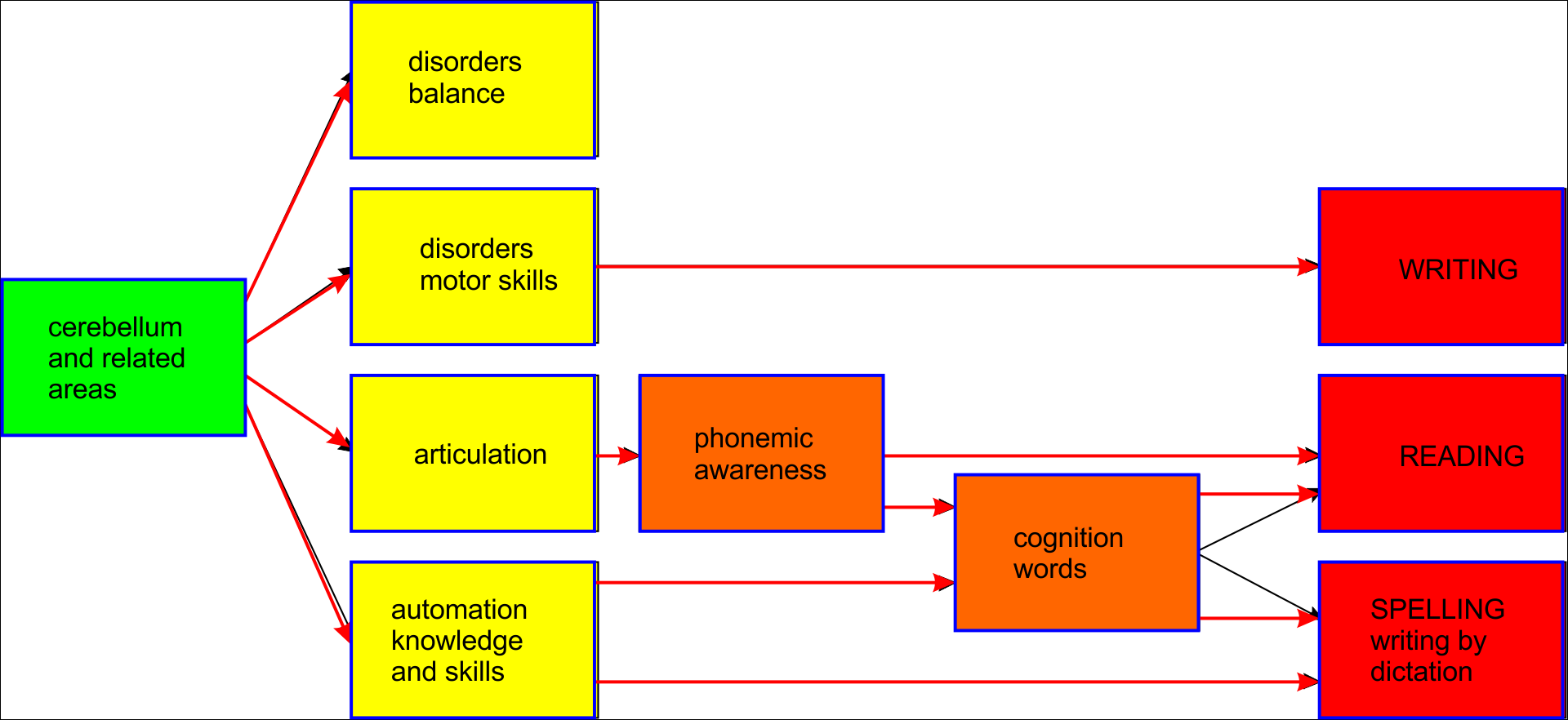
3.1. Current etiological model of partial function deficits as a basis for diagnosis and intervention
Müller's model of multidimensional etiological theory of learning disorders - holistic system model
- Level 1: indirect causes
- Level 2: direct causes
deficits of partial functions (Teilleistungsschwächen)
Johannes Greichen 1960s
"Reduction of the performance of individual factors or their parts in the middle of a larger functional system, which is needed to handle a certain complex task of adaptation" (Pokorná, 2001, p. 95)
- Level 3. own disorders
|
Function deficits: |
|||
|
• phonological - phonemic awareness, attention, rhyming, cocktail party syndrome, reverse camouflage • visual - lower sensitivity to contrast, iconic persistence • speech - syntax, semantics |
• automation - eye movements, social norms • memory - working memory failure • temporal cognitive - dyschronia |
||
|
• psychosocial influences: family |
• prenatal • perinatal • postnatal • (acquired phonological dyslexia, akcalulia) |
aspects: • neuroanatomy (symmetrical planum temporale, different architecture of large cell layers of the visual part of the thalamus, corpus callosum) • neurogenesis (abnormalities of cell migration in the embryonic stage, abnormal development of the activity of the temporal and parietal lobes) • neurophysiology (different activation of the cerebellum) |
|
|
• linguistic and cultural influences |
DAMAGE |
HEREDITY Chromosomes 6 and 15 (relationship between falsehood, immunological diseases, sex hormones and SLD) |
|
Exogenous factors Endogenous factors
4. Basic terminology
DDSS: Specific developmental disorders of school skills - ICD-10: F81
- medical terminology
- F81.0 Specific reading disorder
- F81.1 Specific spelling disorder
- F81.2 Specific disorder of arithmetical skills
- F81.3 Mixed disorder of scholastic skills
- F82 Specific developmental disorder of motor function
Specific (developmental) learning disabilities -SLD
- dyslexia - derived from lat. lego, legere = read, specific reading disorder
- dysortography - from Greek. orthos = correct, grapho = I write, specific spelling disorder, up to 95% occurs in connection with dyslexia
- dysgraphia - from graffiti = write, specific writing disorder
- dyscalculia - from lat. calculus = number, specific disorder of mathematical functions
- dysmusia - from Greek. Muse = goddess of art, a specific disorder of musical abilities
- dyspinxia - from lat. pingo, pingo = paint, draw, drawing abilities disorder
- dyspraxia - from Greek praxis = act, action, specific disorder of the ability to perform more complex tasks (most often clumsiness)
less common signs of dyslexia:
- legasthenia
- bradylexia
Specific (developmental) behavioral disorders
Syndrome associated with abnormalities in brain function, over time referred to by various names: MBD (Minimal brain dysfunction - a term often used either in connection (or interchangeably) with hyperactivity and/or attention deficit disorder), ADHD, hyperkinetic syndrome, etc.
ICD-10:
F90 Hyperkinetic disorders
F90.0 Disturbance of activity and attention
F90.1 Hyperkinetic conduct disorder
F91 Conduct disorders
DSM-5: ADHD - Attention deficit hyperactivity disorder, divided into three subtypes:
- Inattentive type (predominant attention deficit disorder)
- Hyperactivity / impulsivity type
- Combined type
The adoption of ICD-11 was approved at the 72nd World Health Meeting in May 2019 and will enter into force on 1 January 2022.
https://icd.who.int/icd11refguide/en/index.html
Revision major steps
The revision of ICD-11 has taken place in several phases.
First, a list of issues that were known from the use of ICD-10 and that could not be solved in its classification structure was compiled and possible solutions were formulated.
Second, input was received from many scientific groups in the key subject areas with a focus on the clinical perspective.
Finally, centralised editing occurred, aimed to adjust imbalances in content generated by multiple independently operating expert groups in the previous phase of the revision, and to ensure the overall structure is consistent and practicable for users in mortality and morbidity statistics. The ‘guiding principles’ were an essential tool particularly in the last phase. The content, terminology and suggestions for specific groupings by the scientific groups has been preserved, though the proposed structure and location of the entities in the classification has undergone changes necessary to the main uses of ICD. The multiple parenting preserved the visibility of the conditions in the preferred location of the scientific groups. The final version also received input from field testing, Member State comments, and ongoing submission and processing of proposals.
General features of ICD–11
The main structural innovation of ICD–11 is that it is built on a Foundation Component from which the tabular list can be derived. The international reference tabular list is the statistical classification for morbidity and mortality. Due to the addition of a Foundation Component, and the electronic design of ICD-11, some new terminology had to be introduced that had not been used in prior versions of ICD. The table below provides examples of this new terminology. You will find more detail about individual aspects in other parts of this guide.
For more detail on the terminology of ICD-11, see Section 1.1.6.1 Integrated use with Terminologies.
Traditional Medicine conditions - Module 1 (TM1)
Traditional Medicine (TM) is an integral part of health services provided in many countries. National authorities have not had proper methods, nationally or internationally, to monitor its health impact over time and allocate proper resources. International standardisation by including Traditional Medicine within the ICD allows for measuring, counting, comparing, formulating questions and monitoring over time.
The development of the Supplementary Chapter Traditional Medicine Conditions, Module 1 (TM1) is a result of requests to WHO from s everal member states to include TM concepts in an international classification such as the ICD. Although countries such as China, Japan and Korea have developed their own country specific classifications, there was no agreed international standard to allow collection of comparable data or as a starting point for testing efficacy of interventions and monitoring their safety. TM clinicians have been working 2005-2018 to integrate and standardise their terminology, resulting in the current TM chapter.
A large percentage of the world’s population uses some form of Traditional Medicine. However, standardised data and information on health status of these users remain largely absent from national and international health data collections. The use of Complementary and Alternative Medicine (CAM) therapies has become a huge industry and is expected to grow. As a result of this gap in information about TM and the size of the industry, resources have been invested in the creation of a classification tool to allow data to be collected and analysed.
ICD-11’s chapter on Traditional Medicine disorders and patterns is designed to be integrated with coding of cases in conjunction with the Western Medicine concepts of ICD Chapters 1-25. The TM1 chapter within ICD enables continuity and coordination of care and promotes integrated people centred care for those accessing traditional, complementary and integrative medicine as a means of primary health care. Primary health care is the foundation of integrated service delivery, and the TM1 chapter within ICD-11 allows for coordinating with other levels of services and provides better measurement towards achieving universal health coverage.
The chapter will be used in ways appropriate to health care systems, clinical practice and regulations in different countries, but always using standard terminology. It is important to expose TM practitioners to the rigour of coding and collecting data for reporting and for clinical exchange, as well as for research topics. Another vital consideration is to allow collection of data relating to patient safety, so that complications and interactions of TM with WM can be monitored. A standard terminology is also necessary for reimbursement and casemix systems, for education of TM practitioners, for inclusion in electronic record systems and last but not least, for providing currently inaccessible morbidity information to national and international organisations from countries where TM is practised and is an important part of health service delivery.
As with other ICD chapters, the TM1 chapter is a tool for classifying, diagnosing, counting, communicating and comparing TM conditions, it will also assist research and evaluation to assess the safety and efficacy of TM. This chapter not judging TM practice or the efficacy of any TM intervention.
Keywords:
specific developmental disorders of school skills, specific (developmental) learning disorders, specific (developmental) behavioral disorders, ADHD, hyperkinetic disorders, dyslexia, dysorthography, dysgraphia, dyscalculia, dyspraxia, dysmusia, dyspinxia, ICD-10, ICD-11, DSM-5
5. Laterality - types, ontogenesis of laterality
Laterality - definition
Asymmetric use of paired motive and sensory organs.
We see a neurophysiological connection in the dominance of brain centers.
The most well-known manifestations of laterality are right-handedness and left-handedness.
Representation of left-handedness and right-handedness in the population
Leftists as a minority
Leftists in history
Keywords:
laterality, right-handedness, left-handedness, concordant, disagreeable and undefeated laterality, brain centers in the right and left hemispheres, orientation test of laterality, dextrity coefficient, ontogenesis of lateralization, right-left orientation, ambidextria, cross laterality, pathological left-handedness, left-handedness out of necessity, sensory oculomotor and directional dominance of the eye, diagnostics of laterality
5.1. Relationship symptoms - deficits - learning disabilities
|
area |
division of functions |
partial deficits |
related SLD and difficulties |
|
|
motor skills |
gross motor skills |
coordination disorder sequence disorder clumsiness |
dyspraxia |
|
|
fine motor skills |
hands |
dysgraphia, dyspinxia |
||
|
speech organs |
dyslalia, atrial clumsiness |
|||
|
eyes |
sequence disorder disturbance of saccades |
dyslexia |
||
|
perception |
visual perception |
visual analysis |
slow performance insufficient performance confusion of letters and sounds deleting letters and sounds intermodality disorder |
dyslexia dysgraphia dyspinxia dyspraxia |
|
visual synthesis |
||||
|
differentiation |
||||
|
visual memory |
||||
|
auditory perception |
auditory analysis |
dysorthography dyslexia dysmusia wheezing assimilation |
||
|
auditory. synthesis |
||||
|
differentiation |
||||
|
auditory memory |
||||
|
perception of space |
orientation in space |
disorientation confusion |
dyspraxie |
|
|
orientation in space |
dyslexie, dysgrafie, dyspinxie |
|||
|
right-left orientation |
dyskalkulie dysgrafie |
|||
|
perception of time |
disorientation, arrhythmia |
dyschronia, dysorthography social difficulties |
||
5.2. Laterality of the eye
Segregation of Visual Field Information at the Optic Chiasm
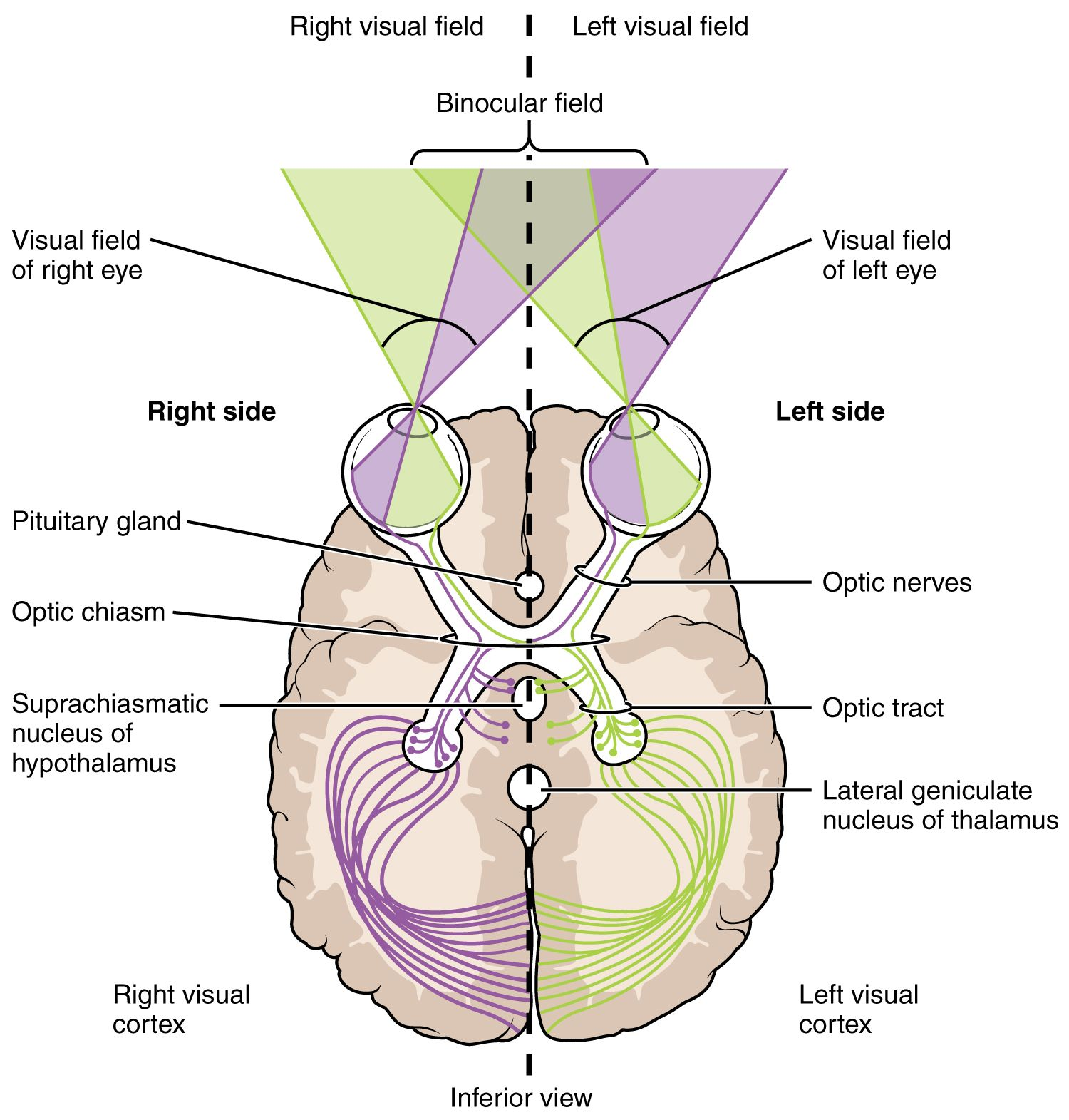
https://cnx.org/contents/KcreJ7oj@13/Central-Processing
Three types of eye dominance:
- sensory - preference of one eye in monocular vision - aiming eye, detected by monocular
- oculomotor - in binocular vision shows better fixation in one eye
- directional - the most used type of eye dominance, ensures directionality in binocular vision, the eye is dominant, focusing on a specific object - the controlling eye
5.3. Ontogenesis of laterality
The brains of humans and other animals are asymmetrically organizedHemispheric asymmetries (e.g., structural or functional differences between the left and the right cortical hemisphere), pervade practically all major neural systems of the human brain.
Laterality is a theory of the dominance of the use of one side of paired organs based on the differences in the function of the right and left cerebral hemispheres . The most well-known manifestations of laterality are right - handedness and left-handedness .
Dominance is the predominance of one cerebral hemisphere over another. The previously widespread view that left-handers have a dominant right hemisphere and left-handers for all activities has been overcome. In the 1960s, J. Wada discovered that almost 100% of right-handers and 60-70% of left-handers had a dominant left hemisphere for speech .
Connection of cerebral hemispheres
The left and right hemispheres are connected by a complex network of nerve fibers called the corpus callosum . The ancient Egyptians noticed that the left hemisphere controls the right side of the body, while the right hemisphere controls the left side of the body.
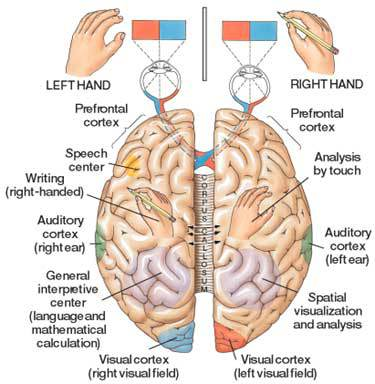
https://wikisofia.cz/wiki/Lateralizace_mozkov%C3%BDch_hemisf%C3%A9r
- significant hereditary influences
- prenatal development (ultrasound examinations show in the uterus 90% of children prefer the right thumb)
- after birth: the first signs of the future development of laterality from the tonic neck reflex
- around the 4th month 1. intentional movements: in most children symmetrical use of both hands
- around the 7th month shift to asymmetric, lateralized power (maturation of nerve pathways)
- long fluctuations between symmetry and asymmetry
- laterality stabilization after the 4th year of life
- if the laterality (especially of the hand) is not clear before the age of 6 - diagnosis is necessary
- related development of orientation in space and right-left orientation
- the child is aware of the basic axes of space in order: vertical, anteroposterior, horizontal
- development of right-left orientation: simple - in the body scheme - mirror orientation
5.4. Diagnosis of laterality
Laterality - types, diagnostics
genotype - phenotype
types of laterality (combination of hand and eye laterality):
agree - disagree (crossed) - indefinite (ambidexterity)
R - R R/ A R X L A / R A / A A / L L X R L / A L - L
R right, L left, A ambidexterity
Diagnostics - dextrity coefficient DQ:
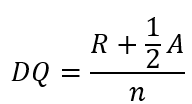
laterality bands:
pronounced right-handedness (DQ = 100 - 90)
less pronounced right-handedness (DQ = 89 - 75)
ambidextria - undefeated laterality (DQ = 74 - 50)
less pronounced left-handedness (DQ = 49 - 25)
pronounced left-handedness (DQ = 24 -0)
5.5. Tasks of the orientation test of laterality
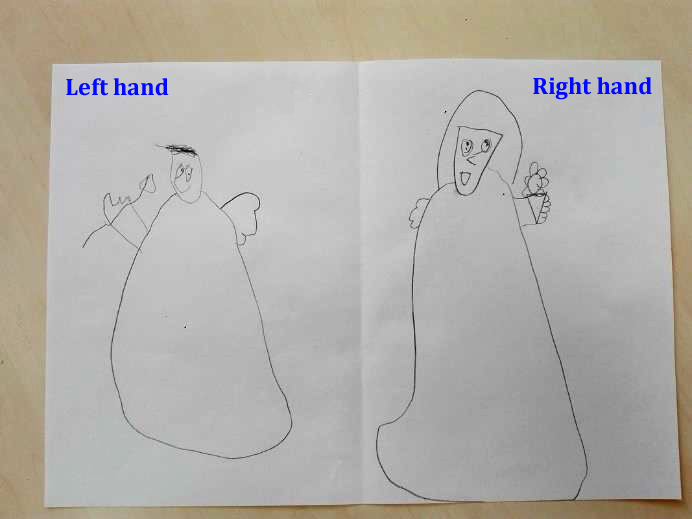
1. DRAWING drawing of a men's figure - drawing the figure with the chosen hand on half of A4 paper, recording the time of drawing
- drawing with the other hand, recording the time
- comparison of quantity (time) and quality (characteristics of character drawing) of drawing
- rating: R or L
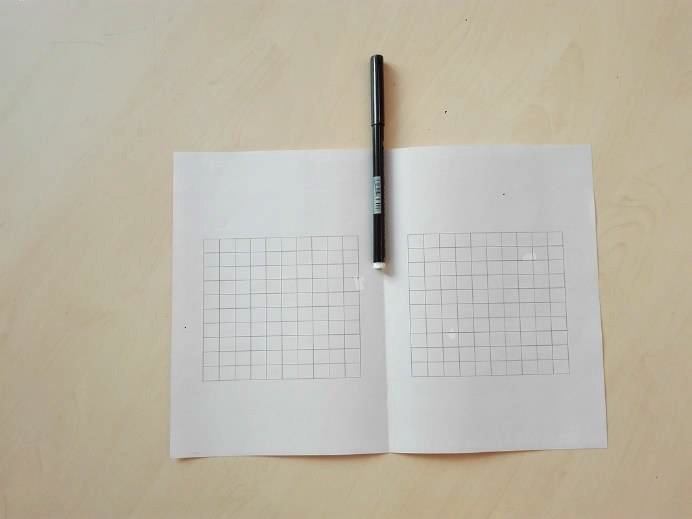
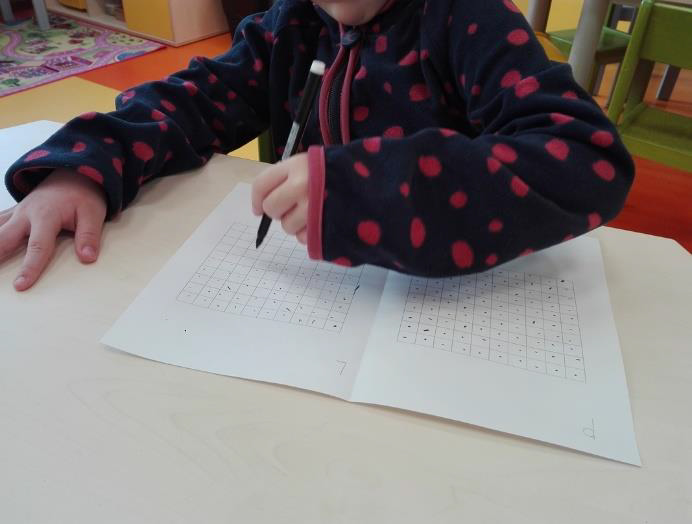
2. FLOW with a marker in the 1st big square, gradually all the small squares, measuring time
- dot the 2nd big square with the 2nd hand, measuring time
- comparison of quantity (time) and quality (dot or comma) of performance
- rating: R or L
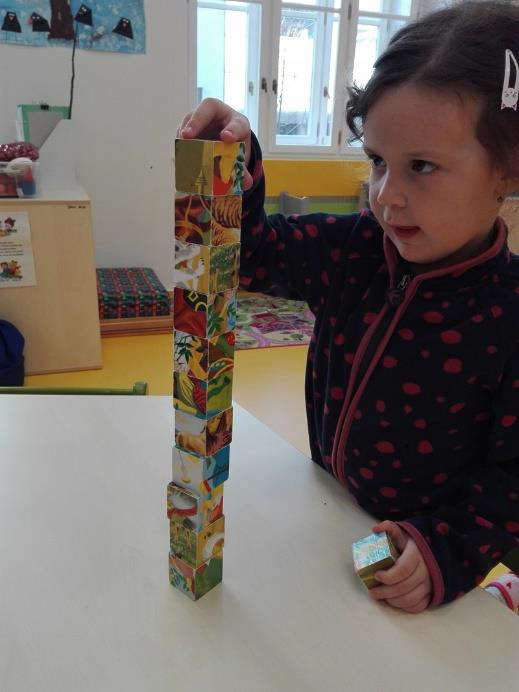
3. BUILD A TOWER OF DICE
- monitor hand use
- rating: P, L or A
4. THROW 3 times at a 2 m distant target
- monitor hand use
- evaluation: RRR = R, LLL = L, combination of R and L = A
5. CUT these shapes (circle, triangle, rectangle) with paper scissors
- monitor hand use
- evaluation: RRR = R, LLL = L, combination of R and L = A
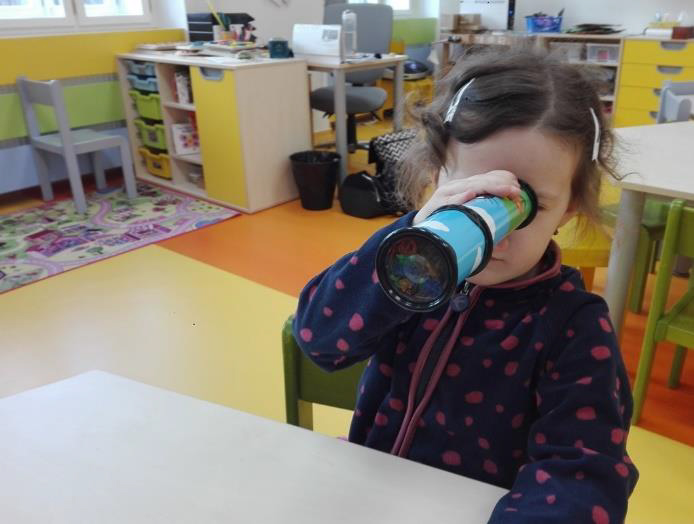
6. LOOK INTO THE peephole
- monitor eye use
- evaluation: RRR= R, LLL = L, combination of R and L = A
5.6. Orientation test of laterality
- Drawing of a gentleman
- Dotting
- Tower construction
- Throw the ball
- Cutout
- Peephole
A standardized exam is used in counseling (Matějček, Žlab)
The so-called Edinburgh exam is used abroad.
Principles:
- Not to tell the child the purpose of the examination, but to say, for example, "I would like to know how handy you are."
- Not to determine which hand the child should use, to create the same opportunity for both hands, only on the second attempt to require performance with the other hand.
- Use secondary diagnostic data
- Respect general diagnostic and ethical principles
Record of the orientation test of laterality
| Name, date of birth | Drawing | Dotting | Tower | Throwing | Cutting | Peephole |
|---|---|---|---|---|---|---|
| Evaluation |
| Overall rating: |
|---|
Example of examination
Aids
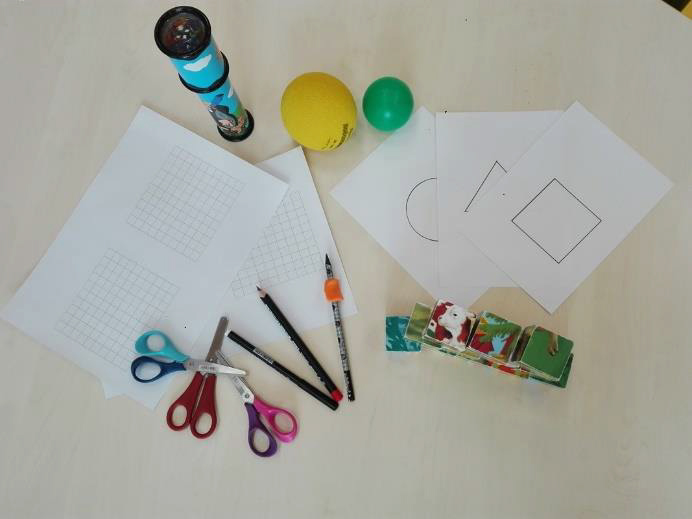
Examination girl, 5 years and 10 months
- Drawing of a gentleman
- Dotting
- Tower construction
- Throw the ball
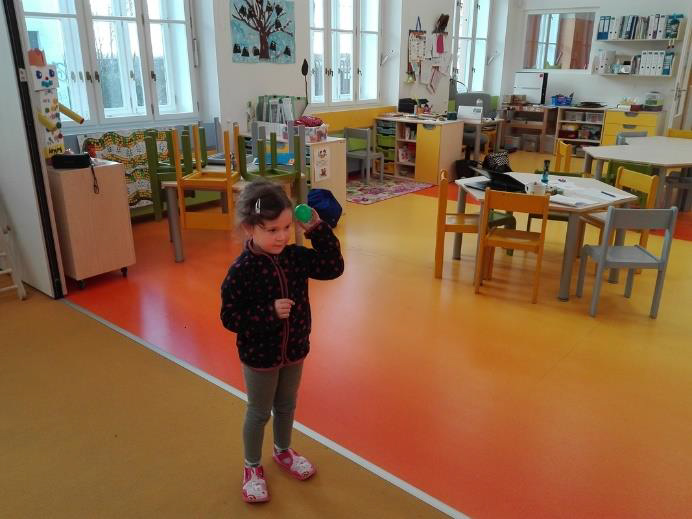
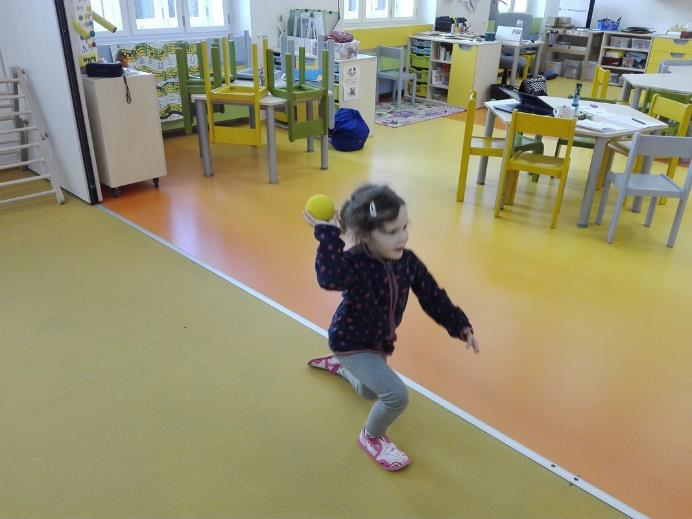
- Cutout
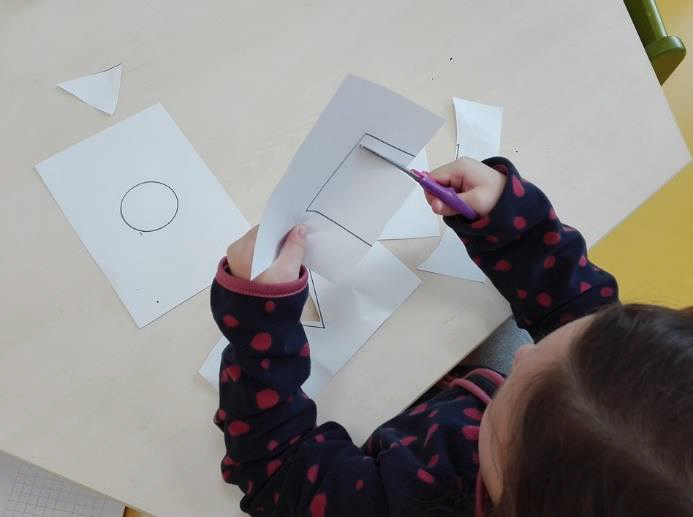
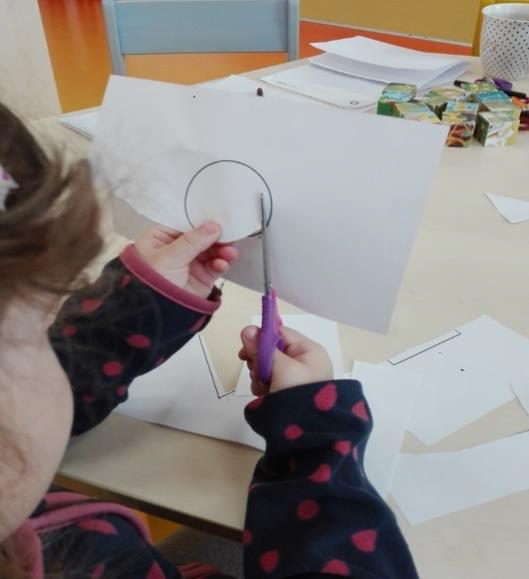
- Peephole
Record of the orientation test of laterality
| Name, date of birth | Drawing | Dotting | Tower | Throwing | Cutting | Peephole |
|---|---|---|---|---|---|---|
| Evaluation | R | R | R | A | R | L |
| Overall rating: | R/L |
|---|
5.7. Laterality test (Matějček, Žlab)
Test record |
R |
L |
A |
Manoptocope |
|||
Peephole |
|||
Beads |
|||
Pins |
|||
Lock |
|||
Ball |
|||
|
|||
|
|||
|
|||
|
|||
|
|||
|
5.8. Risk types of laterality in the context of deficits of partial functions
Deficits in the area of laterality, risk types
- cross laterality
- rehearsed leftism
- ambidexterity
- pathological leftness
- leftism out of necessity
- related deficits and learning disabilities
5.9. Working with a left-hander on the primary (elementary) school
Access to the left-hander in elementary school
In primary school, leftists represent a disadvantaged minority.- writing process from left to right
- specific requirements for holding writing instruments
- reading procedure from left to right
- use of common aids
- job in the classroom
- risks of family exercise
- When writing, the left-hander copes with the requirement, which is difficult for him to manage, to move from left to right, often by turning his hand into a so-called claw-shaped posture so that he can see the written text. However, this posture is non-physiological, often causing convulsions and faster onset of hand fatigue. Therefore, the formation of a claw-like grip must be prevented. What to do to prevent the claw from forming or fixing:
- pay adequate attention to holding a pencil already in kindergarten and in the family of a preschooler
- pay adequate, often greater than for right-handers, attention to preparatory exercises for writing and relaxation exercises (eg shaking hands)
- when there is a hint of claw-holding, consistently perform relaxation and preparatory exercises on a vertical surface
- on the principle of "lesser evil" to accept a more significant rotation of the paper (notebook) than turning the hand into a claw
- cooperation with parents on the principle of a unified approach of the school and the family in writing training
- If the claw posture is already fixed, reeducation must not be stressful, the intervention must not neurotize and stigmatize the child.
- The methodology of writing with the left hand is in general features identical to the procedures in right-handed writing and emphasizes:
- sitting in a bench with a right hand - left, so that the left hand is on the edge of the bench, not in the middle
- posture - straight sitting (prevention of scoliosis, hyperkyphosis), partial support of both forearms, slight forward bending, distance of the eyes from the paper at least 30 cm, the size of the table and chair corresponding to the figure of the student is important
- the paper (notebook) should be placed slightly to the left of the body axis for the left-hander, the upper left corner points slightly upwards (the size of the inclination is individual)
- left-handed way of writing - preferably diagonally from below (palm is below the line)
- font inclination - a large tolerance to left-handed performance is recommended (Křišťanová, 1995), preferably 70 - 75 degrees to the right, vertical font is tolerated (90 degrees)
- font speed - due to the great difficulty of left-handed writing, it is necessary to tolerate a slower font pace
- special aids for left-handers: copybooks, triangular program, pads, scissors, etc.
6. ADHD / Hyperkinetic disorder
Hyperkinetic syndrome / ADHD - development of cognition, terminology, etiology
- 1960s: Mild pediatric encephalopathies: minor diffuse disorders of permanent brain tissue arising prenatally, perinatally or postnatally before adulthood. (Kucera in Cerna, 1999)
- 70s: mild brain dysfunction also minimal brain dysfunction (MBD)
- minimal brain dysfunction
- 80s: specific behavioral disorders
- school adaptability disorder
- 90s: hyperkinetic syndrome
- hyperactive syndrome
- Attention Deficit Hyperactivity Disorder (ADHD)
- Attention Deficit Disorder (ADD)
Mild brain dysfunctions - definition
Mild cerebral dysfunction syndrome refers to children of near-average, moderate, or above-average general intelligence with certain learning or behavioral disorders, ranging from mild to severe, which are associated with abnormalities in central nervous system function. These deviations can manifest themselves in various combinations of impairments in perception, conception, speech, memory, and control of attention, instincts, or motor skills.
Hyperkinetic disorder (HKD) - ICD-10
A group of disorders characterized by early onset (usually in the first five years of life), lack of perseverance in cognitive-intensive activities, and a tendency to move from one activity to another without completion, along with disorganized, poorly regulated, and overactivity.
A number of other abnormalities may be present at the same time. Hyperkinetic children are often undisciplined and impulsive, prone to injury, and easily conflict with discipline for thoughtless breaking of rules rather than intentionally resisting. Their relationship with adults is often socially disinhibited due to a lack of normal caution and distance. They are not very popular with other children and may become isolated.
Cognitive abilities are commonly impaired and specific delays in motor and language development are disproportionately common. Secondary
complications are antisocial behavior and low self-esteem.
ADHD is a developmental disorder characterized by a child's age with an inappropriate degree of attention, hyperactivity and impulsivity.
The problems are chronic and cannot be explained by neurological, sensory or motor disabilities, mental retardation or severe emotional problems.
Deficits are evident in early childhood and probably chronic. Although they may alleviate with CNS maturation, they persist compared to individuals of the general population of the same age. Difficulties are often associated with the inability to follow the rules of conduct and perform certain tasks for a long time. These obviously biological deficits affect the child's interaction with family, school and society.
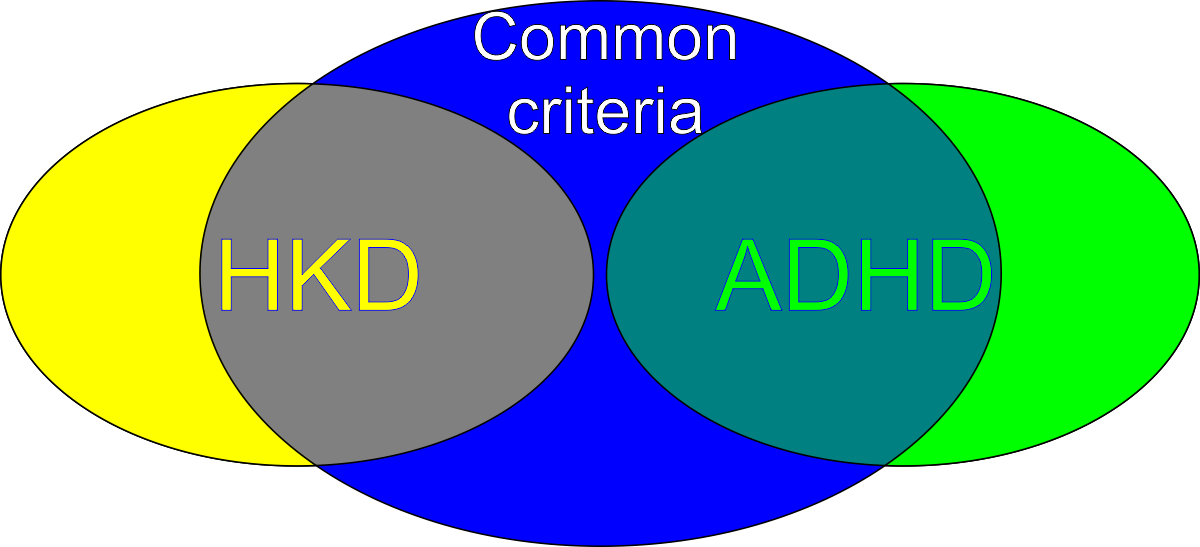
A very simplified picture highlights common criteria HKD and ADHD.
Keywords:
mild pediatric encephalopathy, mild (minimal) brain dysfunction, hyperkinetic syndrome, ADHD, ICD-10, DMS-5, specific behavioral disorder, symptom triad, attention deficit hyperactivity-impulsivity, symptomatic diagnosis, pharmacotherapy , symptomatic therapy, biofeedback, VTI, episodic behavioral control disorder
6.1. Occurrence of the syndrome
proportion of causal factors: the ratio has changed significantly over the last 40 years
- 50-70% inheritance
- 20-30% complications during pregnancy and childbirth
- 10% later effects
incidence in the population - MBD: 6−15%, more common in boys
- the percentage of occurrence varies according to the diagnostic system, gender and age
- DSM-5: 4–19% of children with ADHD
- ICD-10: 1-3% incidence of hyperkinetic disorder
more abundant in boys
- different prevalence according to individual types in ADHD:
- Type of attention deficit disorder occurs in 25-30% of cases;
- Hyperactively impulsive type is diagnosed in about 10-20% of cases;
- The mixed type is the most frequent - it occurs in about 50% of children with ADHD.
- 80% of disorders persist into adolescence and up to 60% into adulthood
6.2. Causes of the syndrome
Important etiological theories:
- evolutionary
- genetic
- dietetic
- traumatic
- neurological http://www.red-tulip.cz/
- psychosocial
Neuroanatomical abnormalities:
- nucleus caudatus
- frontal lobe
- corpus callosum
abnormalities of electrical activity of the brain: activity level corresponding to younger age
- delta 1-3 Hz deep sleep
- theta 4−7 Hz superficial sleep, meditation, hypnosis
- alpha 8-12 Hz basic vigilance
- SMR 12−15 Hz relaxed attention
- beta 15−20 Hz focused attention, free concentration
- beta2 21−30 Hz hyperexcitation, tension, irritation, anxiety
- gamma 31Hz and more Hz top performances, top experiences
- abnormalities in blood flow to certain parts of the brain
- abnormal metabolic activity in some parts of the brain
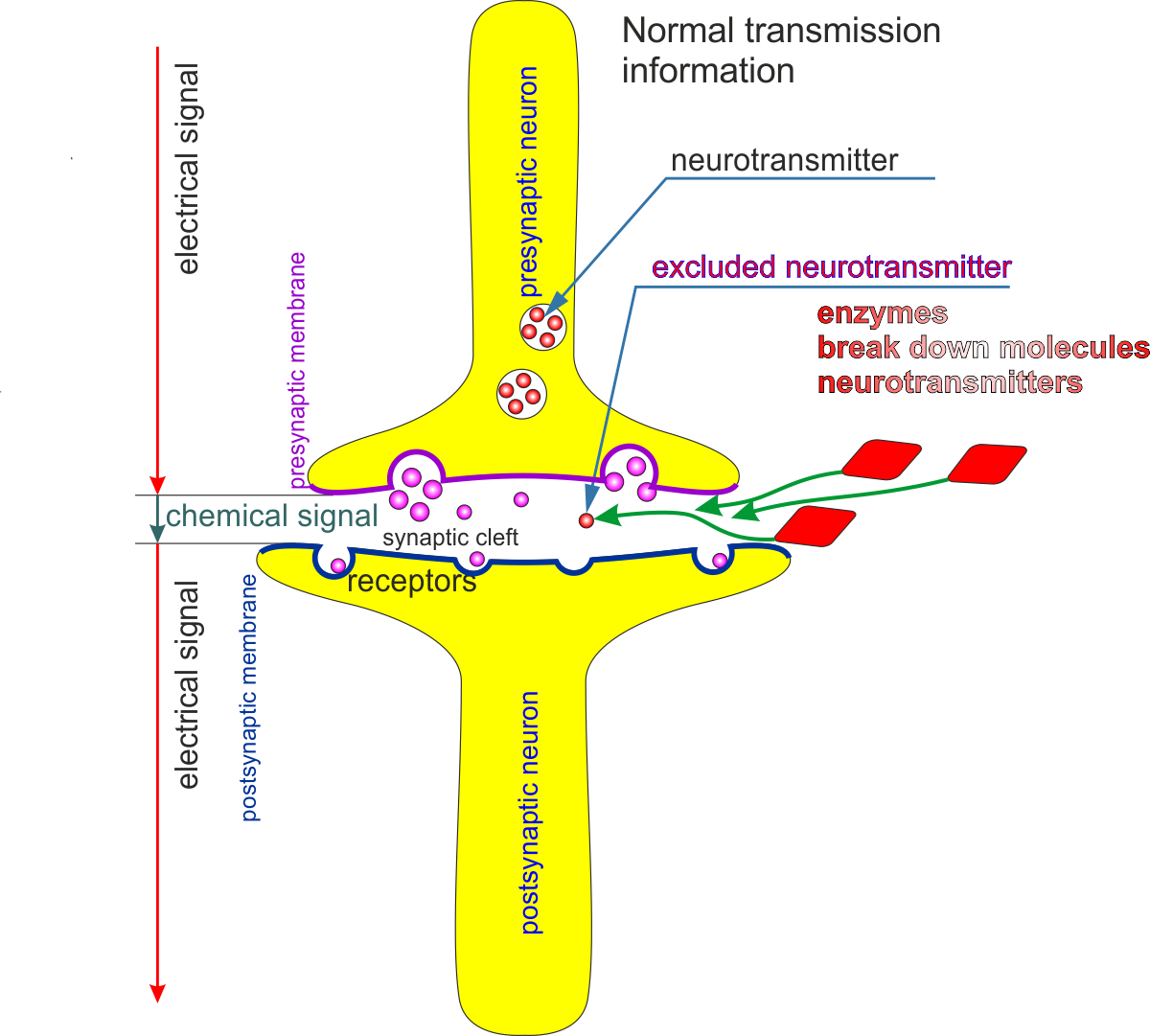
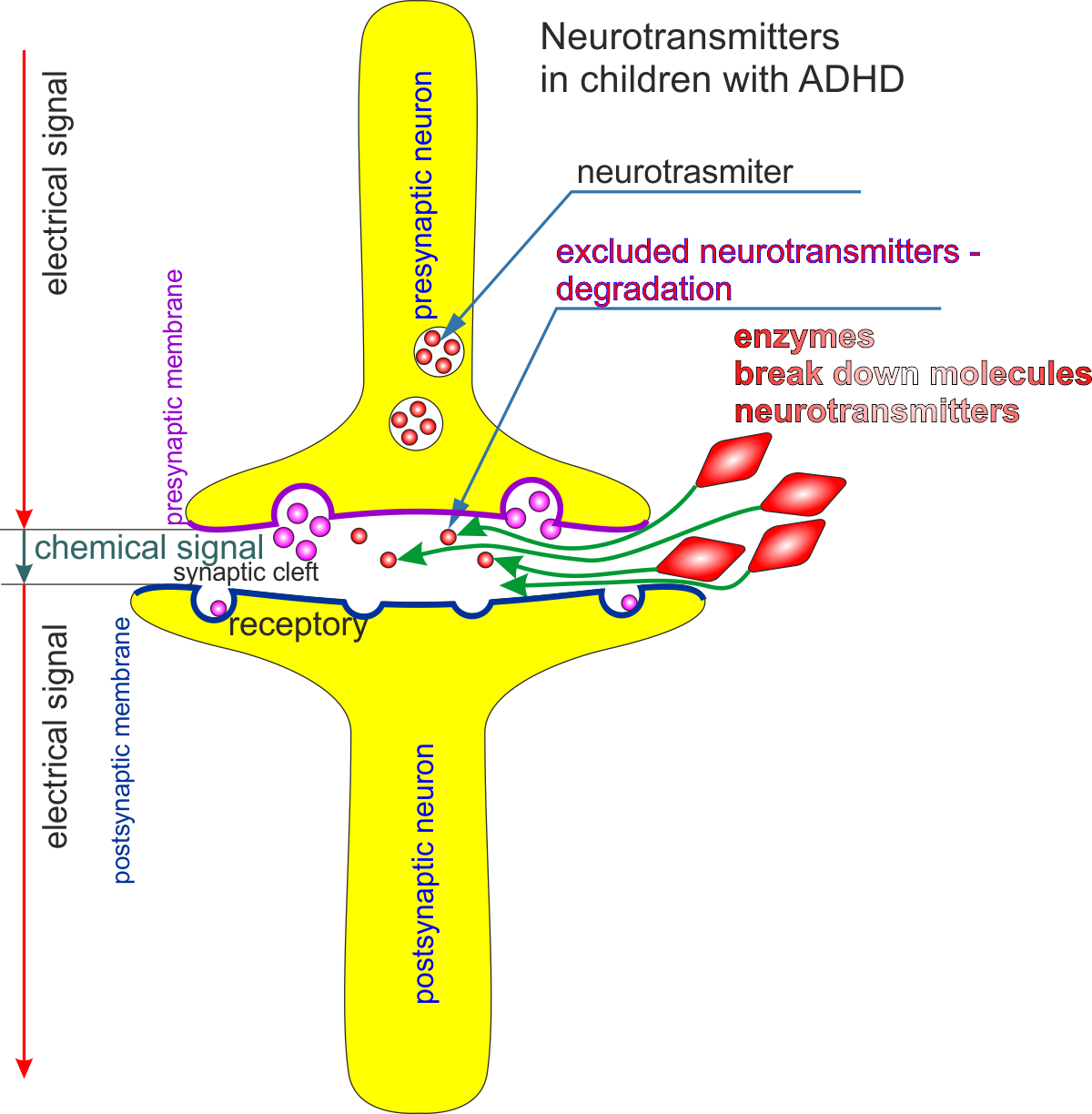
Neurotransmitter deficiency
6.3. Display of neurotransmitter function
6.4. Imaging the functioning of neurotransmitters in ADHD
6.5. Ontogenesis of a person with ADHD
- for the most part it is a lifelong matter
- the development shows characteristics related to typical symptoms
- pregnancy: elements of hyperactivity
- infant and toddler age: biorhythm disorders
- preschool age: typical symptoms, frequent postponement of school attendance
- school age: typical symptoms, learning disabilities, school maladaptation, some difficulties disappear, the need to respect the choice of profession, the emergence of secondary disorders of a predominantly defensive nature, low self-esteem
episodic behavioral control disorder
- adulthood: frequent persistence of typical symptoms, especially impulsivity, risk of social problems to soc. pathological phenomena
- best prognosis: individuals with good intellect and good social background
7. Symptomatics of the syndrome, relation to deficits of partial functions
Hyperkinetic syndrome / ADHD - symptoms
by frequency of occurrence MBD - Třesohlavá (1983)
- attention disorders (93%)
- hyperactivity (80%)
- more than 5 minor neurological symptoms (77%)
- emotional lability (70%)
- impairment of perception and formation of concepts (67%)
- increased impulsivity (66%)
- increased mental fatigue (66%)
- infantile behavior (63%)
- speech disorders (30-53%)
- specific learning disabilities (26-40%)
Keywords:
symptomatic triad, attention deficit hyperactivity disorder, impulsivity, stickiness - perseveration
7.1. Classification of symptoms
Symptoms of MBD |
Deviations in: |
|
motor skills |
perception |
|
attention |
|
thought |
|
speech |
|
emotionality |
|
behaviour |
Symptoms |
primary: |
|
disorders of psyche dynamics |
emotional disorders |
|
motor skills and sensorimotor coordination |
|
perceptual disorders |
|
speech disorders |
|
learning disabilities |
|
biorhythm disorders |
|
secondary: |
|
behavioral disorders |
|
problems with social learning |
|
low self-esteem |
7.2. Relationship symptoms - deficits - learning disabilities, difficulties 1
region |
division of functions |
partial deficits |
related SLDs and difficulties |
|
motor skills |
raw motor skills |
coordination disorder sequence disorder clumsiness |
dyspraxia |
|
fine motor skills |
hand |
dysgraphia, dyspinxia |
||
speakers |
dyslalia, atrial clumsiness |
|||
eyes |
sequence disorder disturbance of saccades |
dyslexia |
||
perception |
visual perception |
visual analysis |
slow performance insufficient performance confusion of letters and sounds deleting letters and sounds intermodality disorder |
dyslexia dysgraphia dyspinxia dyspraxia |
visual synthesis |
||||
differentiation |
||||
visual memory |
||||
auditory perception |
auditory analysis |
dysorthography dyslexia dysmusia wheezing assimilation |
||
auditory synthesis |
||||
differentiation |
||||
s. paměť |
||||
perception of space |
orientation in space |
disorientation confusion |
dyspraxia |
|
orientation in the desktop |
dyslexia, dysgraphia, dyspinxia |
|||
right-left orientation |
dyscalculia dysgraphia |
|||
perception of time |
disorientation, arrhythmia |
dyschronia, dysorthography social difficulties |
||
7.3. Relationship symptoms - deficits - learning disabilities, difficulties 2
|
region |
division of functions |
partial deficits |
related difficulties |
|
attention |
concentration |
deconcentration |
educational difficulties need ind. stimulation social difficulties forgetfulness |
|
length |
short-termness |
||
|
portability |
clinging - perseveration |
||
|
tied to secondary stimuli |
|||
|
thought |
perseveration haste, haste chaoticism memory disorders lack of stereotypes creativity |
inability to realize a good intellect school underperformance creative performances |
|
|
speech and its planes |
phonetic - phonological + motor |
speech defects |
glitter dyslalia articulatory clumsiness wheezing assimilation |
|
lexically-semantic |
lower vocabulary reduced verbal fluency
|
insufficient speech readiness, difficulty in style |
|
|
morphological-syntactic |
reduced level of language feeling |
dysorthography |
|
|
pragmatic |
non-compliance with the rules verbal communication
|
social difficulties |
|
|
emocionalita |
stability |
instability |
social difficulties |
|
maturity |
immaturity, infantile form |
7.4. Relationship symptoms - deficits - learning disabilities, difficulties 3
|
region |
partial deficits |
related difficulties |
|
|
behaviour |
change of activity |
hyperactivity |
unmanageability, educational demands, haste "Acts faster than he thinks" there is no instinct for self-preservation fatigue frequent combination with deconcentrated attention = restlessness |
|
hypoactivity |
frequent combination with perseveration the impression of a lower intellect |
||
|
impulsivity |
social difficulties - inability to respect social norms unpredictability, unpopularity risk of socially pathological phenomena |
||
8. Diagnosis of ADHD syndrome
Basic triad of symptoms:
attention deficit - hyperactivity - impulsivity
activity product analysis
behavior observation
standardized techniques
eg:
- Orientation test of dynamic practice
- Sindelar ensemble to reveal deficits of partial functions
- Character drawing
- Drawing test
- Road test
- Number square
- Edfeld's reverse test
- Developmental test of visual perception
- Auditory differentiation test
- Examination of auditory analysis and synthesis
- Rey's complex figure, etc ..
- EEG, magnetic resonance imaging is used in neurology ...
Keywords:
attention deficit, hyperactivity, impulsivity, syndrome, symptom, EEG, observation, product analysis, test methods
8.1. Diagnosis of main symptoms according to ICD-10
Inattention
At least six of the following symptoms of inattention persist for at least six months to such an extent that they result in the child's inadaptability and does not correspond to his or her stage of development:
1. often fails to focus carefully on details or makes the mistake of inattention at school, at work or other activities
2. often fails to pay attention when performing duties or playing
3. He often does not seem to listen to what he is being told
4. often fails to follow instructions or complete school work, homework or workplace responsibilities (not because they are in opposition or misunderstand)
5. often unable to organize tasks and activities
6. often avoids tasks, such as housework, that require concentrated mental effort
7. often loses things needed to perform certain tasks or activities, such as school supplies, pens, books, toys or tools
8. can often be easily disturbed by external stimuli
9. is often forgetful in daily activities
8.2. Hyperactivity, impulsivity
Hyperactivity
At least three of the following symptoms of hyperactivity persist for at least six months to such an extent that they result in the child's inadaptability and does not correspond to his or her stage of development:
1. often inadvertently moves his arms or legs or wiggles in a chair
2. gets up during classes or other situations where he should remain seated from the chair
3. often runs or walks in situations where it is inappropriate (only feelings of restlessness can occur in adolescents or adults)
4. is often excessively noisy when playing or has difficulty behaving quietly during leisure activities
5. permanently shows excessive motor activity, which he is not able to fundamentally subordinate to social conditions or requirements.
Impulsivity
At least one of the following signs of impulsivity persists for at least six months to such an extent that it results in the child's inadaptability and does not correspond to his developmental stage:
1. often pops up an answer before the question is completed
2. they often do not stand in a row or cannot wait for their turn during a game or team
3. often disturbs others or gets involved in the conversation (eg jumps into others' speech, disturbs them during the game)
4. regardless of social customs and limitations, speaks excessively
8.3. Symptoms of the syndrome in the drawing of the figure
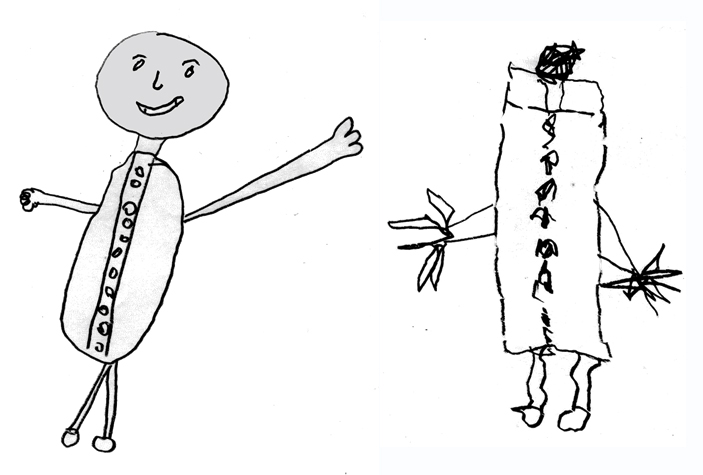
Typical features and peculiarities of drawings of children with MBD
- There are noticeable disproportions of individual parts of the body, eg each hand is different, one shoe is noticeably smaller than the other, etc.
- The individual parts are usually attached in the wrong place, such as the arm at the neck or waist.
- There is an omission of essential details that the child knows about the overall condition and can draw at least approximately, eg missing nose or mouth, hair is only half a head, missing one limb. The authors conclude that this is probably a consequence of attention deficit disorder.
- There are symptoms of rigidity, stereotypes, sticky attention, eg long rows of buttons, excessive number of fingers, etc.
- The technique of scribbling details is often used, usually inadequately, sometimes the whole character consists of scribbled areas.
- Bizarre shapes of individual parts of the body appear.
- The processing of individual parts of the body is usually at a primitive level, such as forked hands, bird's feet, etc.
- Poor coordination prevails, line quality is low, lines are crooked, jagged, often double, crossed out. The drawing is often asymmetric. ,
- Sometimes there is a conspicuous position of the figure in space, children with MBD have difficulty dividing the surface of the paper, the inclination of the figure is usually oblique.
- The profile occasionally appears, but it is noticeably or bizarrely processed. (Trpišovská, 1997, p.63)
9. Social risks of the syndrome
Social risks: related to a number of phenomena
- difficulties in respecting social standards
- impulsivity
- difficulties in orientation in time
- difficulties in building stereotypes
- motor clumsiness
- unrest
- problematic self-concept
- educational difficulties
- in 2/3 of individuals it persists into adulthood
Keywords:
restlessness, clumsiness, unpopularity, unreliability, low self-concept, educational difficulties, unemployment
10. ADHD - support and intervention
Intervention procedures for HKD / ADHD
Intervention approaches: the most effective combination of psychotherapeutic and pharmacotherapeutic methods
- interventional (psychotherapeutic and sociotherapeutic) help focused on the overall personality
- interventional (psychotherapeutic, special pedagogical) help focused on individual features of the disorder, eg attention deficit hyperactivity disorder, etc.
- special therapeutic procedures - pharmacotherapy, biofeedback, diets, VTI, etc.
Intervention focused on the whole personality
- holistic approaches that optimize the whole personality include the family
- Improving school performance is a secondary product
- procedures require special training
- relaxation procedures dominate
- examples:
- autogenous training
- yoga exercises
Intervention focused on individual features of the disorder
- can be implemented at a professional workplace, at school or in the family
- important selection of the most severe symptoms
- often symptoms = deficits causing SLD
- eg: attention exercises - worksheets
- perception exercises (visual, auditory ...)
- memory exercises
- social integration exercises ....
Special therapeutic procedures
- pharmacotherapy - psychostimulants, such as Ritalin (increases the amount of dopamine in
- frontal lobes) “paradoxical reaction”, successful in 70-90% of children
- antidepressants (increase noradrenaline concentrations)
- neuroleptics (antipsychotics)
- physiotherapy: focus on primary and transient reflexes
- biofeedback
- diet?
- VTI - video training of interactions
Keywords:
therapy, intervention, pharmacotherapy, paradoxical reactions, biofeedback, VTI, positive and negative expectations (Pygmalion and Golem effect)
10.1. Rules of educational activity of ADHD/HKD pupis
- Respecting the specifics of basic mental needs (see Matějček)
- Unified education system (school, family)
- Parents = teacher's partners
- Consistent education - building stereotypes
- The importance of positive expectations
- Risk of stigmatization by diagnosis
- Organization of education: segregated regime (?), Integrated regime - group - spec. classes, individually - IVP, pg. assistant, support interventions
Principles of raising a hyperactive child:
- set rules and educational resources (rewards, punishments) in advance and be really consistent
- if possible, always react calmly, without anger, speak slowly, anger is normal, does not mean that we do not love the child, but try to control yourself by thinking about your reactions in advance in the expected commotion
- notice every positive behavior of the child, however insignificant, and praise it !!!
- avoid frequent negative commands: "Stop .. You mustn't .. Don't do it ..!" long sermons are completely useless, hyperactive children do not perceive them
- always separate behaviors, actions you don't like, from the very person of the child you love. For example: "I like you, but I don't like it when you walk in shoes on the carpet ..."
- develop a clear daily routine for the child, set basic times (when to get up, eat, play, watch TV, go outside and go to bed - before talking before falling asleep best about feelings), stick to it if it's just a little possible even if the child still disturbs him. Keep in mind that learning time is guided by the principle: "short but more often"
- the process of remembering in hyperactive children is slower, therefore it is necessary to patiently repeat and clarify the requirements and tasks
- if possible, avoid external influences, distraction of the child (bright colors, posters on the wall, at home eg desk built against an empty wall, quiet room without television, radio), the child can not filter distracting influences on its own
- always do only one thing with him, he should play either alone or with only one friend
- delegate more responsibility to him, so that he has the "choice" experience as often as possible - very important for his development (choose tasks appropriate to his abilities so that he does not develop the so-called "learned helplessness")
- don't just evaluate performance, in case of failure always appreciate at least effort, in case of failure to express the belief that next time it will be better to learn to recognize warning signals before the child explodes in "affect of anger", try to divert his attention to something else
- never compare your child with other children (parents' worst mistake: “look at a clever neighbor ...)
- realize that this is only a special condition of the central nervous system (CNS), which naturally leads to these reactions, but which is manageable and which will occur less and less often with the progressive maturity of the CNS until it disappears completely over time
- if hyperactivity manifests itself in impaired benefit, it should not lead to feelings of inferiority: in addition to school grades, self-awareness is more important for life (a child will be able to live if he does not distinguish adjectives from nouns, but if he does not have a little self-esteem and self-confidence). , it will be hard in life)
It is said that up to 90% of the time in their upbringing activities parents ask for something on the child, order what to do or not to do and then get angry if they do not keep it, but in this role it is impossible to build a positive emotional relationship - the secret of successful parenthood is: "Feel what the child needs and satisfy him". The child also needs moments when we don't ask for anything from him, when we are just together, doing something together, playing, rejoicing.
11. Specific (developmental) learning disabilities
Specific developmental dyslexia is a disorder manifested by an inability to learn to read, even though the child receives normal teaching guidance, has adequate intelligence and a socio-cultural opportunity. It is caused by disorders in basic cognitive abilities, and these disorders are often of constitutional origin.
World Neurological Federation at the Dallas Conference (1968)
Orton's Dyslexic Society (1994)
Dyslexia is one of the more significant learning disabilities. It is a specific speech disorder of constitutional origin, which is characterized by difficulties in decoding individual words, usually reflecting the insufficient ability of phonological processing. These difficulties in decoding individual words often occur unexpectedly due to age and other cognitive and academic abilities. They are not the result of generalized developmental disorder or sensory impairment. Dyslexia manifests itself in difficulties of various kinds with different forms of language and, in addition to difficulties in reading, often involves noticeable problems in acquiring the ability to write and follow a spelling standard.
(Matějček in Kucharská, 1997, p. 18)
Use of terms
The term dyslexia was first used in 1887 by the German ophthalmologist R. Berlin for cases previously known as verbal blindness.
Ambiguous use of the term dyslexia:
narrowly in the sense of the word as a specific reading disorder
more broadly as a specific disorder of speech functions. i.e., a collective term for dyslexia, dysorthography, and dysgraxia
broadly, encompassing all SUAs
narrowly in the sense of the word as a specific reading disorder
more broadly as a specific disorder of speech functions. i.e., a collective term for dyslexia, dysorthography, and dysgraxia
broadly, encompassing all SUAs
Another terms for learning disabilities:
Special learning problems
Specific developmental disorders
Learning disabilities
Specific learning difficulties
Specific speech disorders
Keywords:
basic diagnostic discrepancy criterion, P and L type dyslexia (right and left hemisphere dyslexia)
11.1. SLD - occurrence of faults
occurrence in the population affects:
- type of fault
- language structure
- sex
- age
- methods of school teaching spelling and reading
- aggravating health, psychological and social influences
- degree of educational pressure
- level of diagnostic and corrective care
- the most frequently given figure is 2–20%
- in the adult population: USA up to 20%, Germany and the Czech Republic 9%
severe disorders (most often related to brain damage) - independence from linguistic, cultural and socio-economic influences 1-2%
- the difference in incidence between boys and girls in the ratio 4: 10: 1
11.2. Terminology
Specific learning disabilities (SLD)
Specific Developmental Learning Disorders (SDLD)
- "Disorders":
- dyslexia - derived from lat. lego, legere = read, specific reading disorder
- dysortography - from Greek. orthos = correct, graffiti = I write, specific spelling disorder, up to 95% occurs in connection with dyslexia
- dysgraphia - from graffiti = write, specific writing disorder
- dyscalculia - from lat. calculus = number, specific disorder of mathematical functions
- dysmusia - from Greek Muse = goddess of art, a specific disorder of musical abilities
- dyspinxia - from lat. pingo, pingo = paint, draw, specific disorder of artistic abilities
- dyspraxia - from Greek praxis = act, action, specific disorder of the ability to perform more complex tasks (most often clumsiness)
less common and historical signs of dyslexia:
- legasthenia
- bradylexia
- word blindness
- dyslexia - derived from lat. lego, legere = read, specific reading disorder
- dysortography - from Greek. orthos = correct, graffiti = I write, specific spelling disorder, up to 95% occurs in connection with dyslexia
- dysgraphia - from graffiti = write, specific writing disorder
- dyscalculia - from lat. calculus = number, specific disorder of mathematical functions
- dysmusia - from Greek Muse = goddess of art, a specific disorder of musical abilities
- dyspinxia - from lat. pingo, pingo = paint, draw, specific disorder of artistic abilities
- dyspraxia - from Greek praxis = act, action, specific disorder of the ability to perform more complex tasks (most often clumsiness)
- legasthenia
- bradylexia
- word blindness
11.3. SLD - division of faults
Division of speech disorders:
- according to school skills:
- dyslexia, dysorthography, dysgraphia, dyscalculia, dyspinxia, dysmusia, dyspraxia
- according to deficits of partial functions
- according to the functional division of brain activities (L and P dyslexia Bakker)
- according to the prevailing symptoms (Matějček)
Division according to deficits of partial functions
Various files e.g.
- deficits of visual and auditory perception
- deficits in the field of fine motor skills
- deficits in speech and pronunciation development
- deficits in understanding relationships in space
- deficits in optical and acoustic perception of time sequence
- deficits in short-term and long-term memory - so-called intermodality deficits
Division according to the functional division of brain activities (L, R)
- prof. Bakker: two phases of reading development
- disorders in normal reading development:
- R-type dyslexia - right-hemisphere brain dyslexia lasts longer in initial reading strategies
- L-type dyslexia - levohemisphere dyslexia the brain in development has skipped the first phase and uses straight left-hemisphere strategies
Different use of the reading window for type P closing and for type L opening
An example for the 2nd phase of reading development according to Bakker
Can you read the following sentence?
IN THE CNOTXET OF RSEAERCH AT CMABRDIGE UNVERISITY, IT HAS EEMREGD TAHT IT DEOS NOT MTTAER THE ODRER OF THE LTETERS IN THE WROD. THE OLNY IPMOTRANT TIHNG IS. TAHT THE FRIST AND LSAT LTTERES WREE IN THE RGIHT PALCE. THE RSET CAN BE A TTOAL MXITRUE AND YOU STLIL RAED IT WTIOHUT PORBLMES. IT IS BACUESE THE HAMUN BARIN DEOS NOT RAED EVREY LETETR BUT WROD AS A WOHLE.
Dividing according to predominant symptoms (Matějček)
- based on perceptual deficits
- auditory
- visual
- with a predominance of motor problems
- based on integration difficulties
- with a disorder of the dynamics of basic mental processes
- in a hyperactive individual with impulsivity
- in a hypoactive individual with perseveration
12. SLD in the field of mathematics and other skills
Division of dyscalculia - Košč
- Practical diagnostic dyscalculia - impaired mathematical manipulation with specific or depicted objects, impaired ability to sort by size, compare
- Verbal dyscalculia - impaired ability to verbally indicate quantity and number, numerals, surgical characters, name a number series, etc.
- Lexical dyscalculia - impaired ability to read mathematical symbols = numerical dyslexia
- Graphic dyscalculia - impaired ability to write mathematical characters, distinguish numerical orders when writing, significant disruption of right-left orientation = numerical dysgraphia
- Operational dyscalculia - impaired ability to perform mathematical operations
- Ideognostic dyscalculia - impairment of the ability to understand mathematical concepts and relationships
Keywords:
dyscalculia practical, verbal, lexical, graphic, operational and ideognostic
13. Dysmusia, dyspinxia, dyspraxia
Dysmusia - a specific developmental disorder of musical abilities
- disorders of perception of music as a whole or recognition of tones, difficulties with rhythm, memorization of melody, problems with notation (music dyslexia)
- etiology: deficits in the field of auditory differentiation, rhythm, auditory memory
Dysmusia division:
- expressive - inability to recognize and reproduce a melody
- total - the absolute absence of musical hearing and a feeling for music
Manifestations: not too socially restrictive
- hearing impairment
- non-recognition of musical motifs
- inability to reproduce rhythm
- impaired ability to sing
- impairment of the ability to play a musical instrument
Diagnostics:
- Trough test of rhythm
- pitch and bass recognition
- imitation melody
Intervention:
- listening practice
- tone length recognition eg by buzzer, clapping
- melody recognition and memorization
- use of elements of music therapy
- combining tones and rhythm with graphic recording
Dyspinxia - a specific developmental disorder of artistic ability, difficulty in drawind and painting
etiology: deficits in the field of fine motor skills, visual perception, PLO, orientation in the area, frequent connection with ADHD
Dividing dyspinxia:
- motor
- visual
- integrative
Phenomena:
- disproportionate drawing
- the drawing does not correspond to age
- shaky line, dragging
- difficulties with dividing the paper surface
Diagnostics:
- Drawing test
- visual perception tests (Edfeldt's test, M. Frostig's developmental test of visual perception)
- motor tests (Ozeretzky test)
- Intervention: focused on causal deficits, mainly visual and motor
Dyspraxia - a specific developmental disorder of motor skills
- in ICD-10 F82 Specific developmental disorder of motor function, approx. 6% of the population
- comorbid disorders (in 40%): ADHD, Asperger's syndrome, other dysporodes, speech defects
- etiology: deficits in fine and gross motor skills
Phenomena:
- difficulties in coordinating movements
- muscle tension disorder
- muscle stiffness
Diagnostics:
- observation - gross, fine motor skills, speech, self-care, social behavior are monitored
- neurological examination
- speech therapy examination
- ophthalmological examination (detection of oculomotor dyspraxia)
Intervention: focused on causal deficits - gross motor skills, fine motor skills, right-left orientation, orientation in area and space
Keywords:
expressive and total dysmusia, motor, visual and integrative dyspinxia, dyspraxia
14. SLD diagnostics
Basic diagnostic criterion: discrepancy between intellectual performance and performance in the monitored activity (reading, writing, counting)
Teacher diagnostics Diagnostics in pedagogical-psychological counselling centre
- collection of auxiliary diagnostic data: medical, social school anamnesis of the child, most often ascertained, by interview with parents
- determining the level of intellect - discrepancy of intellectual performance and performance in school activities most often expressed by a different grade, IQ X RQ, IQ X MQ
- determining the level of performance in reading, writing, spelling, counting (quantity and quality of performance) reading: socially acceptable level of reading: 60 words / min. (3rd year)
- determining the level of functions that condition performance: perception (visual, auditory, perception of time, space, right-left orientation), laterality, attention, motor skills, rhythm, etc. (most often searching for partial performance deficits)
Keywords:
discrepancy criterion, IQ, RQ (reading quotient), MQ (math quotient), reading speed, text comprehension, specific errors
14.1. Dilemmas of the discrepancy criterion in the diagnosis of SLD
- Discrepancy (lat. Dis-crepare, to be in dispute, not to tune together- contradiction, disagreement
- dyslexia diagnosis criterion - difference between quantification of mental abilities (IQ) and reading level (RQ) difference greater than 20 points
- Objections:
- basic categorical: quantification evaluates only dually (disorder present - absent), no continuum
- psychometric: load measurement error
- practical: difficult to use in borderline cases, in the youngest children
- Cognitive-Psychological: Reading is not dependent on intelligence, but on the development of cognitive functions. Verbal intelligence is related to comprehension rather than the ability to read.
Tracking the IQ of good readers (sometimes below 80) or average (sometimes above 130).
A better indicator of disorders is an understanding of the content read and heard.
14.2. Symptomatic diagnosis at school and in the family
- searching for specific manifestations, the child's resistance to unsuccessful activities
- specific dyslexic errors: letter substitutions, letter omissions, incorrect word conjectures, poor orientation in the text, very slow reading ....
- specific dysortographic errors: confusions of hard - soft, short, long, voiced - unvoiced, hiss, connecting prepositions with the word ....
- specific dysgraphic errors: shaky, engraved, unbound typeface, mirror inversion, problems with memorizing letters
- specific dyscalcular errors: failure to handle a number series, basic mathematical operations, misunderstanding of the structure of a number, inability to compare, sorting.
15. Specifics of family education for individuals with SLD and ADHD/HKD
What is important for a child's parents and teachers?
- Positive expectations
- A kind but consistent approach
- Resisting prejudice, myths about upbringing:
- A child with a specific disorder is a child with insufficient intellect
- The disorder usually disappears in childhood
- Pupils with a specific learning disability must not fail
- Cases within one diagnosis (dyslexia, dyscalculia, ADHD) are basically identical
- Pupils with SLDmust be assessed verbally
- The school or PPP should take care of resolving the problems
- There are 100% effective methods (eg medication)
- A dyslexic has to read a lot, a dysgraphic has to write a lot
- Problematic behavior in children with ADHD is rudeness
Some recommendations may be made for working with children with a specific learning and behavioral disorder
Keywords:
positive expectations, partnership between teacher and parents, myths about upbringing
16. Organization and implementation of care at primary school
SLD - care organization
Care according to the intensity of disability:
- within the regular educational regime (for mild disorders)
- individualization of the approach in the ordinary classroom
- correction in groups in elementary school
- within the integrated care regime (for more severe disorders with the so-called integration clause)
- processing of special program, regular inspections in PPC, the possibility of using a teaching assistant
- individual correction in consulting centre
- inclusion in the group of remedial care
- inclusion in a specialized class or group
- education in special schools, therapy in medical facilities
- levels of support for pupils with SEN
Keywords:
prevention, school maturity - readiness - eligibility, postponement of school attendance, special program, school counseling facility, secondary disorders, learned helplessness syndrome, support measures