Basic layout and components
| Website: | Moodle ZČU |
| Kurs: | KEV/EMB Elektromobilita - podklady k výuce |
| Buch: | Basic layout and components |
| Gedruckt von: | Nepřihlášený host |
| Datum: | Sonntag, 8. November 2026, 20:31 |
1. Electric vehicle platforms
- The first EV prototypes were based on rebuilds of existing platforms developed for internal combustion engines.
- Modern EVs developed from the beginning as EVs, proprietary platforms.
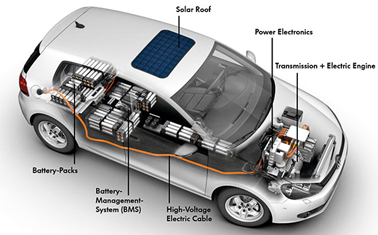
VW e-Golf based on a platform developed for internal combustion engines
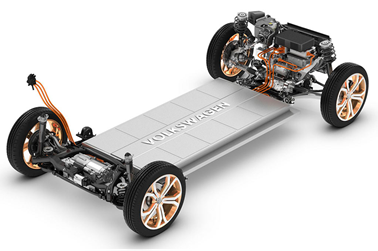
VW MEB platform developed for EV
https://www.volkswagen.de
2. Basic components
Basic components of electric vehicles - types of electric motors, traction inverters, traction batteries.
2.1. Electric machine (motor-generator)
Permanent magnet synchronnous machine (PMSM)
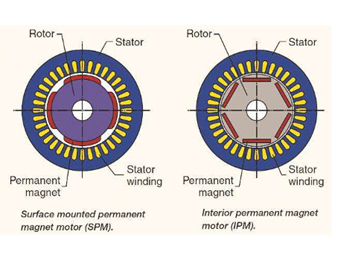
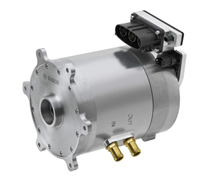
PMSM pro automotive
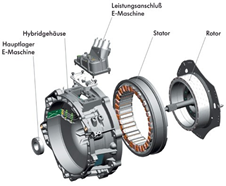
PMSM with concentrated winding
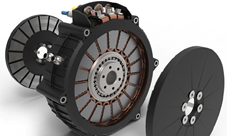
Axial machine with PM
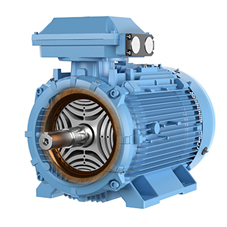
Induction machine
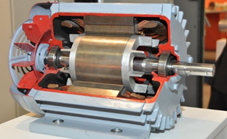
Synchronous reluctance machine
en.wikipedia.org
www.powerelectronics.com
www.abb.com
www.hybrid-autos.info
www.bosch.de
2.2. Traction converter
Three-phase voltage-source inverter
- It forms the interface between the electric motor (three-phase AC side) and the traction battery (DC side).
- Provides power transfer from the battery to the electric motor (drive mode) and back (braking mode).
- It generates output AC voltage of the required magnitude and frequency, controls the speed and torque of the motor.
- It is an integral part of the regulated drive.
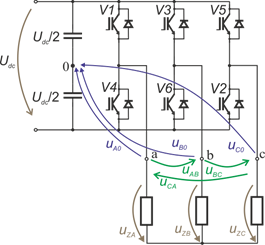
Three-phase voltage-source inverter
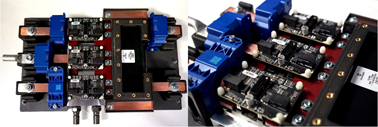
Three-phase voltage-source inverter (CREE SiC),
900 V, 250 kW (RICE FEL/ZČU)
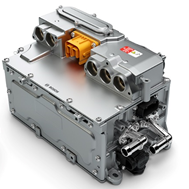
Three-phase inverter for automotive
(Bosch)
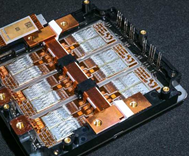
Traction converter (SiC) Porsche Taycan, 800 V
https://thedriven.io
2.3. Traction batteries
- At present, Lithium-based technologies (formerly e.g. Ni-MH) completely dominate.
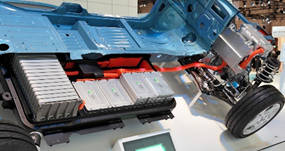
Nissan Leaf
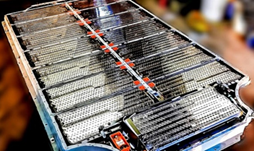
Tesla
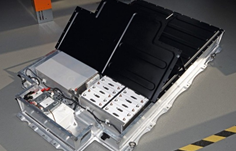
BMW i3
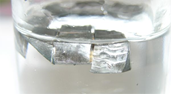
Lithium
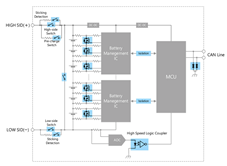
Toshiba BMS
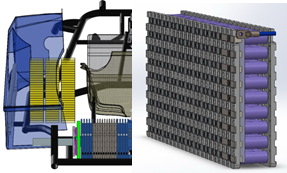
Battery module 21s9p (RICE FEL/ZČU)
https://insideevs.com
https://toshiba.semicon-storage.com
en.wikipedia.org
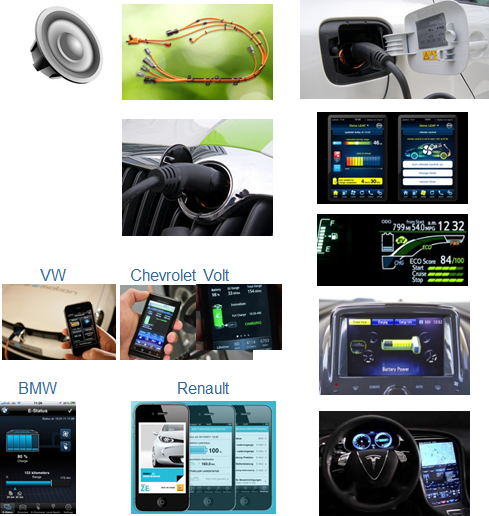
2.4. Other components
- Heating
- Air conditioning
- Cooling circuit
- Charging sockets
- Cable line
- Electric power steering
- Electric brake booster
- Infotainment
- Online services
https://www.tesla.com
https://www.volkswagen.de
en.wikipedia.org
https://www.skoda-auto.cz
2.5. Basic layout
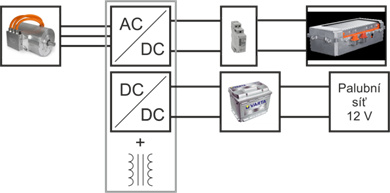
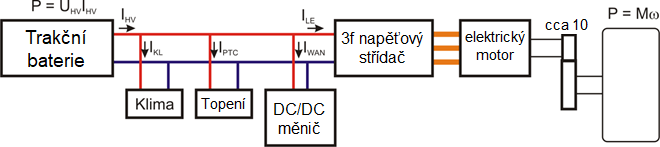
- Electric motor is powered by a three-phase voltage inverter.
- Inverter is connected to the traction battery on its DC side (usually 400 V, now up to 800 V).
- Connection is secured by a switch (usually activated after turning the key).
- Standard on-board supply voltage is provided by a standard lead car battery.
- The 12 V battery is charged from the traction battery via a step-down DC / DC converter with galvanic isolation.
- The DC / DC converter is usually integrated in the traction converter chassis.
- The whole system is completed by an on-board charger for charging the traction battery from the AC supply.
- The speed of the electric motor to the axle is usually ensured by a single-stage gearbox (reducer).
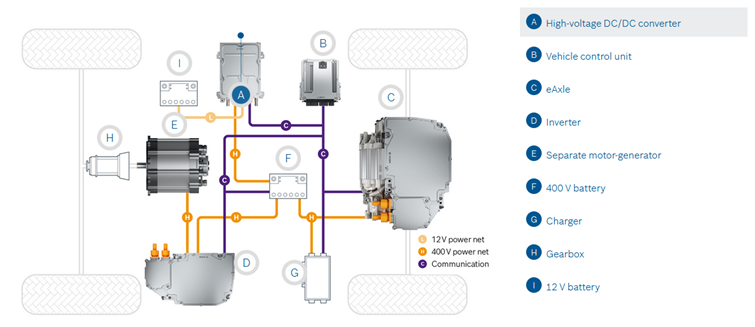
Layout of electric car components - Bosch system
3. Alternative layout
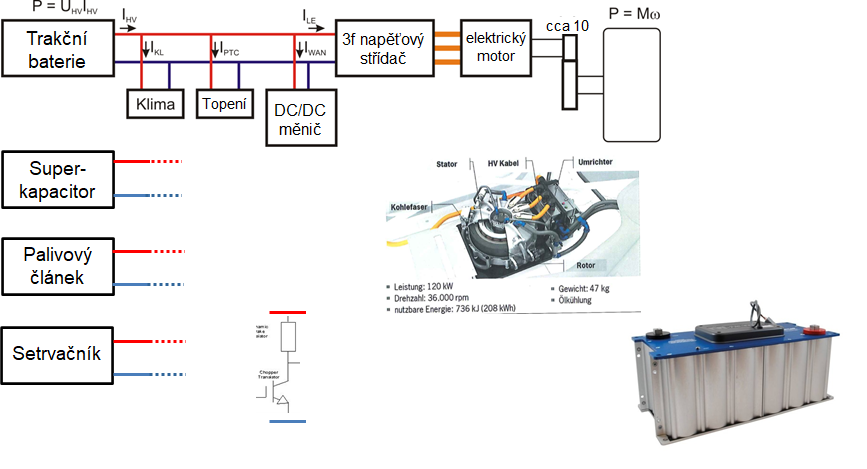
https://maxwell.com
4. EV braking methods
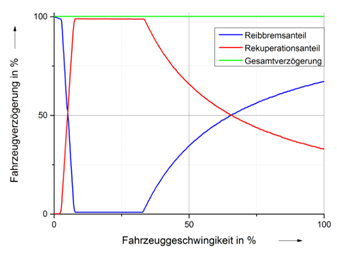
- Recuperation (battery charging, alternatively brake resistor, supercapacitor, flywheel)
- Mechanical brakes
- Most often a combination of recuperation (battery charging) and mechanical brakes
- Recuperation braking, when recharging the battery, depends on the BMS - SoC state, temperature and cell voltage (balancing), the maximum charging current, which differs fundamentally from the magnitude of the discharging current (eg 10C when discharging, but only 1C when charging).