Communication and visual impairment
| Sitio: | Moodle ZČU |
| Curso: | KPG/CPDI - Communication with people with disabilities |
| Libro: | Communication and visual impairment |
| Imprimido por: | Nepřihlášený host |
| Día: | domingo, 8 de noviembre de 2026, 17:40 |
1. How can visual impairment affect interpersonal communication
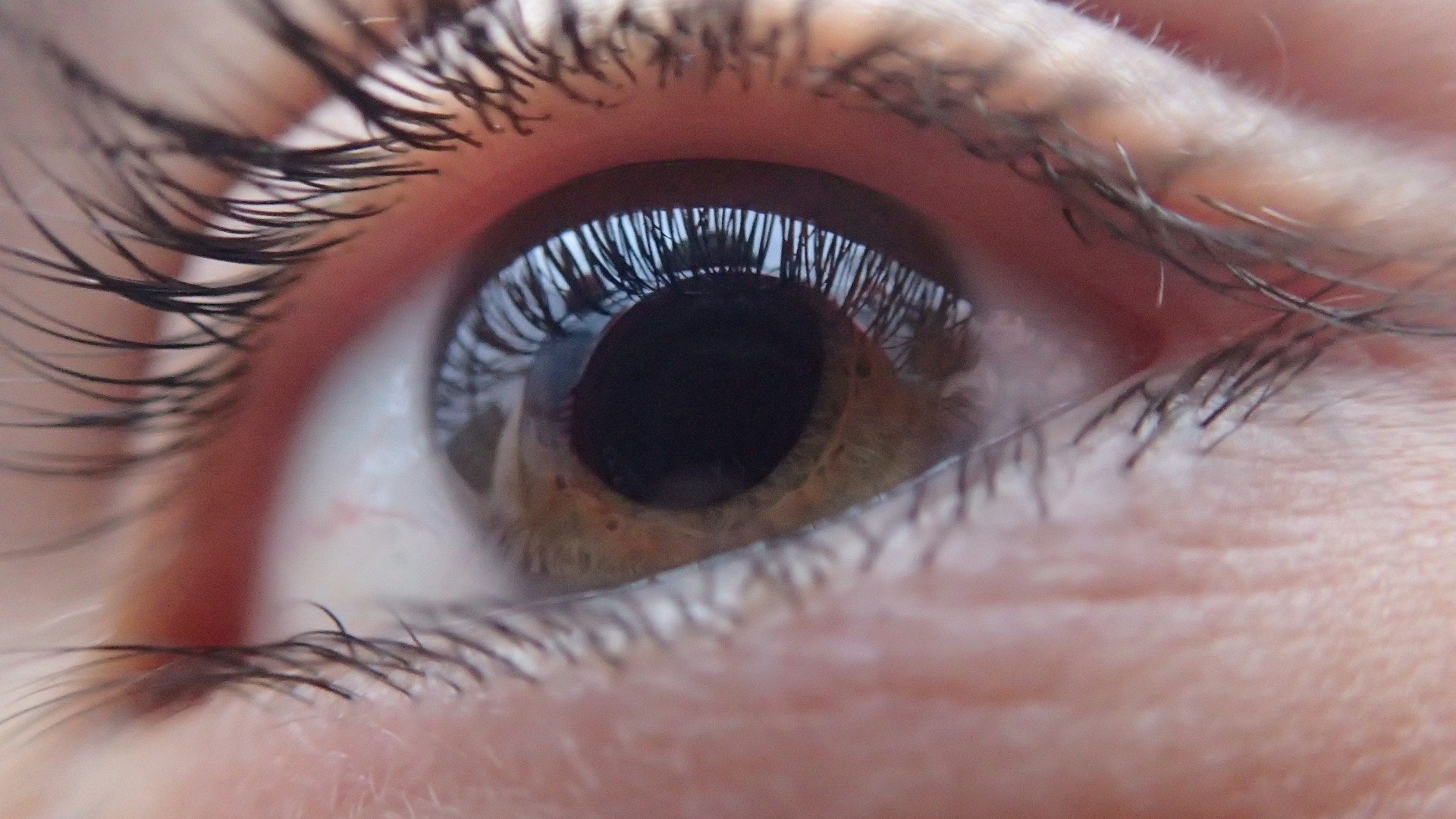
Visual impairment means a lost of part or all of our ability to see (or vision). The impairment must persist even with the use of eyeglasses, contact lenses, medication, or surgery. There can be a lot of causes of visual impairment, such as:
- uncorrected refractive errors
- cataract
- age-related macular degeneration
- glaucoma
- diabetic retinopathy
- corneal opacity
- trachoma.
According to WHO International Classification of Diseases 11 (2018), it can be sorted in the following categories:
The time when the impairment occurred also plays an important role in communication. If one lost his/her sight during the life, he/she has probably got a previous visual experience, which is important not only in terms of orientation skills, but also in terms of acquired communication skills. Visual perception (monitoring, visual orientation, etc.) strongly affects the ability of social learning, which is extremely important in interpersonal communication. Therefore, in children with congenital severe visual impairment is essential to start a professional care and support (mostly provided by Early Care Centers) on time, so that the initial development of communication could be supported (reduced vision often results in a low motivation to explore the environment, initiate social interaction, and manipulate objects; the limited ability to explore the environment may affect even early motor development).
Some visual impairments also affect such functions as color discrimination, spatial vision, adaptation to light intensity or control of eye movements. Even in the case of relatively good visual acuities may specific manifestations of these defects have a significantly negative impact on interpersonal communication because they disrupt visual contact and may lead to certain misunderstandings.
(www.pexels.com)
2. Communication strategies with visually impaired people
Some visually impaired people can partly use their eyesight at least in interpersonal communication, while blind people can not.
Most visually impaired perons use corrective and compensatory aids (strong glasses, magnifying glasses, etc.); however, depending on the intensity of their impariment, we must take into account that they still are not able to visually capture everything what others can see. Therefore they may no longer register correctly our gestures and facial expressions, as well as all distant subjects which we should describe to them in details.
When meeting people with severe low vision (or a blind), it is appropriate to say hello and touch the person lightly (preferably on his/her forearm), so that the person was sure that we were talking to her/him and he/she was able to locate more accurately our position. We must let him/her know if we are leaving, as well!
During our conversation, the light should fall on our face, so that visually impaired person can better follow our gestures and facial expressions (and not to be dazzled by direct light at the same time).
When writing in communication, it is necessary to use strong contrasts (dark marker with strong footprint on white paper), and it is recommended to write on rather large print.
Communicating effectivelyAccording to "Vision Australia (https://www.visionaustralia.org/information/family-friends-carers/communicating-effectively) When speaking with a person who is blind or has low vision, be yourself and act naturally. You should also consider the following tips:
|
3. Compensation in communication
Many visually impaired people use various compensatory aids, like:
- Computer adaptations
- Braille translation software and equipment (converts print into braille and braille into print)
- Braille printers (connects to a computer and embosses braille on paper)
- Screen readers (converts text on a computer screen to audible speech)
- Screen enlargement software (increases the size of text and images on a computer screen)
- Refreshable Braille display (converts text on computer to braille by an output device connected to the computer)
- Adaptive devices:
- Braille notetakers (lightweight electronic note-taking device that can be connected to a printer or a braille embosser to produce a printed or brailled copy)
- Optical character readers (converts printed text into files on a computer that can be translated into audible speech or Braille with appropriate equipment and software)
- Special (audio/talking/with voice output) devices, like watches, thermometers, calculators etc.
- Optical devices:
- Electronic or optical magnifiers (enlarge an image to a larger size and projects it on a screen)
- Telescopes: used to view distant objects
etc.
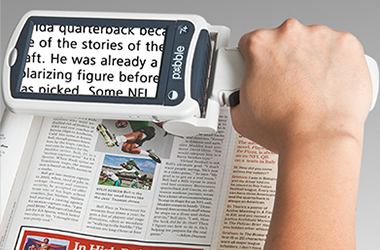
(E-magnifier - https://cz.pinterest.com/patnewbalance/)
The visually impaired person should always be allowed to approach the information boards as close as possible, and all important items (such as merchandise in a store) should be available as well for them to take in hand and check by touch. We also have to take in account that these people need usually more time for reading and space orientation.
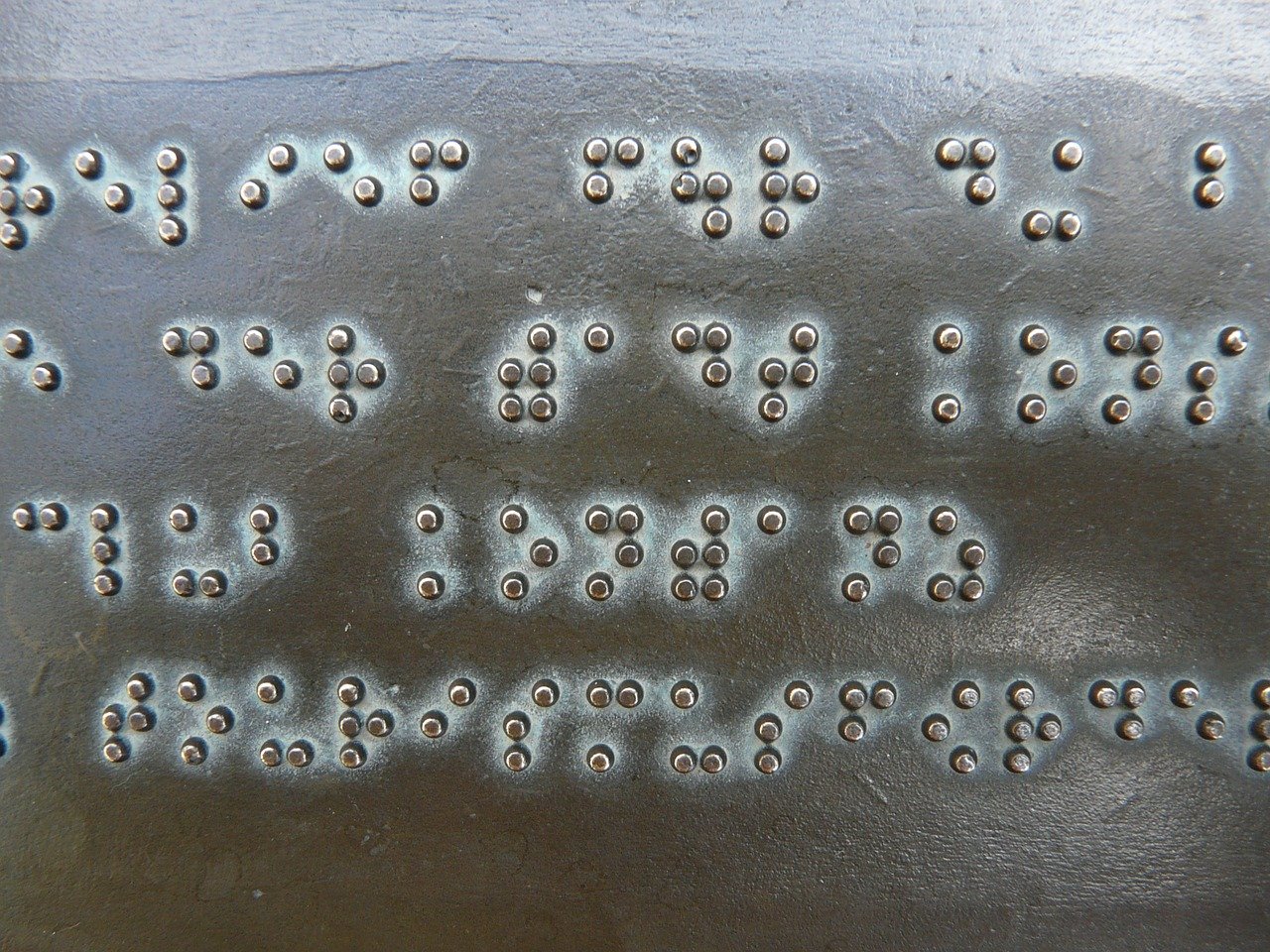
(Braille writing - pixabay.com)
4. What to do and what not to do...
Important points summary
- The one who has a better eyesight should be more active in interpersonal communication.
- Sound and voice are more important than gestures and facial expressions.
- For a blind person, we should describe everything important around us.
- Never manipulate with a blind person, you can only offer your help.
- If a blind person is accompanied by a dog, do not disturb the dog (he is just working as an "assistant"), however let the dog to enter everywhere with the blind person.
- Avoid noisy environments when communicating with a visually impaired person.
- Blind people sometimes need to be accompanied (leadede and assisted) by a sighted person.
Watch the video and notice some usual mistakes in comminication/contact with visually impaired persons: |