Week Seven
| Sitio: | Moodle ZČU |
| Curso: | UJP/AST6 Anglický jazyk pro Fakultu strojní 6 - šablona |
| Libro: | Week Seven |
| Imprimido por: | Nepřihlášený host |
| Día: | domingo, 8 de noviembre de 2026, 21:46 |
Descripción
Information.
Introduction
In engineering professions, you will be asked to write reports on, for example, project results, research results, experiment results, etc. This week we will look at a report structure and some language used for writing it.
Outcomes:
After this unit, you will:
- understand the structure of a technical report,
- use the correct language in the report.
Tasks and Dates
This unit consists of four activities. In the first activity you will find out what a technical report is. You will also learn about the parts/sections of a report. After that you will read a short text and find the correct heading for each paragraph. Then you will be asked to complete a reading comprehension exercise. Finally, you will write a contents, introduction, summary and conclusions for a technical report.Activity One
1. Read the short description below. What does it describe? Complete the two gaps. Then check your answers in QUiZ 7.1
Technical ____________________ are today a major source of scientific and technical information and they are often prepared for sponsors of research projects.
A ___________________ describes a study, investigation or project. Its aim is to provide recommendations and updates. It should be as long as necessary and as short as possible.
2. Now, read the information below. Match the items on the left with their descriptions/explanations on the right. Check your answers in QUIZ 7.2
| Section |
| |
| 1. Title page | a) Any further material which is essential for full understanding of your report (e.g. large scale diagrams, computer code, raw data, specifications) but not required by a casual reader. | |
| 2. Abstract | b) Details of published sources of material referred to or quoted in the text (including any lecture notes and URL addresses of any websites used. | |
| 3. Contents | h) A summary of the whole report including important features, results and conclusions. | |
| 4. Introduction | g) Must include the title of the report. | |
| 5. Body of the report | c) Numbers and lists all section and subsection headings with page numbers. | |
| 6. Conclusion |
| |
| 7. References | f) A short, logical summing up of the theme(s) developed in the main text. | |
| 8. Appendices | e) Presentation of the ideas, divided into numbered and headed sections. These sections separate the different main ideas in a logical order. |
Activity Two
Read the text and find the correct heading for each paragraph. Check your answers in QUIZ 7.3
CONTENTS, REFERENCES, CONCLUSION, INTRODUCTION, BODY OF THE REPORT, TITLE
1. _____________________________________
With the rise in global warming and increasing pollution levels, it is becoming essential to find a viable alternative to the internal combustion engine petrol powered car.
The aim of this project is to create a flying car, the main criteria being environmental friendliness in terms of both emissions and materials. The car should be able to fly as well as move on the ground. This report presents the design for a flying car, including the following components: engine, fuel, wings, wheels, accessories, safety features and materials. A description of the design and an analysis of operational efficiency for the flying car are followed. Finally, advantages and disadvantages of the car are listed.
2. ______________________________________
A design of a flying car have been presented and discussed in this report. The design is simple and very environmentally friendly. Light composite materials are used for the car body. Composites with very special properties are used for the car engine, which is powered by oxygen. The flying car is able to take of at the speed of 5km/h. The maximum speed of the car is 400 km/h. However, a big disadvantage is the length of the manufacturing process and the final cost of the car. Based on the research, we recommend that, the two disadvantages are analysed more in depth before the final decision is made.
3. ______________________________________
1. Introduction………………….………………3
2. Car engine …………………………………...4
1.1 Materials …………………………...6
3. Conclusion …………………………………13
References …………………………………….16
Appendices ……………………………………18
4. ______________________________________
2. Car engine
2.1 Materials
The cylinders are made of a composite material which is very light and strong. The material can also withstand very low temperatures. This property is particularly important for the design …
5. ______________________________________
Glendinning, E.H. (1973) English in mechanical engineering, Oxford, Oxford University Press.
6. ______________________________________
Flying car
By Martin McDonald and Lisa Brown
January 2010
Activity Three
1. Read the text again answer the questions and decide whether the statements are true or false. Check your answers in QUIZ 7.4
1) What is the aim of the report? _________________________________________________
2) Introduction deals with the results. T x F
3) The report does not mention the manufacturing costs. T x F
4) What is suggested in the conclusion ____________________________________________
5) When was the cited book published? ____________________________________________
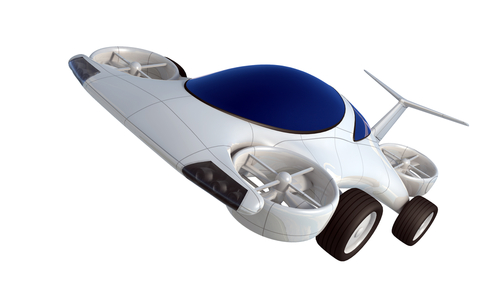
With the rise in global warming and increasing pollution levels, it is becoming essential to find a viable alternative to the internal combustion engine petrol powered car.
The aim of this project is to create a flying car, the main criteria being environmental friendliness in terms of both emissions and materials. The car should be able to fly as well as move on the ground. This report presents the design for a flying car, including the following components: engine, fuel, wings, wheels, accessories, safety features and materials. A description of the design and an analysis of operational efficiency for the flying car are followed. Finally, advantages and disadvantages of the car are listed.
A design of a flying car have been presented and discussed in this report. The design is simple and very environmentally friendly. Light composite materials are used for the car body. Composites with very special properties are used for the car engine, which is powered by oxygen. The flying car is able to take of at the speed of 5km/h. The maximum speed of the car is 400 km/h. However, a big disadvantage is the length of the manufacturing process and the final cost of the car. Based on the research, we recommend that, the two disadvantages are analysed more in depth before the final decision is made.
1. Introduction………………….………………3
2. Car engine …………………………………...4
1.1 Materials …………………………...6
3. Conclusion …………………………………13
References …………………………………….16
Appendices ……………………………………18
2. Car engine
2.1 Materials
The cylinders are made of a composite material which is very light and strong. The material can also withstand very low temperatures. This property is particularly important for the design …
Glendinning, E.H. (1973) English in mechanical engineering, Oxford, Oxford University Press.
Flying car
By Martin McDonald and Lisa Brown
January 2010
2. Now study the language of reports, find and underline some examples in the text.
Introduction
The aim of this report is to …
The purpose of this report is to …
This report presents …
In this report we review …
Recommendations and conclusions
In conclusion,
…A is recommended as it …
We recommend …
Based on the research, we recommend that …
The main recommendations are
Activity Four
Use the notes below to write a short report on two car designs. Write the title, list of contents, introduction, summary, and conclusions for the report. Copy your report to forum 7.5
Two possible car designs
Flying car and solar car
Background: high level of pollution, longer distances, expensive petrol, increasing demands of commuters on comfort and speed
Criteria:
- Materials
- Shape
- Manufacturing method
- Manufacturing costs
- Efficiency
Include:
- Sketches
- Calculations
- Time scale
Comparison:
- Engines in both designs are very effective
- Design 1 – higher manufacturing costs
- Design 2 – higher running costs
Recommend:
- Design 1 recommended
- Design 1 – higher manufacturing cost
- More durable
- Lower running costs