Traction battery modeling
| Sitio: | Moodle ZČU |
| Curso: | KEV/EMB Elektromobilita - podklady k výuce |
| Libro: | Traction battery modeling |
| Imprimido por: | Nepřihlášený host |
| Día: | lunes, 9 de noviembre de 2026, 03:16 |
1. Electrical properties and modeling
Several types of battery models can be distinguished:- Electric model (SoC)
- Temperature model
- Aging model (SoH)
- …
- From an electrical point of view, the battery is a source with significatn internal resistance, ie. the voltage drops under load.
- As the voltage drops, the power consumption decreases.
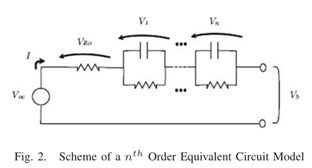
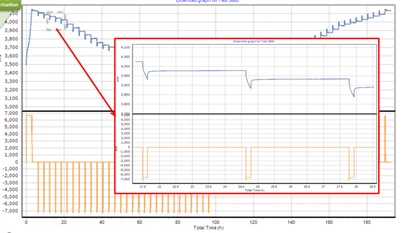
1.1. Electric model
- The electric model helps to determine the SoC or SoH.
- Determination of SoC from simple voltage measurement is practically impossible!
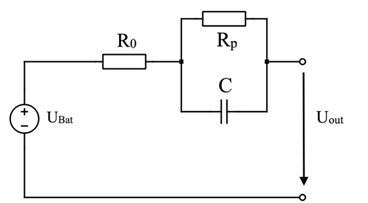
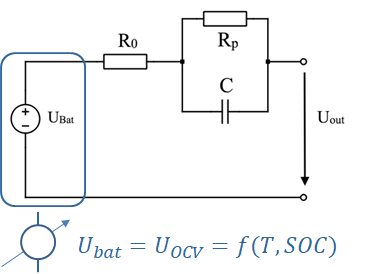
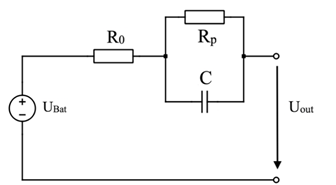
- The 1st order model provides sufficient accuracy if the parameters are f (T, SoC).
- The internal resistance R0 is critical.
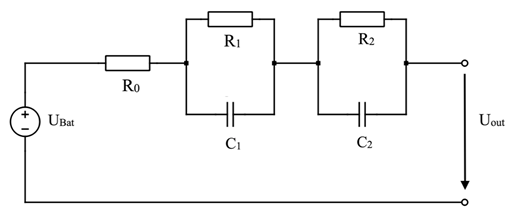
- RC cells model the dynamic processes under load and unloading of the cell.
First order Thévenin model
Second order Thévenin model
1.2. Open circuit voltage
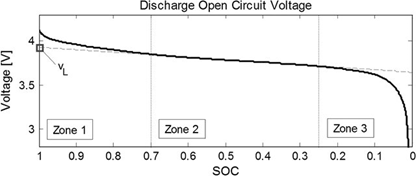
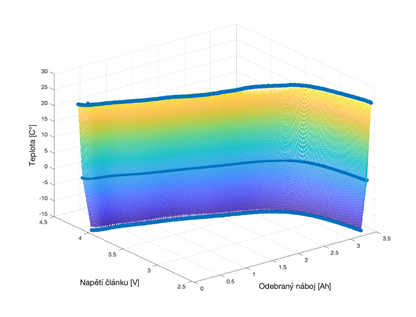
- The open circuit voltage (OCV) curve is the dependence of the steady voltage (without the effect of the drop on the internal resistance, etc.) on the state of charge of the cell.
- OCV measurement is time consuming - stabilization of voltage after loading in the order of tens of minutes.
- Alternatively, it can be determined from the discharge with a very small constant current, but R0 and T are biased.
OCV (open circuit voltage) curve of Li-ion cell
OCV change depending on temperature and SoC
1.3. Parameter identification
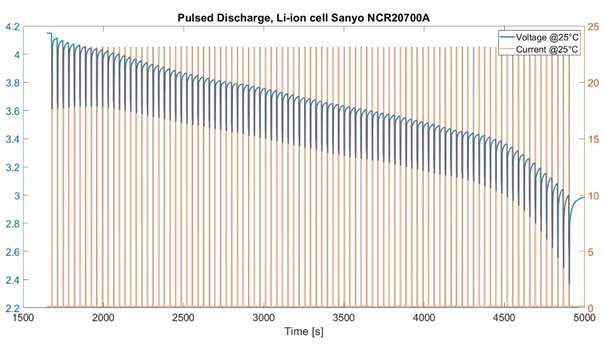
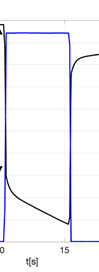
- Determination of parameters using discharge characteristics during pulse discharge.
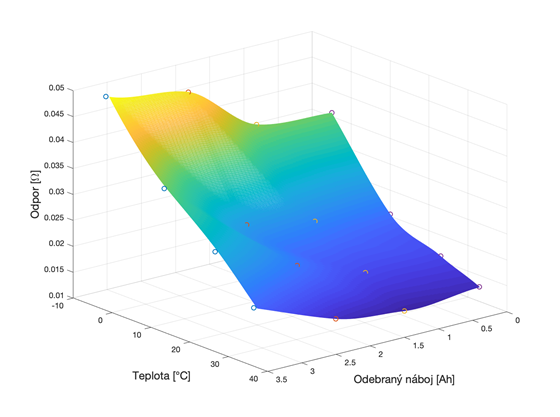
- Dependences of parameters on state of charge and temperature: R, C = f (SOC, T).
Discharge characteristics of the cell during pulse discharge with a current of 23 A at a temperature of 25° C
- Internal resistance is a key parameter of the battery.
- It causes a voltage drop.
- It affects the efficiency of charging and discharging, i.e. losses and range.
- Heavily dependent on temperature - huge differences between summer and winter operation of electric cars!
Current pulse load of the cell
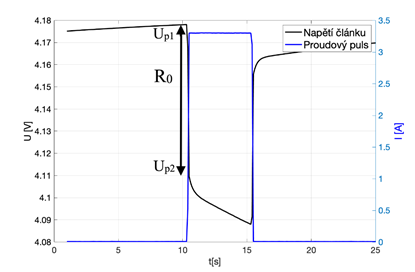
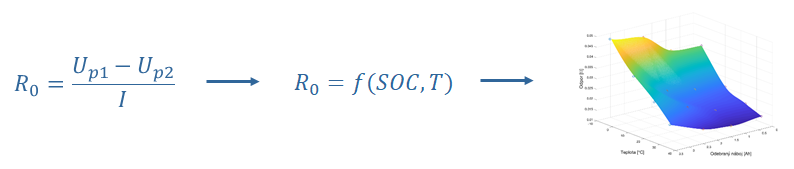
Identification of internal resistance R0 depending on temperature and SoC
1.4. Parameter identification II
Determination of RC cell parameters
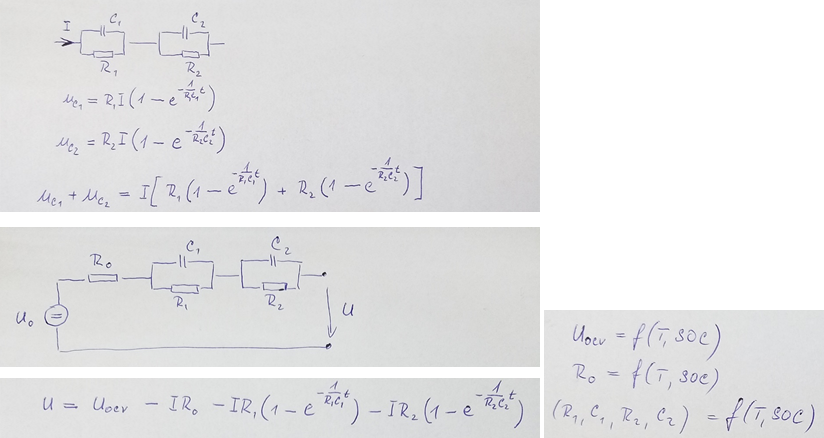
Thévenin models of first and second order
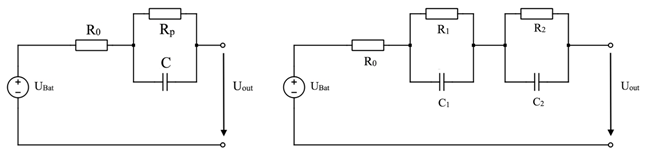
First vs. second order model
- The voltage stabilization transient does not correspond to a single exponential function → better modeled by a combination of two or more exponential functions.
- On the other hand,
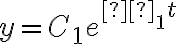 is an unambiguous problem => the dependence of R1 and C1 on T and SOC can be determined.
- Instead,
 there is no unambiguous problem, ie. more combinations R1, C1, R2, C2 lead to the same curve => very problematic determination of dependence on T and SOC.
- However, the first-order model provides sufficient accuracy.
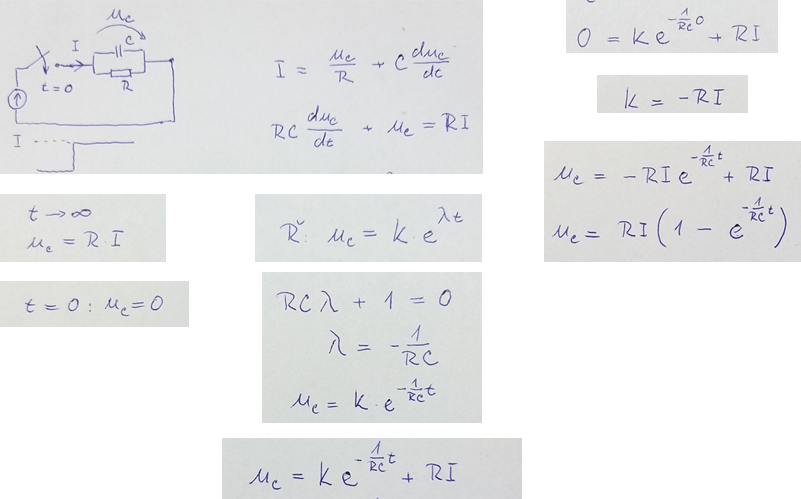
Derivation
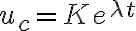 .
 from where lambda equals -1 / RC and add it to the general solution.
For a particular solution, we use a steady state, where the voltage across the capacitor equals the resistance drop, i.e.
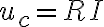 . So we get the solution

 .

1.5. Identified model
RC cell parameters for the first order model
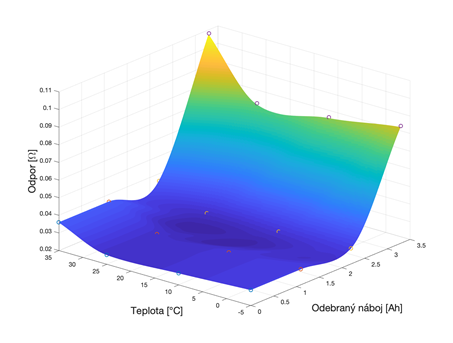
Identification of resistance Rp (RC cell) depending on temperature and SoC
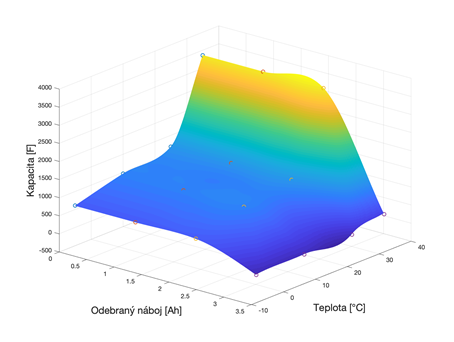
Identification of capacity C (RC cell) depending on temperature and SoC
Outputs of the first order model
- All parameters are dependent on SOC and T, including
 .
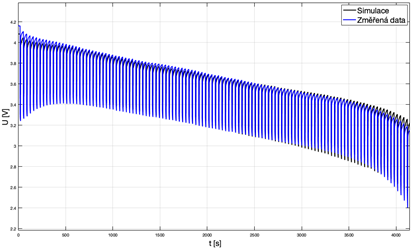
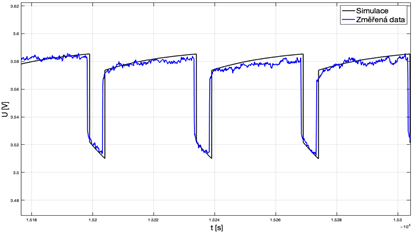
Comparison of measured values and outputs of the identified 1st order model