
Topic 5: Colonialism and Knowledge
Section outline
-
Week 5, students will learn about the production of knowledge and technological advancement as necessary part of colonial/imperial history of Europe and its interaction with and understanding of non-European societies.
-
-
Write a short essay (1000 words) on the impact of colonialism on languages and production of knowledge. How different is the world today from the world in, say, 15th century in terms of production of knowledge and use of languages?
-
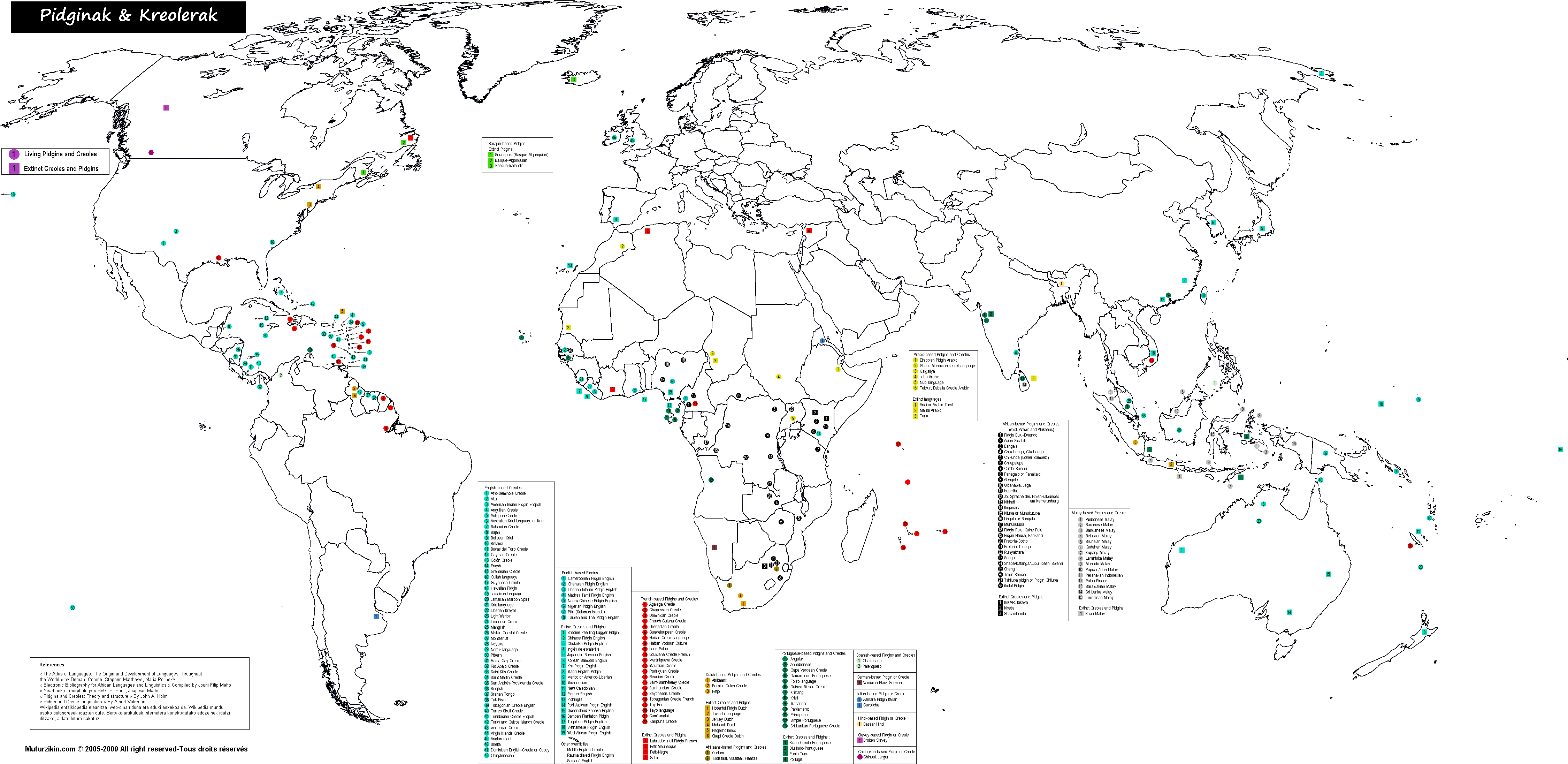
Pidgins and creoles have usually been named after
(1) their lexifier language, i.e. the language that provides most of the vocabulary. This is often the language of a European colonizer such as English or Spanish. Accordingly, when we speak of English-based pidgins and creoles, we mean all those contact languages whose lexifier language is English. Likewise, there are for instance Spanish-based, French-based or Dutch-based pidgins and creoles.
(2) The names for pidgins and creoles usually denote their geographical location, i.e. the place where they are spoken.
Thus, we find such names as Chinese Pidgin English, Hawaiian Creole English or West African Pidgin English.
-
Watch the movie Blood Diamonds featuring Leonardo di Caprio and try to figure out where he uses English and where Pidgin West African English.