KBS/1CODG - Kolonialismus a postkolonialismus - Šablona
Osnova sekce
-

ESF II project of University of West Bohemia
reg. number: CZ.02.2.69/0.0/0.0/18_056/0013239
1CODG - Colonialism and Postcolonialism
This work is licensed under a Creative commons 4.0 BY-SA license
Dear students,
welcome to the course on Colonialism and Postcolonialism!

-
-
Colonialism and Postcolonialism course is based on a multidisciplinary perspective, with an emphasis on heritage of the European colonialism in various corners of the world. The students will develop critical thinking in historical processes which helped to form the world today with all its varieties including social and political organizations, globalization, linguistic hegemony of the West, and postcolonial structure of the world outside Europe.
-
The aim of the course is to offer a colorful picture of the phenomena of colonialism and postcolonialism. Students will broaden their knowledge in a variety of topics such as: colonialism and production of knowledge, colonialism and literature, construction of racial cate-gories, colonialism and ethnography, colonialism and gender, sexuality, social and ethnic inequalities, nationalism as a reaction on colonialism, postcolonialism in broader perspective, modernity, Empire, and culture in postcolonial environment, globalization and postcolonialism, and the future of postcolonial studies.
-
Jan Záhořík is an Africanist/social scientist specialized in the history and politics of the Horn of Africa. He is an associate professor of modern history, and his research focus includes modern and contemporary history and politics of Ethiopia and the Horn of Africa; relations between former Czechoslovakia and Africa; mobility and migration; European-African relations; Cold War in Africa; conflicts in Africa; socio-economic development in Africa (with particular focus on Ethiopia and East Africa); terrorism and security.
Since 2006 Jan Záhořík has conducted research during multiple stays (50 in total) in Ethiopia ranging from 2 weeks to 6 months; minor research or academic stays include Rwanda, Burundi, Sudan, Morocco.
-
Students are required to write a long essay (10 pages, 1,5-spacing excluding cover page and references) based on a topic discussed with the instructor the first week of the semester. The deadline is the last class of the semester. The list of essay out of which the students will select their topics will be made available by the instructor the first week of the semester.
-
Final Exam will be composed of materials covering the whole semester (lectures, readings, and related issues), the exact format of the exam will be announced two weeks before the exam date.
-
-
In the first week, students will learn about various theoretical approaches to the study of colonialism, imperialism, and postcolonialism, about various definitions of the phenomena, as well as about major sources to study them.
-
Loomba, Ania. Colonialism/Postcolonialism. New York: Routledge, 2015.
Loomba, Ania. Shakespeare, race, and colonialism. Oxford : Oxford University Press, 2002.
-
-
Explain the following terms and be ready for discussion in the class:
1) Colonialism
2) Imperialism
3) Postoclonialism
4) Culture
5) Nation
Try to find as many definitions as possible, use the internet and all available sources.
-
-
Week 2, students will learn about major historical periods of colonialism and imperialism, various interpretations of events, as well as major figures.
-
Loomba, Ania. Colonialism/Postcolonialism. New York: Routledge, 2015.
Loomba, Ania. Shakespeare, race, and colonialism. Oxford : Oxford University Press, 2002.
-
-
Write a short essay (1000 words) about the movie. What have you learned? What kind of impact did colonialism have on places such as Congo?
-
PPT deals with basic terms such as colonialism, imperialism, postcolonialism. It serves as the basis for further discussions in the class.
-
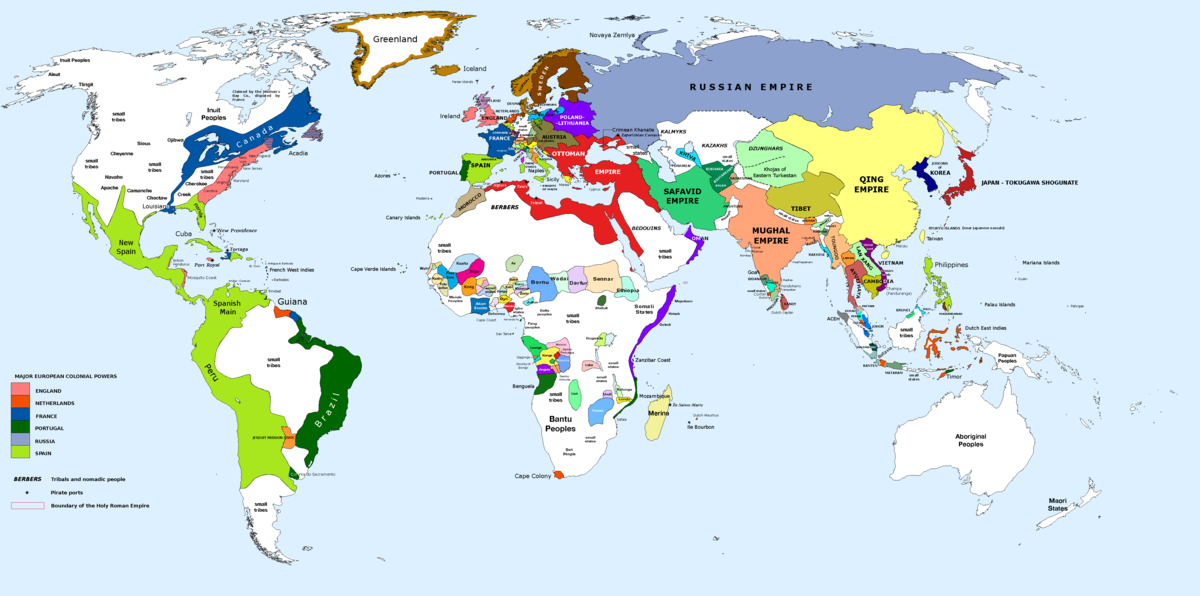
Take a look at the map. For the class, prepare an overview of empires which you can remember, including their geographical setting, lenght of their existence, and try to find out the reasons why some empires reached a global status while some others did not.
-
PPT deals with basic terms such as colonialism, imperialism, postcolonialism. It serves as the basis for further discussions in the class.
-
-
Week 3, students will learn and discuss about historical trajectories of racism, various forms of racial violence, stratification and politics of difference.
-
Loomba, Ania. Colonialism/Postcolonialism. New York: Routledge, 2015.
Loomba, Ania. Shakespeare, race, and colonialism. Oxford : Oxford University Press, 2002.
-
-
Go through and try to complete the crosswords puzzle and prepare a short overview of each correct answer so that you are ready for discussion in the class.
-

Try to find out as many definitions of races as possible by using the internet and all oter available sources and try to come up with as many contradictions in racial thoeries as possible - in your own words. Be ready for discussion in the class.
-
-
Week 4, students will learn and discuss about historical trajectories of racism, various forms of racial violence, stratification and politics of difference.
-
Loomba, Ania. Colonialism/Postcolonialism. New York: Routledge, 2015.
Loomba, Ania. Shakespeare, race, and colonialism. Oxford : Oxford University Press, 2002.
-
-
On the following slides, you may find basic terms regarding the construction of colonial and postcolonial identities, the process of formation of ethnic groups and nations in the colonized world, sexuality, hybridity, postcoloniality, and other key terms related to colonialism and postcolonialism.
-
For the next class, read one fiction (novel) related to colonialism and colonial world (e.g. Conrad, Naipaul, Achebe, Ngugi, etc.) and make an overview of the work, relate it to what you have learned in the class and to what you have read in the readings. Be ready for discussion with the classmates and an instructor.
-
-
Week 5, students will learn about the production of knowledge and technological advancement as necessary part of colonial/imperial history of Europe and its interaction with and understanding of non-European societies.
-
-
Write a short essay (1000 words) on the impact of colonialism on languages and production of knowledge. How different is the world today from the world in, say, 15th century in terms of production of knowledge and use of languages?
-
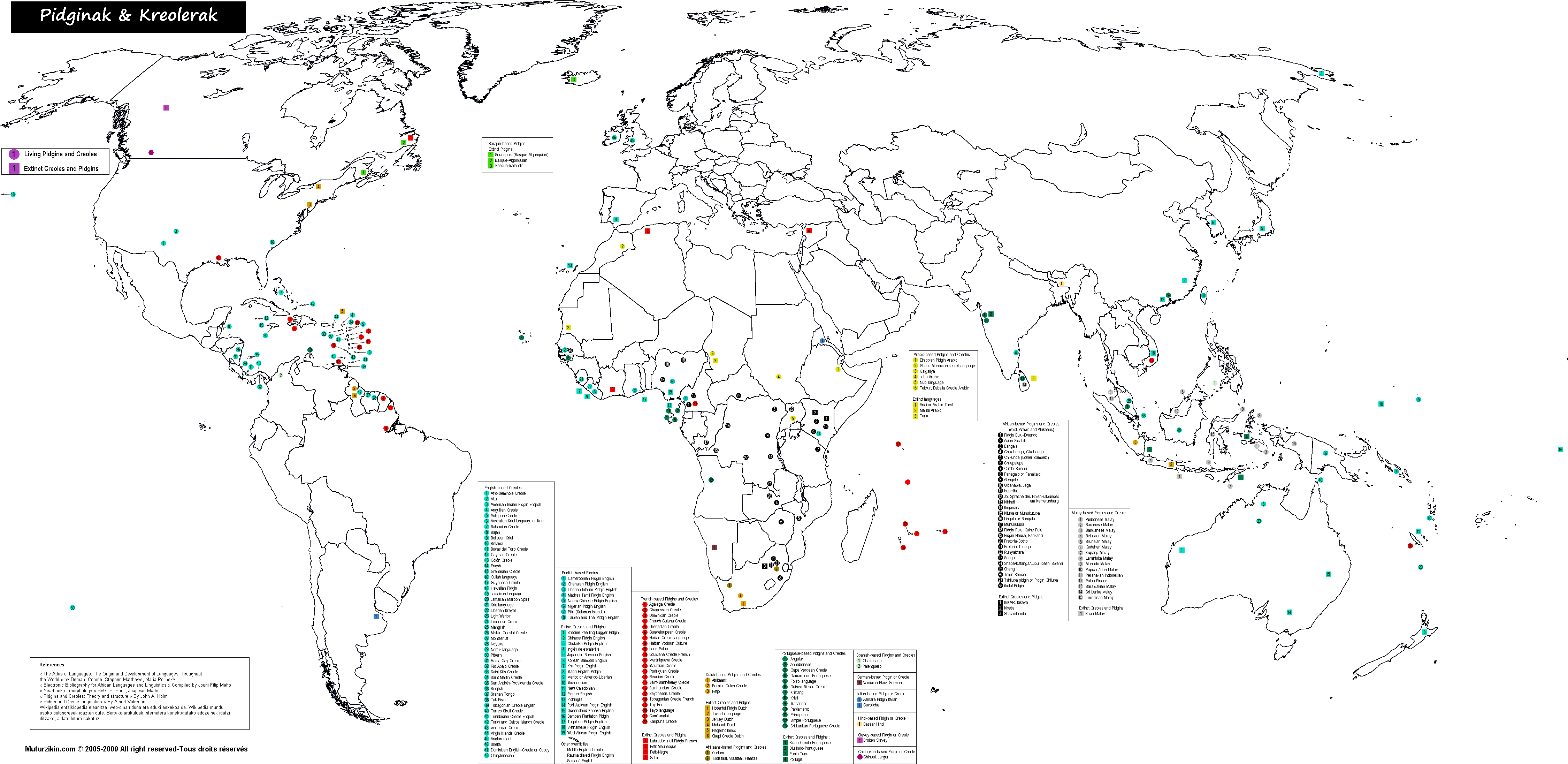
Pidgins and creoles have usually been named after
(1) their lexifier language, i.e. the language that provides most of the vocabulary. This is often the language of a European colonizer such as English or Spanish. Accordingly, when we speak of English-based pidgins and creoles, we mean all those contact languages whose lexifier language is English. Likewise, there are for instance Spanish-based, French-based or Dutch-based pidgins and creoles.
(2) The names for pidgins and creoles usually denote their geographical location, i.e. the place where they are spoken.
Thus, we find such names as Chinese Pidgin English, Hawaiian Creole English or West African Pidgin English.
-
Watch the movie Blood Diamonds featuring Leonardo di Caprio and try to figure out where he uses English and where Pidgin West African English.
-
Week 6, students will learn about the impact of colonialism on sexuality, gender issues, and violence, aas well as theoretical approaches to the study of these phenomena.
-
Loomba, Ania. Colonialism/Postcolonialism. New York: Routledge, 2015.
Loomba, Ania. Shakespeare, race, and colonialism. Oxford : Oxford University Press, 2002.
-
-
Try to find out as many articles as possible that are related to sexual violence as means of war and conflict in modern and contemporary history. Be ready for discussion in the class.
-
-
Students will be informed long in advance about the structure and format of the midterm exam, which will be composed of the first 6 weeks' lectures, seminars, and readings.
-
Week 8 will show the students the impacts of colonial/imperial past on the rise of nationalist movements as a response to subjugation and as a part of global movements that brought indepednence to the former colonized areas of the Global South.
-
-
-
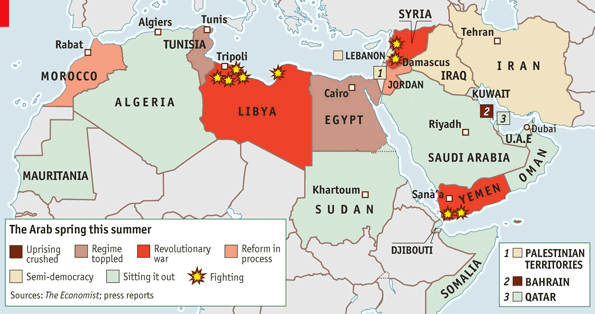
Use all available sources to analyze why some MENA countries neded up in war, some regimes survived the Arab Spring, and some regimes were toppled. What are the common features of all regimes? Be ready for discussion in the class.
-
This power point gives you an overview on cultural imperialsim and related issues which you may find useful for further debates in the class.
-
Try to complete the attached crossword puzzle and be prepared to say a few words on each answer. Be ready for dicsussion in the class.
-
-
Week 9 will show the students the impacts of colonial/imperial past on the rise of nationalist movements as a response to subjugation and as a part of global movements that brought indepednence to the former colonized areas of the Global South.
-
-
-
Write 1000 words as a summary of the movies on nationalism and imperialism. How is, in your own words, nationalism related to anticolonial struggle?
-
-
Week 10 will bring debates over beginnings of postcolonialism, its theoretical roots and contexts, historical trajectories, as well as major figures.
-
-
Write a summary (1000words) on the movies related to postcolonialism and orientalism. What are the major features of both phenomena?
-
For the purpose of class discussion, be prepared for the following questions based on the movies and readings:
How would you define the difference between colonialism and imperialism?
What is postcolonialism?
How would you define Orientalism and who is the author of this term?
Colonialism was associated with racial discourse? How? Any examples?
-
Week 11 will bring debates over beginnings of postcolonialism, its theoretical roots and contexts, historical trajectories, as well as major figures.
-
- Dabashi, Hamid. The Arab spring : the end of postcolonialism. London : Zed Books, 2012.
- McLeod, John. Beginning postcolonialism. Manchester: Manchester University Press, 2016.
-
-
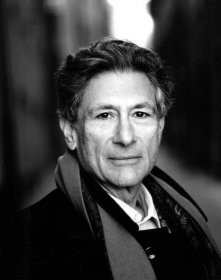
Let us use this opportunity and learn something more about Edward Said. Use all available source to find as many things as you can about his life and his formative years that led him to develop the theory of Orientalism. Try to find out as many information as possible about his followers as well as critics and opponents. Be ready for discussion in the class.
-
-
-
- Dabashi, Hamid. The Arab spring : the end of postcolonialism. London : Zed Books, 2012.
- McLeod, John. Beginning postcolonialism. Manchester: Manchester University Press, 2016.
-
-
-
Thank you for your attention and participation in the course!
-
Dear students!
Thank you for participating in the Colonialism and Postcolonialism course. I do hope you have learned a lot about a multitude of aspects related to colonial past and postcolonial present which you may use in one way or another in your future studies and subsequent careers.
Feel free to contact me in regard to consultations over lectures, seminars, and the final exam.
And good luck!
-
In order to successfully pass the course, students are obliged to write a short reflection on how they would use knowledge and skills gained in the course in practice. The text of your reflection will be uploaded into your protfolio as one of proofs of your participation in the course. The reflection should be composed of at least five sentences. After an approval of your reflection by the lecturer, you will be given an official certificate.