
Topic 1: Africa under Colonial Rule
Osnova sekce
-
Impact of colonialism
The impact of colonialism itself is still until nowadays a matter of passionate debates among various communities of historians who blame each other from Eurocentrism or Afrocentrism. It is not our aim to discuss positives or negatives of the European colonialism in Africa but generally it is indubitable that approximately eighty years of European rule in Africa, creation of colonial systems and principle of inequality between the colonizers and the colonized had a remarkable impact on social and political climate in one way or another. Later, this climate was inherited by the newly independent regimes. Mostly Marxist authors usually depicted European colonialism in Africa as a tool of oppression and exploitation of a black man by a white man.
Similarly significant (with direct psychological and physical impacts) aspects of colonialism included various forms of oppression and violence, manifested by suppression of anti-colonial West African revolts, elimination of the Herero rebellion in former German South-West Africa, or clearly brutal behavior of colonial masters in Congo Free State during Leopold II rule and race for rubber. On the other hand, African states can be taken as successful, because despite all thinkable barriers and obstacles, an African state is a functioning element.
Most of the borders were simply delineated on tables of European governments as a result of the Berlin conference, 1884–1885. There could not be any other solution than creation of artificial entities bringing many questions and a lot of unresolved problems. Despite the fact that most of the state borders in Africa were created artificially, there exist some evidence of how European powers tried to use and reuse existing pre-colonial borders for their purposes, and therefore, it shows the longevity of such borders in time.
Somali speaking peoples were divided into five completely different settings and administrative environments: Ethiopia, French Somaliland (Djibouti today), Italian Somalia, British Somaliland, and the British colony of Kenya. Social and political consequences of the Scramble for Africa have led to the growth of nationalist and separatist movements and tendencies that were legitimized by colonial past (Eritrea, Somaliland).
French colonialism in Africa and its legacies
French colonial system based on a direct rule and direct control over the colonies suggested vast expenditures and energy spent on creation of massive administrative apparatus and involvement of French bureaucrats. Since the end of the 19th century, the French wanted to create an undisrupted Francophone territory that would connect Senegal with the Red Sea and Indian Ocean which was blocked by the British competed plans to connect Cairo with Cape Town and resulted in an almost clash of both armies at Fashoda (1898) in what is now Sudan.
Strategy of the French was based on strengthening of political and cultural dominance in all spheres of African life and society. Due to a long-lasting Anglo-French rivalry and international political and economic superiority of Great Britain, the program of the French colonial policy became a “cultural export” based on assimilation, i.e. spread of French language and culture in newly conquered territories. A part of this was a strategy to educate “loyal” African political elites in order to keep continuity of French dominance in emancipating colonies after the World War II. First presidents of independent African Francophone countries were thus close friends of France and spent at least part of their lives in Paris. Here we can place for instance the first Senegalese President Léopold Sédar Senghor, first President of Côte d’Ivoire Félix Houphouët-Boigny or the first President of Niger, Hamani Diori.
The idea of unification of Francophone colonies in Africa via linguistic and cultural assimilation had to prevent these countries from disintegration experienced by some of the Portuguese or Belgian colonies in the era of early independence. Strong patrimonial relation of the colonial metropole to its colonies was largely manifested by de Gaulle’s government unwillingness to allow any visible liberalization or emancipating mechanisms due to fears of chaotic and quick decolonization. The example of Guinea that voted for independence in 1958 in a referendum offered by France, or of Algeria that in a French collective memory was considered a part of France on Africa soil, show how worried Paris was of losing its power and prestige including economic and cultural significance in Africa. Despite this fact we cannot overestimate French cultural imperialism as only some 15% of people in Francophone Africa speak French while the rest of the population gives preference to local languages.
Shortly after the World War II, the French government came up with the concept of “French Union” under whose shelter the various components were divided into six categories that included the European France, Algeria, old colonies in the Caribbean and four communes in Senegal, new colonies mostly in French Africa, protectorates in Morocco, Tunisia, and Indochina, and mandates in Togo and Cameroon. However, it was not the intention of any of the colonial powers to bring quick decolonization and independence to Africa.
British colonial system and its legacies
The British unlike the French developed (in many of their colonies) the system of indirect rule that did not rely on such financial efforts but obviously affected lives of individuals in the same manner. This was remarkable primarily in “pearls of the British Empire” such as Kenya or Nigeria. However, unlike the French the Brits did not have any desire to assimilate Africans. They allowed Africans many of their traditional institutions as the main aim was economic profit, not cultural dominance. British, or generally European colonialism, owed much to great explorers and personalities such as Cecil Rhodes who in fact established the basis of British imperialism in South Africa. North Rhodesia, named after him, soon became one of the most important components of the British Empire. The richest area was the region along borders with former Belgian Congo that came into being as Copper Belt due to vast deposits of copper and other minerals. However, the British, just like any other imperial power, were rather insensitive to rich and vast cultures and histories of their colonial subjects, and rather portrayed them as the primitive ‘other’
Portuguese colonial system and its legacies
The Portuguese colonial system was based, according to Paul Nugent, on a kind of a social Darwinism, which was derived from a hypothesis that Africans could not contribute to development of society with anything. Portuguese three-stages system of assimilation composed of destruction of traditional societies, infiltration of Portuguese culture and integration of detribalized Africans to Portuguese society remained largely only a theoretical concept. Reality saw unequal system in which the so called assimilados could use certain privileges while natives (indígenas) were taken as second class category of people. If anyone wished to belong to the category of assimilado, he or she had to show adequate knowledge of Portuguese language and prove principles of a civilized life-style. Portuguese control over the colonial possessions and its unwillingness to start the decolonization process led to creation of diverse liberation movements with different ideological and foreign backing, primarily in Angola.
Belgian colonial system and its legacies
In Belgian mandate territory of Ruanda-Urundi, the Tutsi aristocracy was elevated to the role of real rulers of the country and the Tutsis became a privileged society while the Hutu farmers and Pygmies named Twa became officially second class citizens. It was this polarization of the society in which former social categories became fixed ethnic categories which gave Rwanda and Burundi a genocidal character. Tutsis enjoyed relative advantages including wealth, education, and power. Belgian impact on formation of ethnic and even racial categories is indubitable as was the growing demographic rates and overpopulation. At the same time, mythologization of the past and of the ethnic identities came into being during the colonial rule especially under supervision and direct involvement of Catholic Church, having a monopoly on education. Hamitic hypothesis based on anthropological prejudices and racial theories of the 19th century played a significant role in perceiving Africans and Africa in general, as a continent without culture and history, where everything of some civilizing value was brought in by the Hamites, or semi-white people. In Rwanda and Burundi, the Hamitic hypothesis and use and abuse of rich local mythology led to creation of separate races that made further social and political development in both countries very complicated. Here we get to everlasting problems of ethnicity which scholars study from either primordialist, instrumentalist or constructivist positions. Colonialism obviously categorized people into different groups and ethnic groups were taken as given, sort of impermeable entities.
Photo: Jan Záhořík (Niamey, Niger)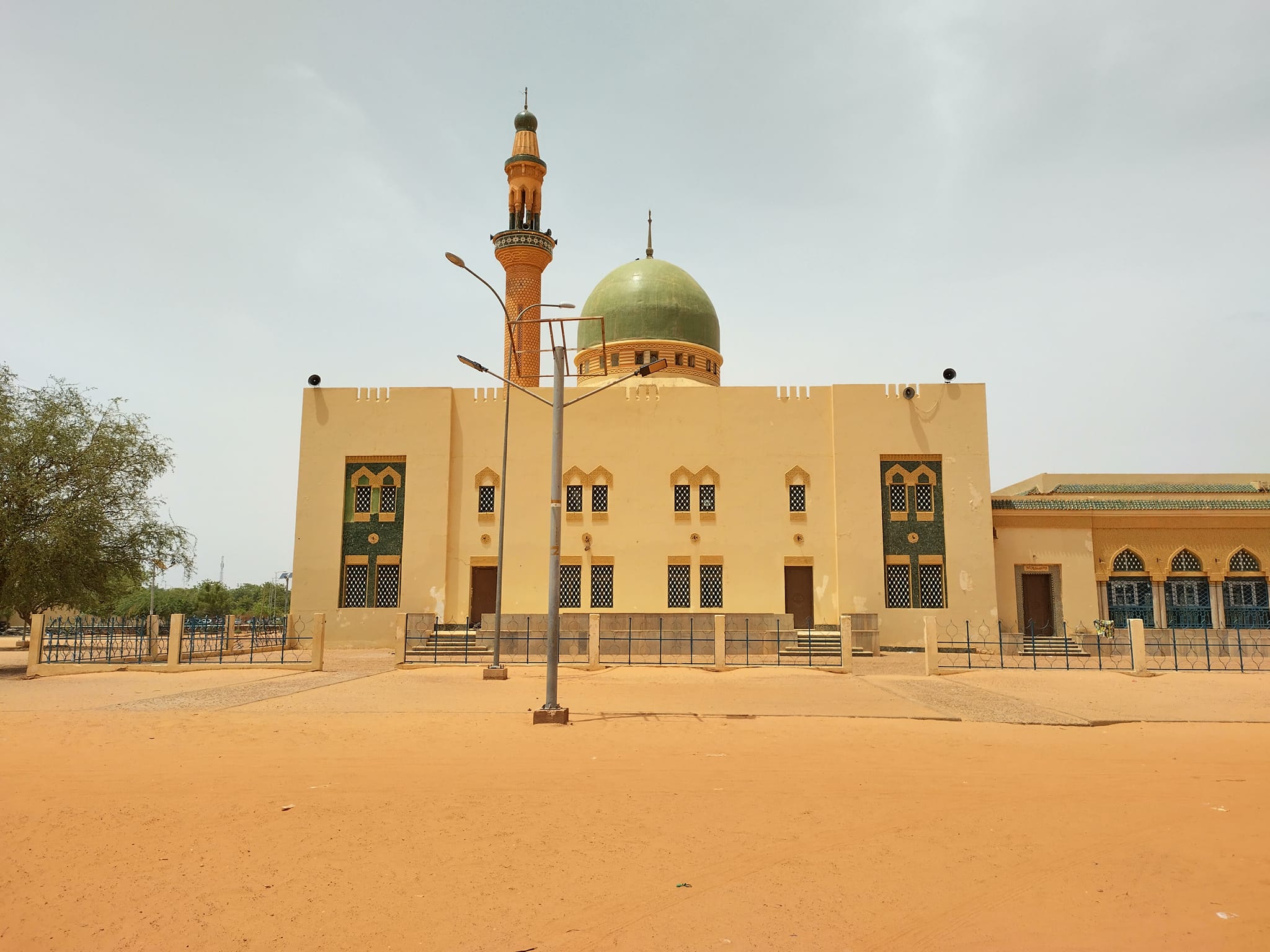
-
-
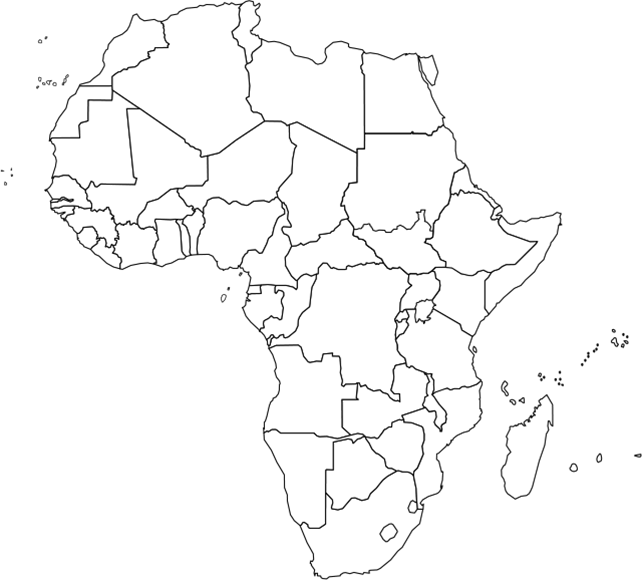
Try to find out the African countries on the blind map, you may color them in different colors if you will.
-
-
After watching the movies, prepare a set of arguments and responses for the following topics/questions that would form a part of the debate:
1) What are the main legacies of colonialism in Africa?
2) Can we blame the post-colonial military/authoritarian/dictatorial rules on colonial legacies only?
3) Should European museums return artifacts back to Africa or shall they be kept safely in the museums as part of global cultural heritage?