
Topic 4: Military Coups and Crises
Section outline
-
First Crises of Early Independence
Soon after the independence euphoria disappeared, many regions in Africa ended up or began to experience their first crises that usually combined local and global affairs and factors. The Democratic Republic of Congo has long served as an example of failed decolonization and fragmented state as a result of Belgian colonial rule that did not do much in order to promote social stability, ethnic equality, and access to education. Therefore, it is not surprising that taking into account enormous natural resource wealth in Congo, the country quickly became one of the main battlefields of the Cold War. The Congo crisis of the early 1960s also saw the first real victim of the Cold War, Patrice Lumumba, democratically elected first Prime Minister of a newly independent Democratic Republic of Congo. Congo is also a perfect example of combination of direct and indirect impacts on the fragility of the state. These include inherited weakness of state institutions undermined by lacking nation-building process that was initiated at the very latest stage of colonialism, ethno-regional discrepancies and imbalances in terms of access to global markets and infrastructure, as well as global contexts of the Cold War in which former colonies became primary “laboratories” of foreign powers’ struggle.
Joseph-Désiré Mobutu played a major role in developments following Congolese independence, although his position remained somewhat covert until the decisive year of 1965. The perpetual crises in the Congo have been explained by some as resulting from the belated decolonization of the country and also by specific conditions that prevented nationalism from becoming fully accepted by the majority of the population; the majority of the population continuing to favor ethnic self-consciousness and thus the fragmentation of the Congo. For a long time, even Belgium supported the idea of a unitary state, only changing its mind and turning to federalism after Lumumba’s victory. Congolese politics were thus very divided, partly between socialism and “capitalism” (i.e. pro-Belgian), and partly between Pan-Africanists and nationalists proposing a unitary state and federalists or separatists tending to seek a weakening of the central government in order to realize their objectives. The achievement of a strong and centralized state, the position supported by socialist countries (the Soviet Union and its allies, including, primarily, Czechoslovakia), was the last thing the Western powers (Belgium, France, the USA) wished to see in the newly independent Congo. At the height of the cold war, Communist infiltration into the Congo was the least desired development for Belgium and thus it developed its neo-colonial strategy in Katanga, which was ended by intervention from the UN. Moïse Tshombe was then to serve as Prime Minister of the central government, but had limited success in consolidating power.
While Lumumba and his followers (later known as Lumumbists) preferred not to be engaged in the neo-colonial and Cold War struggle, their opponents from the pro-Western camp had no objection to receiving support from the former colonial power and fulfilling goals that had been established by Brussels or the CIA. This camp of politicians included, among others, Joseph Kasavubu, Jason Sendwe, Ildephonse Kasengwo and Laurent Kabila (who in 1997 became president after Mobutu’s death). Despite internal problems and Katanga’s secession attempt, it was really a number of external factors that systematically eroded Congolese integrity and sovereignty. Belgium and the USA played the most significant role, but some of the neighboring countries, such as Rhodesia, had a great impact on developments in the Congo as well. Rhodesian representatives sought to engage the Congo in the Federation of Rhodesia and Nyasaland. The UN mission that was supposed to monitor Congolese politics and effect Katanga’s reunification with the Congo did not come about easily. Some of the UN Security Council countries were rather hesitant (France, Great Britain, China) and some (the Soviet Union) were forced to agree with the resolution only as a result of pressure applied by many of the African states.
At the end of August 1960, it was clear that Lumumba had become one of the main threats in the eyes of the Western powers as he continually disagreed with the way the UN was seeking to resolve the Congo crisis. He constantly expressed his disgust at Dag Hammarskjöld, claiming that the UN mission in the Congo represented, in one way or another, only the substitution of “Belgian colonialism by the colonialism of the UN.” The Congo crisis was to unceasingly affect the Congo and the cold war reality up until the end of 1960. It was also the last attempt by Lumumba to completely decolonize the Congo; however, he failed as he was arrested and moved to Elisabethville, with the agreement of Mobutu, Kasavubu and Tshombe. There, he was killed on January 17th during the so-called Operation Barracuda. Lumumba’s elimination very much affected future relations between Mobutu’s Congo and the socialist countries, especially the Soviet Union and Czechoslovakia, which were the most prominent socialist states to involve themselves in the Congo. Lumumba’s assassination was widely covered and criticized in the media worldwide and by the public. Subsequent conflicts in the Congo were not only the result of political and/or ideological clashes between Lumumbists and pragmatists, but had much wider variety of causes.
Photo: Jan Záhořík (Lake Kivu, Rwanda-Congo border)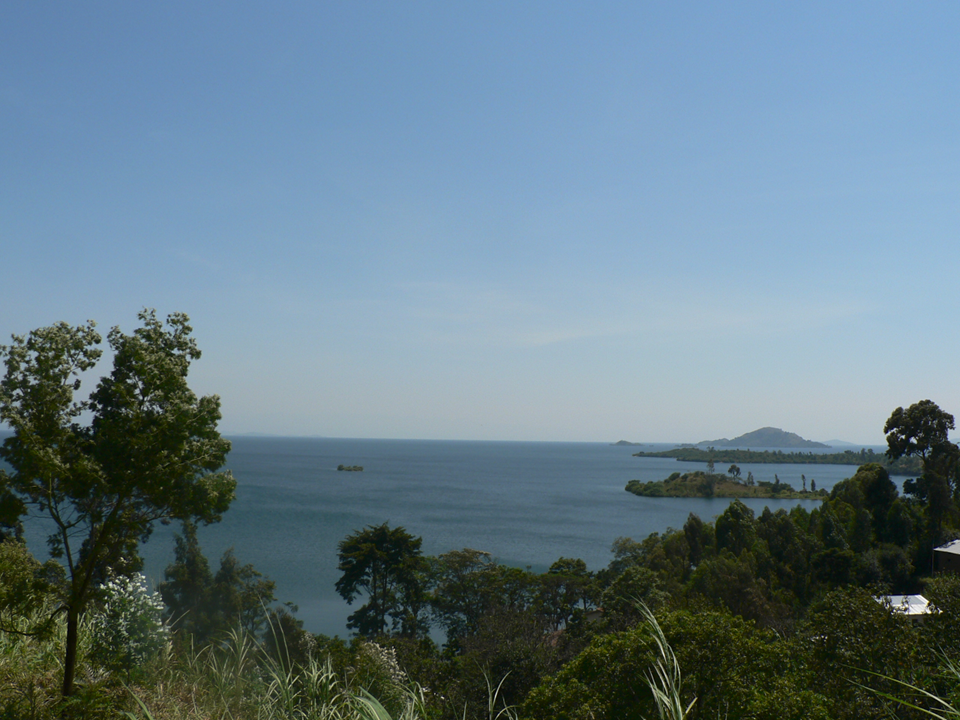
-
-
Prepare, as a homework, a short account/overview of some major military rulers according to your choice so that you are able to talk about them for at least 3 minutes. You may use the documentary movies as an inspiration.
-
After watching the movies and reading the texts, be ready for the discussion over the following topics/questions:
1) Can military rule still have a space in Africa or is it still a relevant alternative to democracy?
2) Why does democracy fail in so many African countries?
3) What is the role of ethnicity (and religion) in the history of military rule or the history of authoritarian/dictatorial rule?