
Topic 5: Post-colonial State and African Socialism
Section outline
-
Postcolonial State in Africa
Majority of African countries is ethnically and linguistically heterogeneous while homogeneity is a sign of only a small number of them. Intergovernmental conference on language policy in Africa which took place in Harare in 1996 under the shelter of UNESCO defined eight countries as homogeneous while the term itself means that more than 90 % of inhabitants of the country speak one language. Among those countries we may find Botswana, Lesotho, Madagascar, Mauritius, Rwanda, Seychelles, Somalia, and Swaziland.
Several African countries have in last decades witnessed development of what we may call a linguistic nationalism in relation to state-directed effort leading to linguistic homogenization. Non-democratic language policies are often linked to bloody conflicts and ethnic tensions. Batibo claims that such ethnic movements are not motivated only by an effort to maintain indigenous languages in a given country but by an aim of local authorities to maintain linguistic plurality of their country. On the other hand, linguistic revivalism can be successful only in such a case when it is supported by state institutions and a concerted effort of its speakers to preserve it as a mother tongue.
The fact that languages are a necessary part of politics, and the question of standardization of languages can be abused by political representation, is more than obvious. In recent past, language and his standardization has become quite often a subject of political clashes in several African countries. During Siyad Barré dictatorship (1969–1991) a Latin script was introduced for a Somali language despite the Osmaniya script legalized in 1961. Moreover, Barré’s secularist regime strongly stepped against Arabic and Arabic script preferred by Muslim authorities.
Languages were for a long time taken as an inseparable part of ethnic identity, but several recent researches have shown that such a claim does not have an absolute validity. As an example, we may point at Senegalese Serer who have been since independence in 1960 completely Wolofized but since then there was a concerted effort by Serer elites and people to strengthen elements of Sere culture and ethnic identity. Serer consider Wolof to be inferior and development of ethnic identity without their own language was a means how to defense the Wolof domination.
In the case of Ethiopia, it is quite problematic to speak about a postcolonial state, just like it is in a very different setting of South Africa, for instance. One of the main features of postcolonial states was their bureaucratization. In the case of Ethiopia, all three regimes, Imperial, socialist, and federal, have relied on massive bureaucracy. Recent trends have focused on a key government objective which is the ‘Democratic Development State’. As analyzed by Sabine Planel, current government’s techno-bureaucratic rule rather complicates any development and leads many farmers to servitude under the state domination. Vulnerability of the countryside is at the same time one of the most explosive issues of today Ethiopia.
African countries thus receive technology, know-how, skills, publications and other elements from foreign countries without being perceived as contributors to a common social wealth in the era of globalization. Some even blames African countries that in the past instead of developing African know-how, they only followed the development policy of Western countries by which they failed in the effort to systematically promote indigenous practices in development processes. Language became an indubitable part of these processes because European languages used in education supported modernization coming from the West as something desirable and broadly expected.
Photo: Jan Záhořík (Nairobi CBD, Kenya)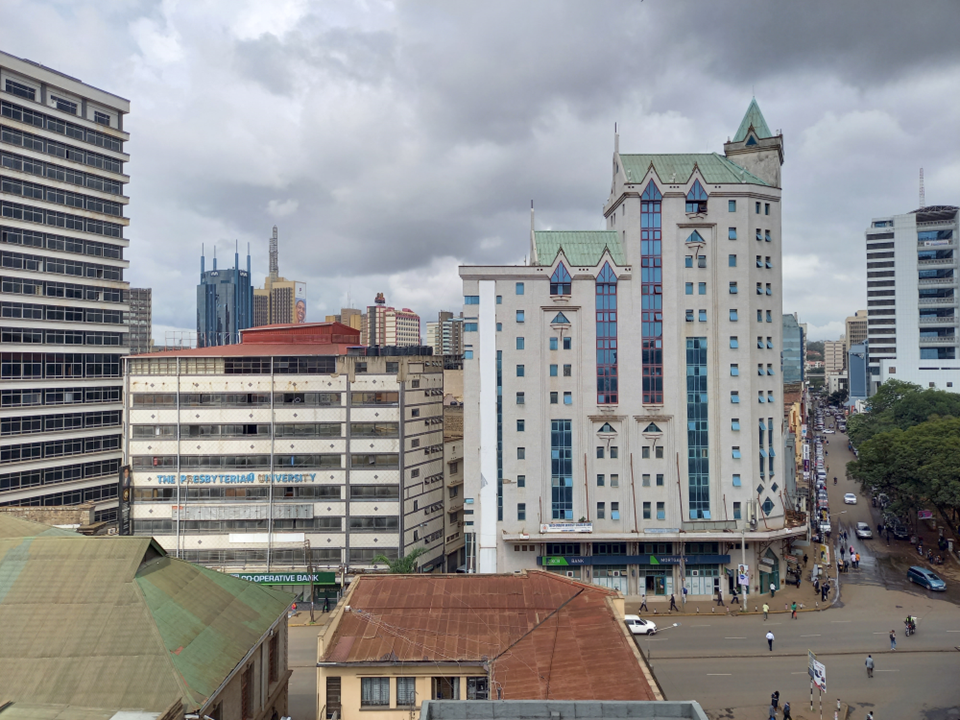
-
-
Go through the flags in the power point attached. Try to find out as many countries as possible. You may use the internet for help. Be prepared for brief control and overview of the flags and countries to which they belong during the class.
-
After watching the movies and reading the texts, get ready for the following set of topics or questions:
1) Can socialism work in Africa or has it been only a utopia?
2) Why have so many African countries inclined to some version of socialism and what kind of benefits it had?
3) As part of your study at home, prepare materials on Thomas Sankara and Julius Nyerere so that we can discuss their contributions to the development of Africa.