
Charging
Požadavky na absolvování
Methods of charging electric vehicles.
4. Fast DC charging
- Unlike AC charging, the charger is not located in the vehicle during DC charging.
- The conversion of the ac voltage and current into the dc quantities is ensured by an external charging station.
- The DC voltage of the charging station is directly connected to the traction battery terminals.
- The BMS is communicates with the charging station and sets the voltage level.
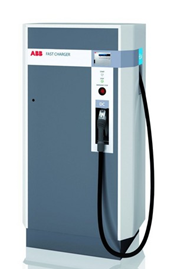
- The external installation of the charging station enables to design the charger for significantly higher power rates.
- Outputs of tens to hundreds of kW (power of 150 kW is wide spread, actual maximum power up to 350 kW)
- The charging time is significantly shortened (about tens of minutes to just several minutes).
- However, fast charging also has disadvantages, in particular
- large charging losses yielding costs,
- shortening battery life (loss of capacity),
- higher price per kWh.
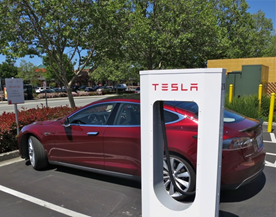
- The actual condition of the battery when arriving to the charging station greatly affects the charging speed.
- Actual charging speed mainly depends on
- temperature,
- cell disbalancing.
- Based on these parameters, battery management determines the charging speed.
- Charging speed is slower when intensive cell balancing is needed.
- In addition to the temperature, the charging speed is therefore determined by the driving style.
- Nonaggressive drivine at favorable temperatures → fast charging.
- Aggressive driving (accelerations and braking), unfavorable temperatures → charging power does not reach the power rate of the charging station.
www.tesla.com