
Learning difficulties and communication
5. ADHD
For a person with ADHD (Attention Deficit Hyperactivity Disorder), it is extremely difficult to keep focus and pay attention to a single activity for a prolonged period of time, especially if he or she is required to sit quietly. To watch a movie for 90 minutes or listen to a sermon for an hour is an exertion. Children with ADHD are often preoccupied, impulsive, in a constant state of flu; they react without thinking, even though during adulthood these characteristics are subdued by self-control. In spite of that, adults with ADHD are often clearly restless; they cannot stay focused for too long; they are disorderly and exhibit other typical characteristics. In some extreme cases, their impulsive behaviour could provoke uncontrolled reactions resulting in conflicts with others or even with the law. ADHD is also often accompanied by speech disorders, specifically compulsive talking. People with ADHD more often encounter neurotic problems in adulthood, and they have suicidal tendencies more often than those who do not suffer with this problem.
What issues conected to interpersonal comunication would you expect in people with ADHD? Try to estimate a few of them:
The following video brings the information on ADHD in outline:
Diagnostic criteria for ADHD
Symptoms of inattention:
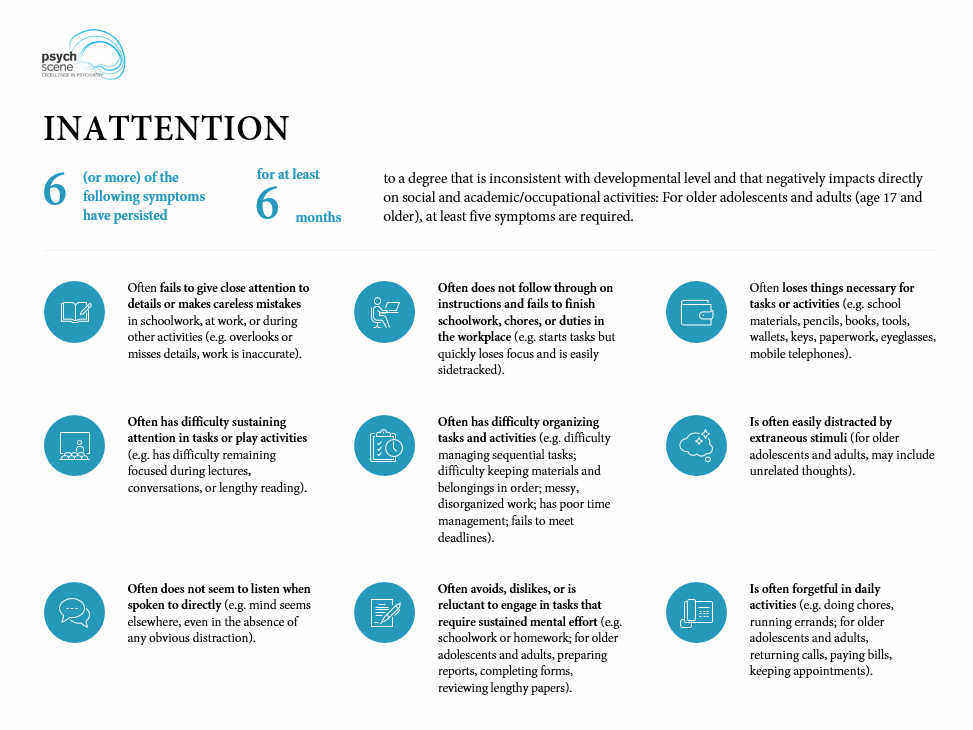
(https://psychscenehub.com/psychinsights/diagnosis-and-management-of-adult-adhd/)
Symptoms of hyperactivity and impulsivity:
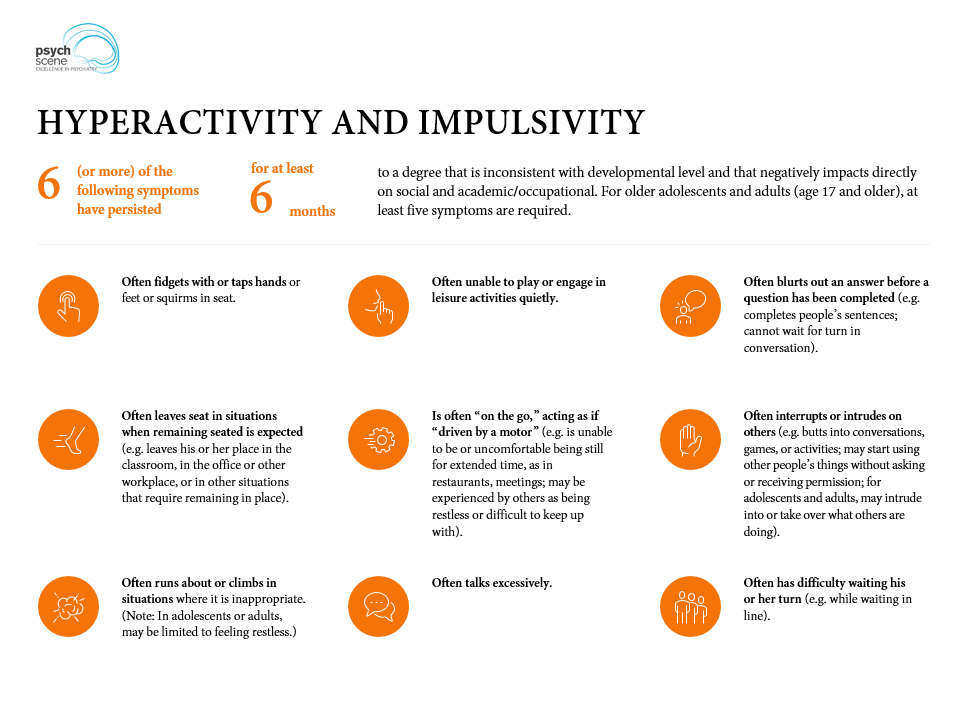
(https://psychscenehub.com/psychinsights/diagnosis-and-management-of-adult-adhd/)
Warnings and symptoms in children:
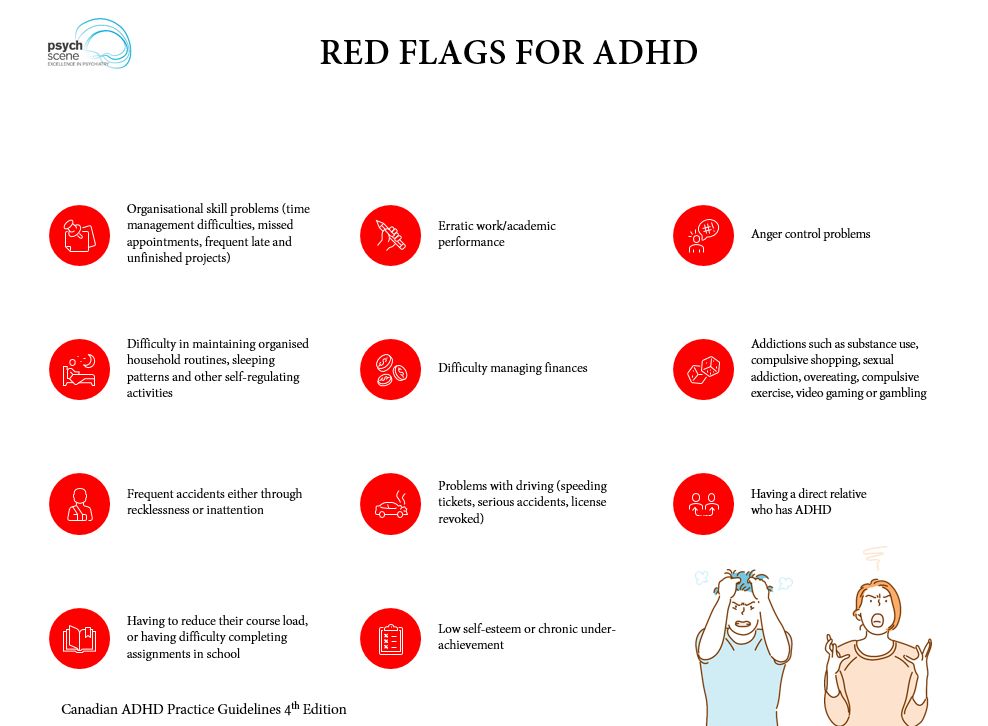
(https://psychscenehub.com/psychinsights/diagnosis-and-management-of-adult-adhd/)
Symptoms in adults:
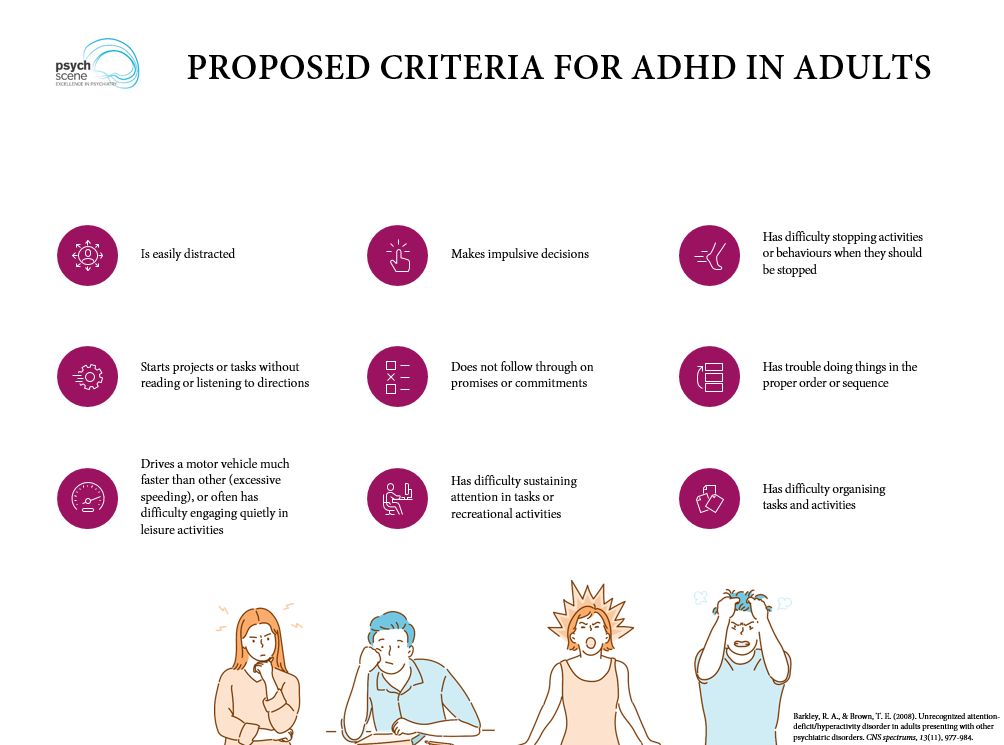
(https://psychscenehub.com/psychinsights/diagnosis-and-management-of-adult-adhd/)