
Vegetation and animals
1. Vegetation
Today's Czech landscape is a heterogeneous mosaic of forests, arable land and settlements. The composition of flora and fauna is result of long-term Quaternary development under the changing climate conditions. The location of the Czech Republic in the central part of Europe led to the diverse mix of Atlantic, Alpine, Boreal, Mediterranean, Pannonian and steppic species (Fig. 1).
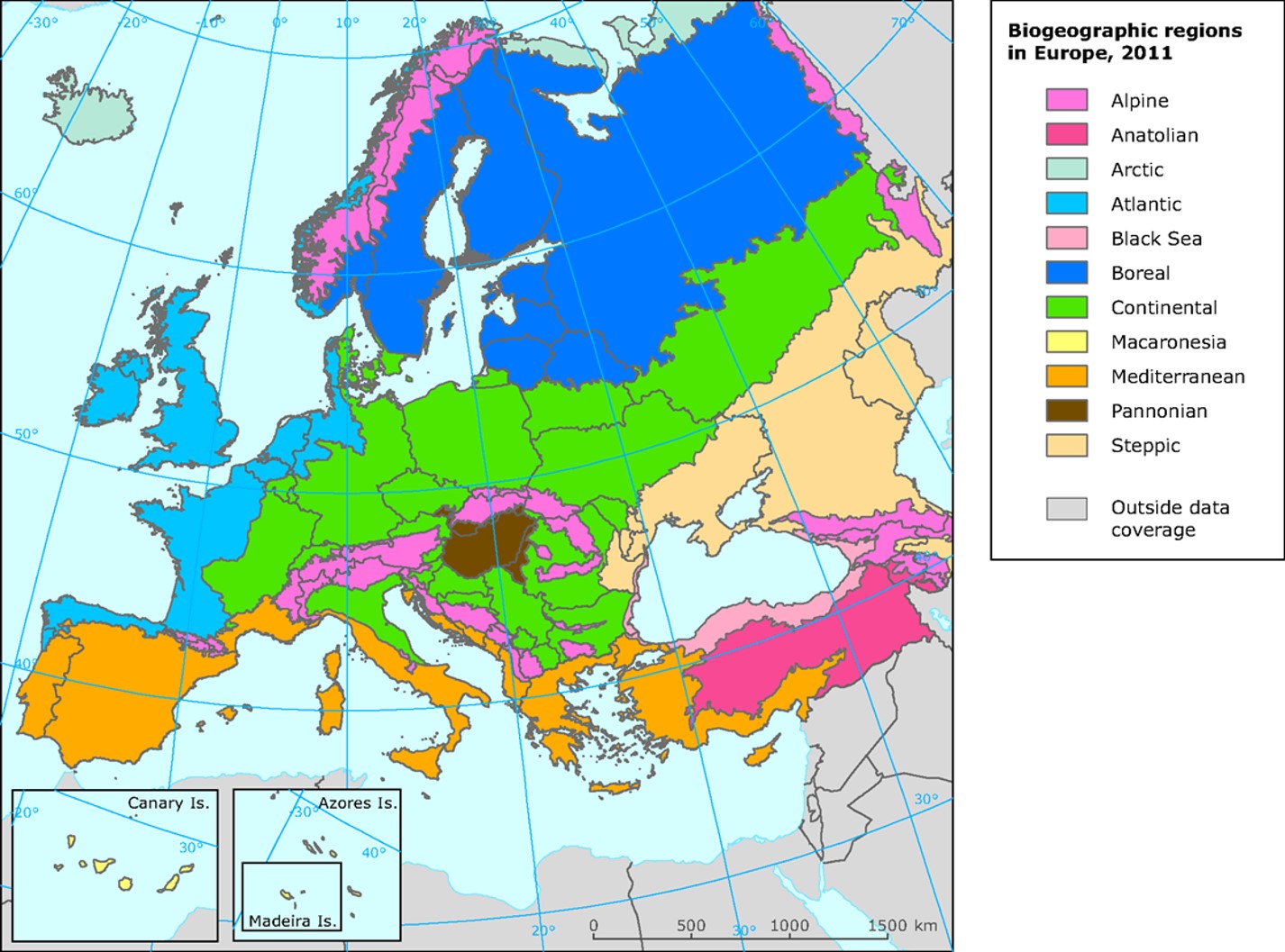
Fig. 1. European biogeographic regions. Most of the territory of the Czech Republic is included in the Continental zone. Southern Moravia is dominated by the Pannonian vegetation.
Native vegetation and landscape were transformed by anthropogenic activities. Particularly steppe areas were under the pressure. These areas are covered by Chernozems, the most quality soil, and native grassland vegetation had to step aside to arable land. Also forest areas were reduced by the Neolithic and later human activities.
Not only land cover was changed but also species composition was transformed. Originally dominated broad-leaved deciduous forests were replaced by the agricultural coniferous forests (mostly spruce) which are planted in middle and lower elevation where is not their natural occurrence. Nevertheless, the forest areas take 33% of state area.