
Vegetation and animals
Completion requirements
1. Vegetation
1.3. Landscapes with a high diversity of vegetation types
Biodiversity hot spots of the Czech landscape could be found in some restricted areas such as areas with high topographic heterogeneity, geological diversity or occurrence of specific bedrock types. These specific conditions (e.g. high elevation differences in the small area and thus high diversity of microclimate, or occurrence of specific bedrock which influence soil conditions and attract the unique vegetation) lead to the high diversity of the vegetation.
These are:
- Deep river valleys of the Bohemian Massif
- Karst areas
- Sandstone pseudokarst
- Solitary volcanic rocks
- Glacial cirques
- Lowland riverine landscapes
- Serpentine areas
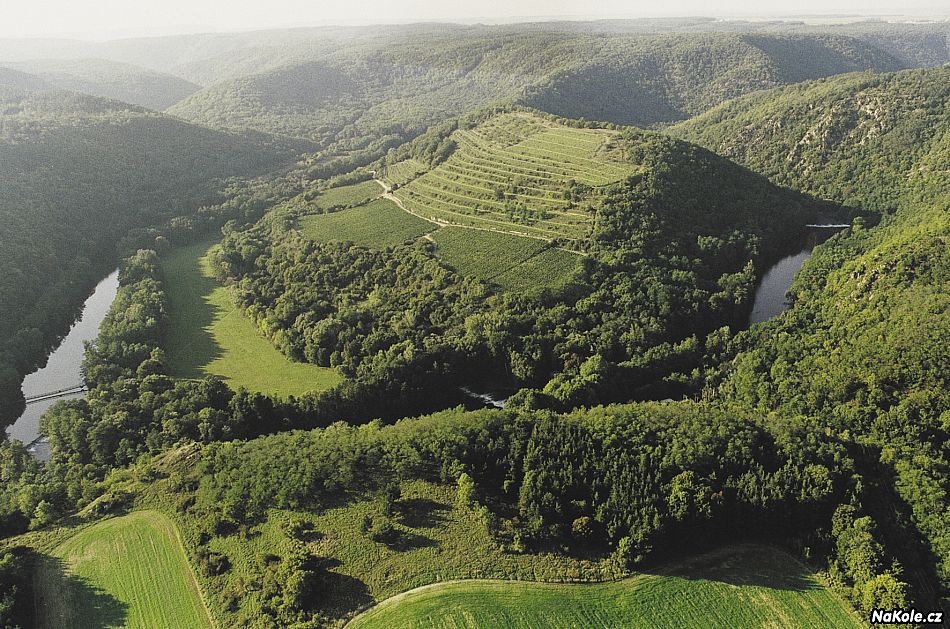
Fig. 1. Meander in a deep river valley of Dyje, south Moravia. This area of high biodiversity is one of the Czech National parks. The vegetation is well preserved in a natural or semi-natural state as this rugged terrain is unsuitable for agriculture (Source of image: www. nakole.cz)

Fig. 2. Český kras, karst landscape in Central Bohemia with high biodiversity of rock steppe vegetation (Source of the image: https://ceskykras.ochranaprirody.cz/charakteristika-oblasti/geologie/).

Fig. 3. Adršpach sandstone landscape, so called "rock city" in the eastern Bohemia. High biodiversity is due to the high elevation differences and diverse microclimate. (Source of image: https://www.meteopress.cz/tipy-na-vylet/adrspasske-skalni-mesto/).

Fig. 4. Isolated volcanic hills in the České středohoří Mts., northern Bohemia. Slope, aspect, position on lower or upper slope, bedrock (basalt versus
phonolite) and local occurrence of cliffs or boulder screes influence high vegetation diversity. (Source of image: https://phototours.cz/fotokurz-jarni-ceske-stredohori/)

Fig. 5. Glacial cirques in the border mountains have the higher vegetation diversity influenced by the occurrence of extreme relief (cliffs and screes) and serve as refuges of glacial relics.

Fig. 6. Litovelské Pomoraví, lowland riverine landscape with well-preserved complexes of floodplain vegetation in the central Moravia. (Source of image: https://kolo.cz/clanek/nenarocna-cykloturistika-litovelskym-pomoravim/kategorie/vylety-s-detmi)

Fig. 7. Mohelenská serpentine steppe. Natural reservation on the serpentine bedrock with valued xerotherm steppe vegetation, thermophile grasslands and serpentine pine forests. During the summer, the serpentine outcrops have 20oC higher temperature than the neighbourhood which creates extreme pressure on the vegetation. (Source of image: https://botany.cz/cs/mohelno/)