
KBS/AFDG - Afrika - Šablona
Abschnittsübersicht
-

ESF II project of University of West Bohemia
reg. number: CZ.02.2.69/0.0/0.0/18_056/0013239
KBS/AFDG - Africa
This work is licensed under a Creative commons 4.0 BY-SA license

Dear students,
Welcome to the course titles Africa, which will offer you a deep insight into Africa’s modern and contemporary history, politics, socio-economic issues, and future prospects and perspectives on development. Africa is not a country, but a huge continent with 54 countries and a population of more than 1,4 billion, and still growing. In thisa course, we will be exploring postcolonial and contemporary history and politics of the continent, woth special focus on Sub-Saharan Africa. That is because we divide Africa into two zones, North Africa which is also part of the so-called MENA (Middle East and North Africa) region, and Sub-Saharan Africa.
I do hope this course will be entertaining for you and would serve as an inspiration for your future studies or work.
Let us explore Africa!

-
The course builds on key theoretical subjects dealing with development and globalization and it is focused on already known issues in a narrower regional perspective. It gives a general introduction to the African continent and its contemporary problems, it is focused on the historical and political evolution and an analysis of its societies and diversity. This course will introduce the students to the history, politics and society of Africa since independence. It thus offers an interdisciplinary look at various themes of African politics and society including issues of democratization, dictatorship, socialism, capitalism, international trade, health care, education, etc. Among the key topics discussed within the course will be the following:
- Africa v the era of decolonization, specific problems and issues of African independence
- Separatist tendencies, federations, chieftainship, traditional and modern systems of governance in Africa
- Socialism/capitalism in Africa, Cold War context, military dictatorial rule
- Revolts, guerillas, reformist and revolutionary movements, civil wars in 1980s
- Economic problems of Africa, HIV/AIDS, civil society
- Democratization tendencies of the 1990s
- Multiethnic states, political transformations, citizenship, economic progress in the 21st centuryStudents will be obliged to present a paper based on their research, write a long essay and a few short written assignments, a midterm exam and final exam.
ALL ARTICLES ARE EASILY ACCESSIBLE ON www.scholar.google.com, ALL VIDEOS ARE EASILY ACCESSIBLE ON youtube.com!!
-
The course builds on key theoretical subjects dealing with development and globalization and it is focused on already known issues in a narrower regional perspective. It gives a general introduction to the African continent and its contemporary problems, it is focused on the historical and political evolution and an analysis of its societies and diversity. This course will introduce the students to the history, politics and society of Africa since independence. It thus offers an interdisciplinary look at various themes of African politics and society including issues of democratization, dictatorship, socialism, capitalism, international trade, health care, education, etc.
-
Aim of the course is to present Africa's social, political, economic, and cultural development to the students who will be able to:
- to explain historical development of the region in post-colonial era
- to identify and characterize important soci-political and economical problems in contemporary African societies
- to identify and explain specific social and political trends in the region
- to differentiate various causes of specific problems and also consequencesIn order to successfully pass the course, students will be required to write an essay, short assignments, midterm exam, present a paper, and pass the final exam.
-

Jan Záhořík is an Africanist/social scientist specialized in the history and politics of the Horn of Africa. He is an associate professor of modern history, and his research focus includes modern and contemporary history and politics of Ethiopia and the Horn of Africa; relations between former Czechoslovakia and Africa; mobility and migration; European-African relations; Cold War in Africa; conflicts in Africa; socio-economic development in Africa (with particular focus on Ethiopia and East Africa); terrorism and security.
Since 2006 Jan Záhořík has conducted research during multiple stays (50 in total) in Ethiopia ranging from 2 weeks to 6 months; minor research or academic stays include Rwanda, Burundi, Sudan, Morocco.
-
Students are required to write a long essay (10 pages, 1,5-spacing excluding cover page and references) based on a topic discussed with the instructor the first week of the semester. The deadline is the last class of the semester. The list of essay out of which the students will select their topics will be made available by the instructor the first week of the semester.
-
Final Exam will be composed of materials covering the whole semester (lectures, readings, and related issues), the exact format of the exam will be announced two weeks before the exam date.
-
-
Impact of colonialism
The impact of colonialism itself is still until nowadays a matter of passionate debates among various communities of historians who blame each other from Eurocentrism or Afrocentrism. It is not our aim to discuss positives or negatives of the European colonialism in Africa but generally it is indubitable that approximately eighty years of European rule in Africa, creation of colonial systems and principle of inequality between the colonizers and the colonized had a remarkable impact on social and political climate in one way or another. Later, this climate was inherited by the newly independent regimes. Mostly Marxist authors usually depicted European colonialism in Africa as a tool of oppression and exploitation of a black man by a white man.
Similarly significant (with direct psychological and physical impacts) aspects of colonialism included various forms of oppression and violence, manifested by suppression of anti-colonial West African revolts, elimination of the Herero rebellion in former German South-West Africa, or clearly brutal behavior of colonial masters in Congo Free State during Leopold II rule and race for rubber. On the other hand, African states can be taken as successful, because despite all thinkable barriers and obstacles, an African state is a functioning element.
Most of the borders were simply delineated on tables of European governments as a result of the Berlin conference, 1884–1885. There could not be any other solution than creation of artificial entities bringing many questions and a lot of unresolved problems. Despite the fact that most of the state borders in Africa were created artificially, there exist some evidence of how European powers tried to use and reuse existing pre-colonial borders for their purposes, and therefore, it shows the longevity of such borders in time.
Somali speaking peoples were divided into five completely different settings and administrative environments: Ethiopia, French Somaliland (Djibouti today), Italian Somalia, British Somaliland, and the British colony of Kenya. Social and political consequences of the Scramble for Africa have led to the growth of nationalist and separatist movements and tendencies that were legitimized by colonial past (Eritrea, Somaliland).
French colonialism in Africa and its legacies
French colonial system based on a direct rule and direct control over the colonies suggested vast expenditures and energy spent on creation of massive administrative apparatus and involvement of French bureaucrats. Since the end of the 19th century, the French wanted to create an undisrupted Francophone territory that would connect Senegal with the Red Sea and Indian Ocean which was blocked by the British competed plans to connect Cairo with Cape Town and resulted in an almost clash of both armies at Fashoda (1898) in what is now Sudan.
Strategy of the French was based on strengthening of political and cultural dominance in all spheres of African life and society. Due to a long-lasting Anglo-French rivalry and international political and economic superiority of Great Britain, the program of the French colonial policy became a “cultural export” based on assimilation, i.e. spread of French language and culture in newly conquered territories. A part of this was a strategy to educate “loyal” African political elites in order to keep continuity of French dominance in emancipating colonies after the World War II. First presidents of independent African Francophone countries were thus close friends of France and spent at least part of their lives in Paris. Here we can place for instance the first Senegalese President Léopold Sédar Senghor, first President of Côte d’Ivoire Félix Houphouët-Boigny or the first President of Niger, Hamani Diori.
The idea of unification of Francophone colonies in Africa via linguistic and cultural assimilation had to prevent these countries from disintegration experienced by some of the Portuguese or Belgian colonies in the era of early independence. Strong patrimonial relation of the colonial metropole to its colonies was largely manifested by de Gaulle’s government unwillingness to allow any visible liberalization or emancipating mechanisms due to fears of chaotic and quick decolonization. The example of Guinea that voted for independence in 1958 in a referendum offered by France, or of Algeria that in a French collective memory was considered a part of France on Africa soil, show how worried Paris was of losing its power and prestige including economic and cultural significance in Africa. Despite this fact we cannot overestimate French cultural imperialism as only some 15% of people in Francophone Africa speak French while the rest of the population gives preference to local languages.
Shortly after the World War II, the French government came up with the concept of “French Union” under whose shelter the various components were divided into six categories that included the European France, Algeria, old colonies in the Caribbean and four communes in Senegal, new colonies mostly in French Africa, protectorates in Morocco, Tunisia, and Indochina, and mandates in Togo and Cameroon. However, it was not the intention of any of the colonial powers to bring quick decolonization and independence to Africa.
British colonial system and its legacies
The British unlike the French developed (in many of their colonies) the system of indirect rule that did not rely on such financial efforts but obviously affected lives of individuals in the same manner. This was remarkable primarily in “pearls of the British Empire” such as Kenya or Nigeria. However, unlike the French the Brits did not have any desire to assimilate Africans. They allowed Africans many of their traditional institutions as the main aim was economic profit, not cultural dominance. British, or generally European colonialism, owed much to great explorers and personalities such as Cecil Rhodes who in fact established the basis of British imperialism in South Africa. North Rhodesia, named after him, soon became one of the most important components of the British Empire. The richest area was the region along borders with former Belgian Congo that came into being as Copper Belt due to vast deposits of copper and other minerals. However, the British, just like any other imperial power, were rather insensitive to rich and vast cultures and histories of their colonial subjects, and rather portrayed them as the primitive ‘other’
Portuguese colonial system and its legacies
The Portuguese colonial system was based, according to Paul Nugent, on a kind of a social Darwinism, which was derived from a hypothesis that Africans could not contribute to development of society with anything. Portuguese three-stages system of assimilation composed of destruction of traditional societies, infiltration of Portuguese culture and integration of detribalized Africans to Portuguese society remained largely only a theoretical concept. Reality saw unequal system in which the so called assimilados could use certain privileges while natives (indígenas) were taken as second class category of people. If anyone wished to belong to the category of assimilado, he or she had to show adequate knowledge of Portuguese language and prove principles of a civilized life-style. Portuguese control over the colonial possessions and its unwillingness to start the decolonization process led to creation of diverse liberation movements with different ideological and foreign backing, primarily in Angola.
Belgian colonial system and its legacies
In Belgian mandate territory of Ruanda-Urundi, the Tutsi aristocracy was elevated to the role of real rulers of the country and the Tutsis became a privileged society while the Hutu farmers and Pygmies named Twa became officially second class citizens. It was this polarization of the society in which former social categories became fixed ethnic categories which gave Rwanda and Burundi a genocidal character. Tutsis enjoyed relative advantages including wealth, education, and power. Belgian impact on formation of ethnic and even racial categories is indubitable as was the growing demographic rates and overpopulation. At the same time, mythologization of the past and of the ethnic identities came into being during the colonial rule especially under supervision and direct involvement of Catholic Church, having a monopoly on education. Hamitic hypothesis based on anthropological prejudices and racial theories of the 19th century played a significant role in perceiving Africans and Africa in general, as a continent without culture and history, where everything of some civilizing value was brought in by the Hamites, or semi-white people. In Rwanda and Burundi, the Hamitic hypothesis and use and abuse of rich local mythology led to creation of separate races that made further social and political development in both countries very complicated. Here we get to everlasting problems of ethnicity which scholars study from either primordialist, instrumentalist or constructivist positions. Colonialism obviously categorized people into different groups and ethnic groups were taken as given, sort of impermeable entities.
Photo: Jan Záhořík (Niamey, Niger)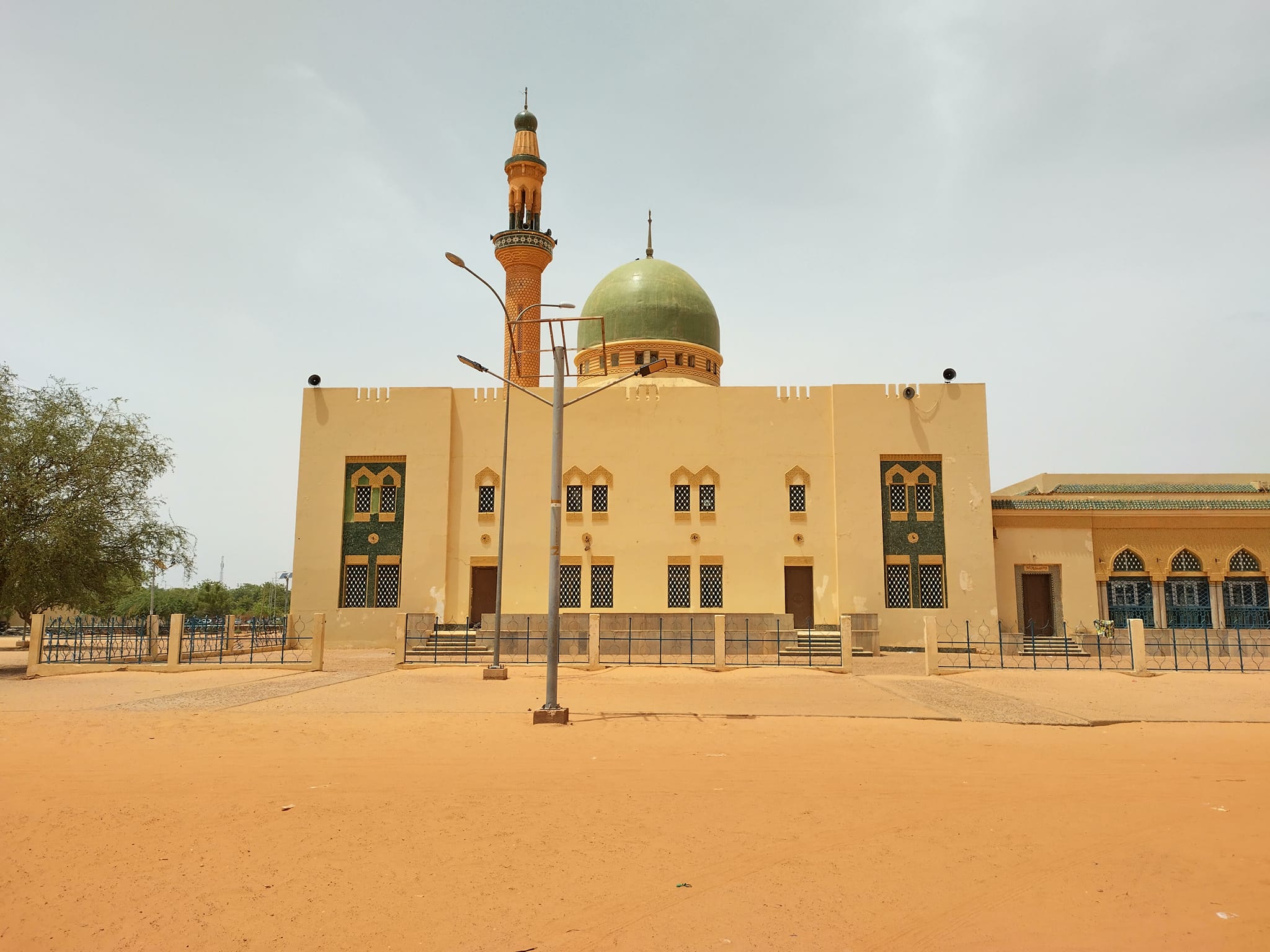
-
-
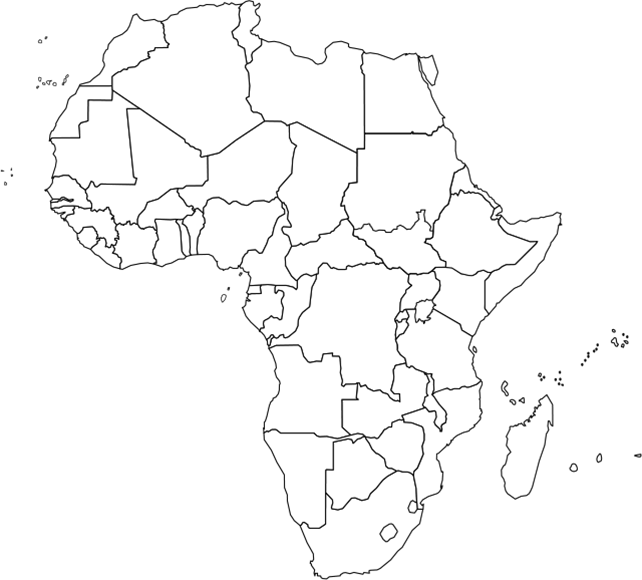
Try to find out the African countries on the blind map, you may color them in different colors if you will.
-
-
After watching the movies, prepare a set of arguments and responses for the following topics/questions that would form a part of the debate:
1) What are the main legacies of colonialism in Africa?
2) Can we blame the post-colonial military/authoritarian/dictatorial rules on colonial legacies only?
3) Should European museums return artifacts back to Africa or shall they be kept safely in the museums as part of global cultural heritage?
-
In the Era of Decolonization, we can observe an enormous rise of nationalism, both in terms of each nation and state, as well as in terms of pan-isms, such as Pan-Africanism, Pan-Arabism, Pan-Islamism, Pan-Somalism, etc.
Decolonization in Africa, by its nature, was a social change leading to emancipation of Africans and social and cultural transformation as a necessary alternative to colonial rule. Decolonization after the Second World War was a necessary process that was accelerated by the independence of India and Pakistan although it seems now that the aim of Great Britain (as well as other powers) was not to abandon the Empire, but rather to reinvigorate it. Despite a continuous fall of the Empire, white supremacy did not disappear from the colonized world so quickly as was the example of South Africa. There, the policy of apartheid legitimized the white rule and any kind of equality would question this “legitimacy.” On the other hand, other dominions were for long based on white supremacy and it took a long time until the so-called “first nations,” or the indigenous populations were made equal by law.
The process of decolonization led to continuous and slow (in some cases, such as Guinea, very quick) loss of white supremacy and transfer of power into the hands of local elites, many of them educated in the West and some of them loyal to their colonial masters. Racial superiority began to be challenged by ethno-national, nationalist as well as international movements such as Pan-Africanism. In this process, Ethiopia played a specific role on one hand as an inspiration due to its history of victory over European colonialism, on the other hand, Ethiopia lacked those kinds of links that other colonies had with their former colonial masters.
Africa is also full of various kinds of inequalities and discrepancies which are in one way or another related to the issues of conflicts, violence, migration, and development. In order to make a clearer idea of historical linkages to recent events in some parts of Africa, some concrete case studies are used to depict how deep past played a certain role in recent events, such as in the genocide in Rwanda. Nationalism in Africa, in one way or another, has been a phenomenon studied by many scholars from various disciplines. Nationalism, as a modern phenomenon, was on the rise in Africa since the first half of the 20th century. Despite the fact that in most parts of Africa, nationalist movements began to flourish in the era of decolonization, we can observe the enormous rise of ethno-national movements also in regions that never experienced European colonial rule, like Ethiopia. The ways in which nationalist movements appeared and grew were multiple.Nationalism can be:
Ethnonational
subnational,
national,
consociational,
international,
transnational,
multinational,
supranational.
Each form of nationalism would satisfy some, if not all, of the following attributes:
1) a large centralized government (or state);
2) a common territory;
3) a collective proper name;
4) common myths of ancestry or origin;
5) a common language;
6) a common economic life and policy;
7) common rights and duties for all citizens, plus a common mental makeup;
8) ideological background serving as guidance to leaders of the nationalist movement and contributing to the emergence of the nation;
9) existing links between the masses and the aristocracy;
10) a common public culture or education system.
Photo: Jan Záhořík (Libreville, Gabon)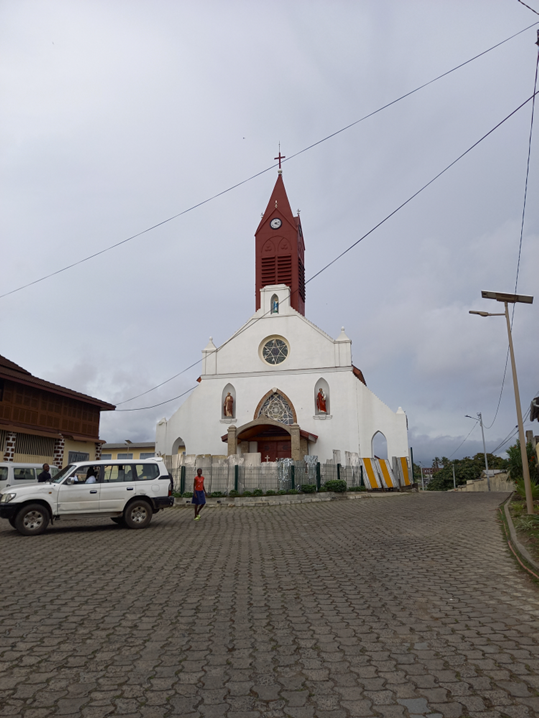
-
-
Match the country and the capital city
Prepare (while using the internet) short overview of each country and each city on the list - to be discussed during the class.
-
After watching the movies and reading the articles, prepare for the discussion in the class, particularly the following topics/questions:
1) What was, in your opinion, the legacy of the USA and the USSR in Africa, and how did it affect Africa's postcolonial era up to this day?
2) What kind of role does the African diaspora play in the development of postcolonial states in Africa?
3) Was, in your opinion, the creation of African states in postcolonial era a success or gailure? Why?
-
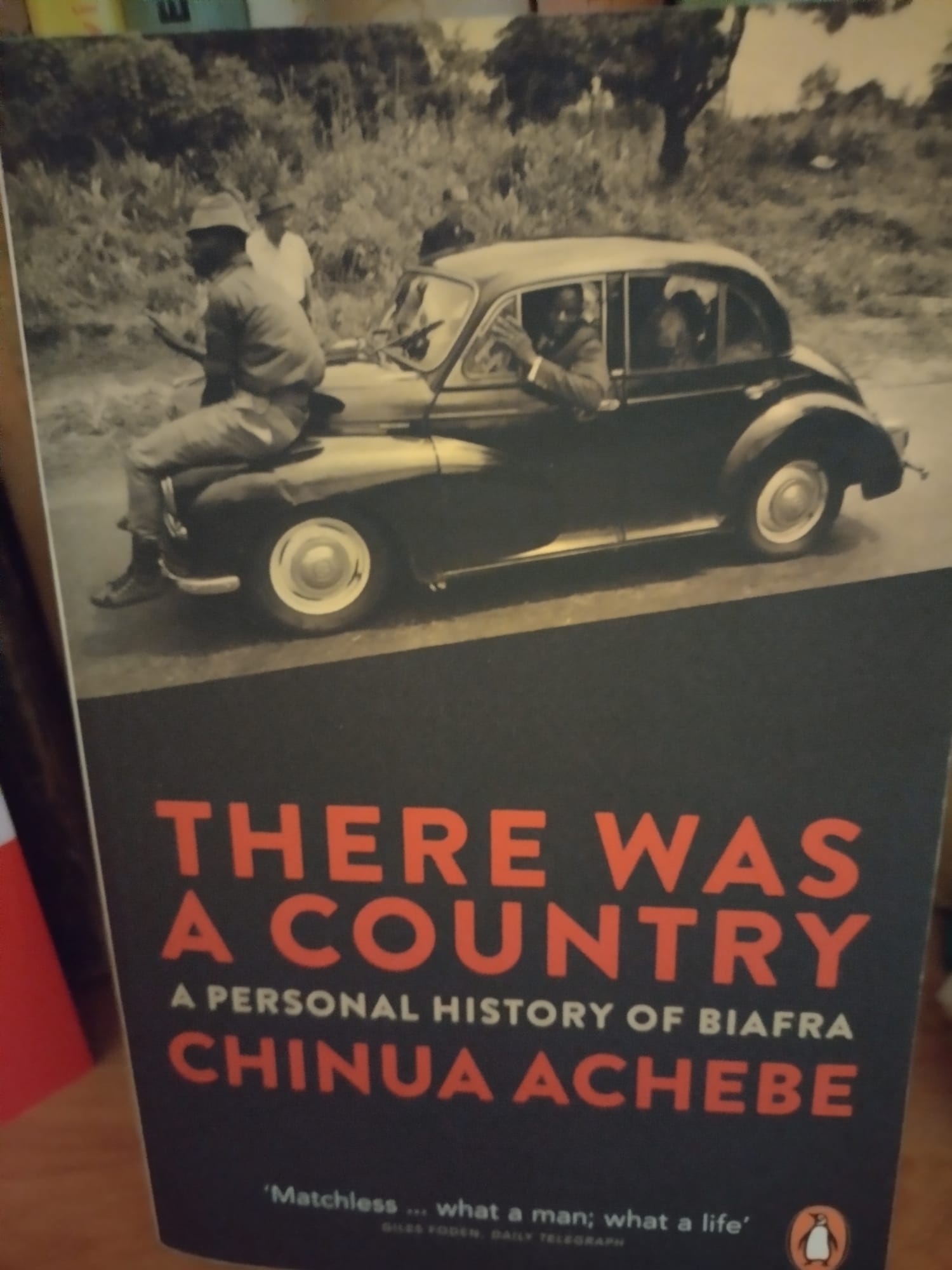
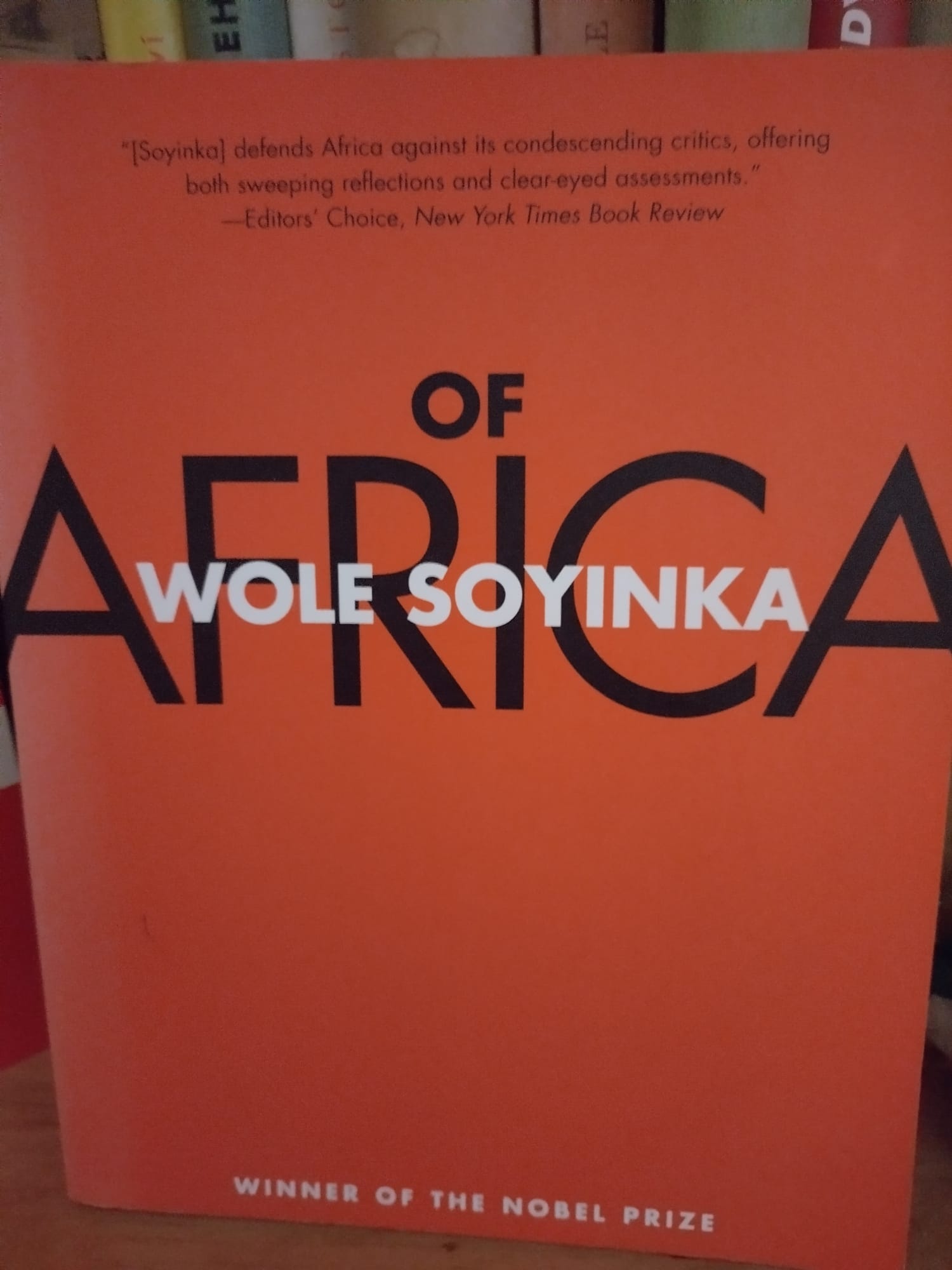
 One of the methods how we can broaden our understanding of the African politics and the legacies of colonialism in by reading high quality fiction. Here you can see randomly chosen books by famous authors such as Wole Soyinka or Chinua Achebe dealing with various aspects of colonial and postcolonial history in Africa in a different way than the academic literature. Your task will be to pick one novel from any African author - related to some of the crucial themes of African colonial or postcolonial history. Week 12 each of the students wil present the book in a brief overview so that we can discuss how it broadened your knowledge of Africa. Students have to consult their choices with the lecturer.
-
One of the major features of the first years (or the first two decades) of independence of Africa was Pan-Africanism.
Pan-Africanism
Pan-Africanism, which once hailed Ethiopia as a symbol of African purity and independence, failed to create a unified and homogenous continent which was rather an illusion from its very beginning. Despite this, Pan-Africanism played a remarkable role in the decolonization period and had a great impact on nationalist movements in Africa although the ideology of Pan-Africanism was in sharp contrast with nationalist movements in African colonies seeking for independence and not any kind of federation with other former colonies. That is why so many federal projects failed (e.g. Mali and Senegal, or Ghana and Guinea) because they were unable to overcome the historical, linguistic and territorial heritage of European colonialism. Moreover, the Cold War context prevented these projects from fruitful implementation. The case of Guinea, surrounded by hostile environment in the early days of its independence when it faced troubles not only from the West, but also from other former members of French West Africa closely tied to Paris, speaks for itself.
In the era of decolonization, Africa witnessed a genuine and new-born, in a certain sense virgin waves of nationalist movements which were characterized by the efforts of colonized nations to proclaim independence or at least to gain greater autonomy. It was the World War II that served as accelerator of emancipation and independence thought and ambitions. Nationalism in Africa after the World War II can be divided in several groups dependent on the political and social environment in which it was rooted. The main nationalist sources were Pan-Africanism, Pan-Arabism, Pan-Islamism, and Ethno-nationalism. These were not necessarily in opposition but could be compatible, at least in some cases. On the other hand, it is clear that, for instance, Pan-Arabism did not coincide very well with Pan-Africanism and both ideologies had quite divergent trajectories of political goals and ambitions. The oldest nationalist movements of these are Pan-Africanism and Pan-Islamism whose first rise to political and social significance took place already at the beginning of the 20th century.
With no surprise, many of the African states ended up very soon in some form of authoritarian rule ranging from those who were supported by former colonial power to those more radical in terms of dealing with historical/colonial heritage. Due to the lack of contact and understanding between states and societies we have to distinguish an official nationalism (state nationalism) from other types of nationalism (ethno-nationalism) which were created as the result of failed hopes and dreams of early generations of intellectual elites. Not surprisingly either, socialist and Marxist tendencies became popular among African (including Ethiopian) intelligentsia and students as well as trade unions and workers because of its alternative against European capitalism which was necessarily associated with colonialism.
Pan-Arabism, together with Pan-Africanism, served as the most important accelerator of nationalism in North Africa shortly after the end of the World War II. In 1952, Egypt proclaimed independence, only a year after Libya. But Egypt’s case was more important because of its historical significance, and because Egypt has traditionally been a center of Arab and Islamic world. Moreover, its geographical position connected African, Middle Eastern, and Mediterranean environments. Pan-Islamism as a powerful means of social mobilization played a significant role since the beginning of the 20th century, and especially Egypt served as a center of reformist Islamic thinking. But due to more or less secular character of African nationalism before and after the World War II, the importance of Pan-Islamism gained momentum mainly in the era of independence when secular states in North Africa witnessed first serious socio-political crisis. Iranian revolution in 1979 was a heyday for most of the Islamic movements in North, West, and East Africa, and since that period we can see the rise of various movements inspired by the events in Iran. Moreover, as a reaction to the rise of Shi’a Islam, Wahhabist Saudi Arabia strengthened its efforts to export its ideology and to stop the influence of Iran in Africa.
In Sub-Saharan Africa, ethno-nationalism was a major challenge to Pan-Africanism, because, unlike Pan-Africanism, ethno-nationalism was aimed to serve various nationalities to proclaim independent states, and thus fragment already existing states into smaller territories. From the very beginning of the formation of political parties in many of the African states, ethno-nationalism served as major means of social mobilization and people were instructed to vote for their ethnic parties and representatives. In countries like Nigeria, Democratic Republic of Congo, or Kenya, there was a lack of national identity feeling and political parties had very serious ethnic and regional attachments thus making it impossible to reach a national consensus. With no surprise, Nigeria and Congo ended up in years of conflicts which up to date have been uneasy to completely overcome.
Fragmentation of Nigeria and Congo, two very important states in Africa, was the biggest obstacle for Pan-Africanist dreams of African unity, common African government, parliament, and currency. If these countries were unable to reach consensus, how then all more than fifty states were supposed to reach the goal of unity? Disunity did not reach only these ethnically diverse states but was a case of much smaller and relatively homogeneous countries like Rwanda or Burundi. From the very beginning of the decolonization process, it was clear that both countries could not reach any national unity.
After new independent states were created, the international community including the Organization of African Unity (OAU) did everything it could to maintain the integrity of African states. It was clear that any disintegration in one part of Africa could inspire other emancipation, or separatist movements in other parts of the continent.
As a result of decolonization which accelerated after the Bandung conference in 1955, yet in the 1950s a number of African states gained independence on their former colonial masters. These were Libya (1951), Egypt (1952), Sudan, Morocco and Tunisia (1956), Ghana (1957), and Guinea (1958). The end of 1950s brought an extremely evident pressure on decolonization and independence of African nations which gained its momentum in 1960, since then claimed as a “year of Africa” when 17 states in Africa gained independence. Most of them were Francophone states but generally it was a great success for the continent as whole. This was a result of late colonial project of “developmental” colonial state that was supposed to make the Empire richer and more legitimate.
Photo: Jan Záhořík (Abuja, Nigeria)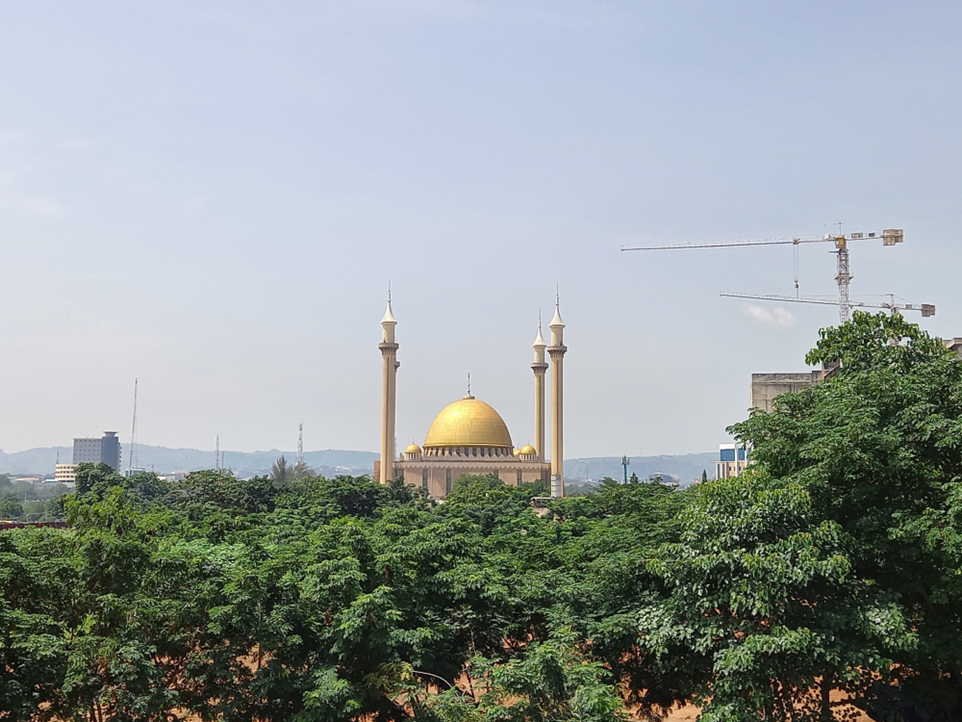
-
-
Match the politician and the country
Prepare (while using the internet) a short overview of each politician and each country - to be discussed in the class.
-
After watching the movie and reading the texts, get ready for the following topics and questions:
1) How has been the European reputation affected, in your opinion, by such crimes such as the murder of Lumumba?
2) Is there, in your opinion, still a space for a renewal of European-African relations given the fact that these have been negatively affected by many mistakes in the past?
3) Can Africa become successful given the fact that the wealth of countries like Congo being constantly stolen or misappropriated?
-
First Crises of Early Independence
Soon after the independence euphoria disappeared, many regions in Africa ended up or began to experience their first crises that usually combined local and global affairs and factors. The Democratic Republic of Congo has long served as an example of failed decolonization and fragmented state as a result of Belgian colonial rule that did not do much in order to promote social stability, ethnic equality, and access to education. Therefore, it is not surprising that taking into account enormous natural resource wealth in Congo, the country quickly became one of the main battlefields of the Cold War. The Congo crisis of the early 1960s also saw the first real victim of the Cold War, Patrice Lumumba, democratically elected first Prime Minister of a newly independent Democratic Republic of Congo. Congo is also a perfect example of combination of direct and indirect impacts on the fragility of the state. These include inherited weakness of state institutions undermined by lacking nation-building process that was initiated at the very latest stage of colonialism, ethno-regional discrepancies and imbalances in terms of access to global markets and infrastructure, as well as global contexts of the Cold War in which former colonies became primary “laboratories” of foreign powers’ struggle.
Joseph-Désiré Mobutu played a major role in developments following Congolese independence, although his position remained somewhat covert until the decisive year of 1965. The perpetual crises in the Congo have been explained by some as resulting from the belated decolonization of the country and also by specific conditions that prevented nationalism from becoming fully accepted by the majority of the population; the majority of the population continuing to favor ethnic self-consciousness and thus the fragmentation of the Congo. For a long time, even Belgium supported the idea of a unitary state, only changing its mind and turning to federalism after Lumumba’s victory. Congolese politics were thus very divided, partly between socialism and “capitalism” (i.e. pro-Belgian), and partly between Pan-Africanists and nationalists proposing a unitary state and federalists or separatists tending to seek a weakening of the central government in order to realize their objectives. The achievement of a strong and centralized state, the position supported by socialist countries (the Soviet Union and its allies, including, primarily, Czechoslovakia), was the last thing the Western powers (Belgium, France, the USA) wished to see in the newly independent Congo. At the height of the cold war, Communist infiltration into the Congo was the least desired development for Belgium and thus it developed its neo-colonial strategy in Katanga, which was ended by intervention from the UN. Moïse Tshombe was then to serve as Prime Minister of the central government, but had limited success in consolidating power.
While Lumumba and his followers (later known as Lumumbists) preferred not to be engaged in the neo-colonial and Cold War struggle, their opponents from the pro-Western camp had no objection to receiving support from the former colonial power and fulfilling goals that had been established by Brussels or the CIA. This camp of politicians included, among others, Joseph Kasavubu, Jason Sendwe, Ildephonse Kasengwo and Laurent Kabila (who in 1997 became president after Mobutu’s death). Despite internal problems and Katanga’s secession attempt, it was really a number of external factors that systematically eroded Congolese integrity and sovereignty. Belgium and the USA played the most significant role, but some of the neighboring countries, such as Rhodesia, had a great impact on developments in the Congo as well. Rhodesian representatives sought to engage the Congo in the Federation of Rhodesia and Nyasaland. The UN mission that was supposed to monitor Congolese politics and effect Katanga’s reunification with the Congo did not come about easily. Some of the UN Security Council countries were rather hesitant (France, Great Britain, China) and some (the Soviet Union) were forced to agree with the resolution only as a result of pressure applied by many of the African states.
At the end of August 1960, it was clear that Lumumba had become one of the main threats in the eyes of the Western powers as he continually disagreed with the way the UN was seeking to resolve the Congo crisis. He constantly expressed his disgust at Dag Hammarskjöld, claiming that the UN mission in the Congo represented, in one way or another, only the substitution of “Belgian colonialism by the colonialism of the UN.” The Congo crisis was to unceasingly affect the Congo and the cold war reality up until the end of 1960. It was also the last attempt by Lumumba to completely decolonize the Congo; however, he failed as he was arrested and moved to Elisabethville, with the agreement of Mobutu, Kasavubu and Tshombe. There, he was killed on January 17th during the so-called Operation Barracuda. Lumumba’s elimination very much affected future relations between Mobutu’s Congo and the socialist countries, especially the Soviet Union and Czechoslovakia, which were the most prominent socialist states to involve themselves in the Congo. Lumumba’s assassination was widely covered and criticized in the media worldwide and by the public. Subsequent conflicts in the Congo were not only the result of political and/or ideological clashes between Lumumbists and pragmatists, but had much wider variety of causes.
Photo: Jan Záhořík (Lake Kivu, Rwanda-Congo border)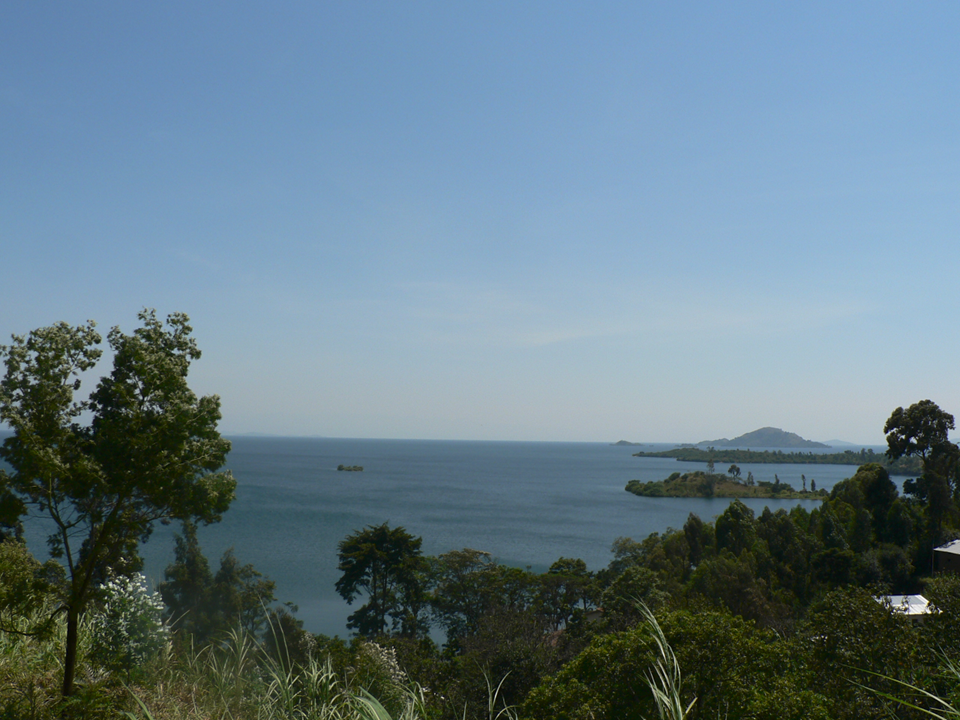
-
-
Prepare, as a homework, a short account/overview of some major military rulers according to your choice so that you are able to talk about them for at least 3 minutes. You may use the documentary movies as an inspiration.
-
After watching the movies and reading the texts, be ready for the discussion over the following topics/questions:
1) Can military rule still have a space in Africa or is it still a relevant alternative to democracy?
2) Why does democracy fail in so many African countries?
3) What is the role of ethnicity (and religion) in the history of military rule or the history of authoritarian/dictatorial rule?
-
Postcolonial State in Africa
Majority of African countries is ethnically and linguistically heterogeneous while homogeneity is a sign of only a small number of them. Intergovernmental conference on language policy in Africa which took place in Harare in 1996 under the shelter of UNESCO defined eight countries as homogeneous while the term itself means that more than 90 % of inhabitants of the country speak one language. Among those countries we may find Botswana, Lesotho, Madagascar, Mauritius, Rwanda, Seychelles, Somalia, and Swaziland.
Several African countries have in last decades witnessed development of what we may call a linguistic nationalism in relation to state-directed effort leading to linguistic homogenization. Non-democratic language policies are often linked to bloody conflicts and ethnic tensions. Batibo claims that such ethnic movements are not motivated only by an effort to maintain indigenous languages in a given country but by an aim of local authorities to maintain linguistic plurality of their country. On the other hand, linguistic revivalism can be successful only in such a case when it is supported by state institutions and a concerted effort of its speakers to preserve it as a mother tongue.
The fact that languages are a necessary part of politics, and the question of standardization of languages can be abused by political representation, is more than obvious. In recent past, language and his standardization has become quite often a subject of political clashes in several African countries. During Siyad Barré dictatorship (1969–1991) a Latin script was introduced for a Somali language despite the Osmaniya script legalized in 1961. Moreover, Barré’s secularist regime strongly stepped against Arabic and Arabic script preferred by Muslim authorities.
Languages were for a long time taken as an inseparable part of ethnic identity, but several recent researches have shown that such a claim does not have an absolute validity. As an example, we may point at Senegalese Serer who have been since independence in 1960 completely Wolofized but since then there was a concerted effort by Serer elites and people to strengthen elements of Sere culture and ethnic identity. Serer consider Wolof to be inferior and development of ethnic identity without their own language was a means how to defense the Wolof domination.
In the case of Ethiopia, it is quite problematic to speak about a postcolonial state, just like it is in a very different setting of South Africa, for instance. One of the main features of postcolonial states was their bureaucratization. In the case of Ethiopia, all three regimes, Imperial, socialist, and federal, have relied on massive bureaucracy. Recent trends have focused on a key government objective which is the ‘Democratic Development State’. As analyzed by Sabine Planel, current government’s techno-bureaucratic rule rather complicates any development and leads many farmers to servitude under the state domination. Vulnerability of the countryside is at the same time one of the most explosive issues of today Ethiopia.
African countries thus receive technology, know-how, skills, publications and other elements from foreign countries without being perceived as contributors to a common social wealth in the era of globalization. Some even blames African countries that in the past instead of developing African know-how, they only followed the development policy of Western countries by which they failed in the effort to systematically promote indigenous practices in development processes. Language became an indubitable part of these processes because European languages used in education supported modernization coming from the West as something desirable and broadly expected.
Photo: Jan Záhořík (Nairobi CBD, Kenya)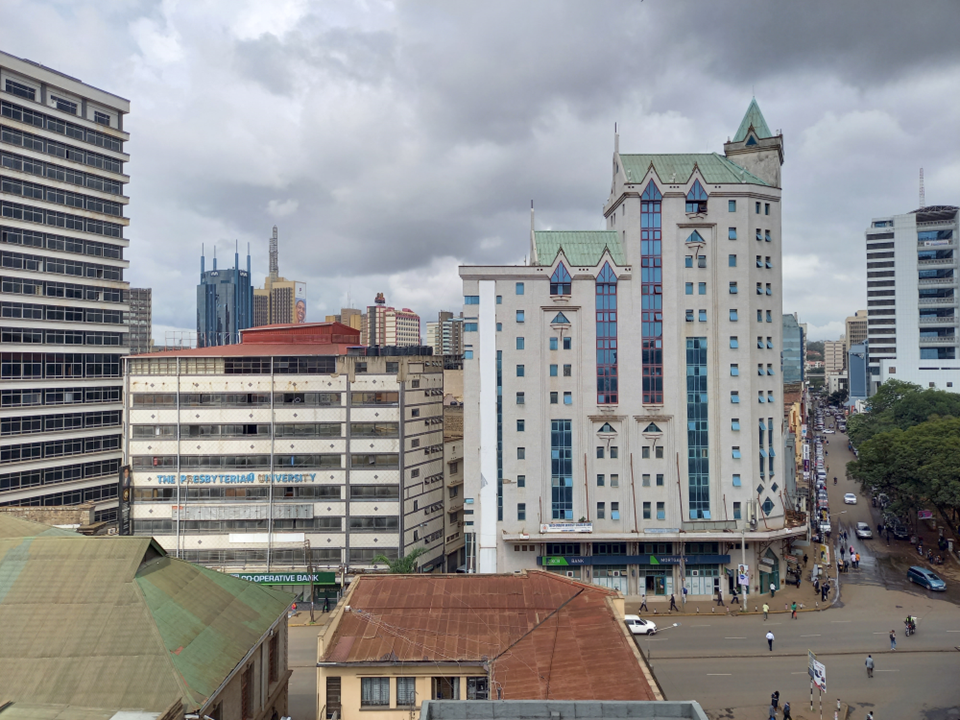
-
-
Go through the flags in the power point attached. Try to find out as many countries as possible. You may use the internet for help. Be prepared for brief control and overview of the flags and countries to which they belong during the class.
-
After watching the movies and reading the texts, get ready for the following set of topics or questions:
1) Can socialism work in Africa or has it been only a utopia?
2) Why have so many African countries inclined to some version of socialism and what kind of benefits it had?
3) As part of your study at home, prepare materials on Thomas Sankara and Julius Nyerere so that we can discuss their contributions to the development of Africa.
-
Neo-patrimonial Rule in Africa
Besides family-nation discourse, there exist enough evidence that the newly independent states in their majority valued security over democracy. Not only such countries as the Congo, or Nigeria, but also Tanzania where the fears of division and fragmentation were quite significant and almost tangible among the TANU party leaders. Julius Nyerere’s vision was to create a state of “multiracial unity” in order to avoid conflicts similar to those in Rwanda/Burundi, or the Congo.
Typical institutional characteristic of African regimes is neo-patrimonialism. The main feature of this lies in the fact that the main authority in the state is not related to an institution, but to a person. Rulers of such regimes sought to gain presidential seat not because of public interests but only for their own enrichment. Governmental administrative posts, licenses, contracts, projects and employments depended on ruler’s personal preferences or even actual mood. In theory, some of the observers called these political systems private instruments of those in power rather than states.
One of the common features of post-colonial states in Africa that significantly contributed to a formation of opposition political and military movements was the phenomenon of personal rule. States with strong dominant person at the forefront were a proof and consequence of colonial policy of “divide and rule” in which there was no space for formation of wide and erudite political elite. On the contrary, newly independent countries ruled by leaders usually maintained frequent contacts with former colonial metropolis or in other cases with newly established power blocs such as the Soviet Union and its allies. Context of the Cold War contributed to impossibility to create truly functional democratic plural political systems respecting opinions of majority. Strong personal rule either based its power on ethnic majority or dominant political subject (Senegal, Côte d’Ivoire), or on ethnic minority or region that dominated military and economic sectors of the country (Gabon, Congo).
Very often such an autocrat came to power after military coup that became one of the basic (although simplified) features of postcolonial Africa. Nigeria is in this matter probably the most notorious country as the majority of governments in postcolonial period came into being after military coup. Especially in the first three decades of independence (Cold War era) the military type for rule prevailed and military coup as means to get to power was dominant in many African countries. Strong personal and neo-patrimonial rule in a certain sense followed a tradition of chieftainship in pre-colonial Africa with the difference that neo-patrimonial post-colonial rule was based on violation of law, oppression and clientelism while pre-colonial era on the basis of clearly limited set of rules. Instead of democratization, many African independent states underwent decades of neo-patrimonial rules characterized by relationship between a leader and administrative apparatus chosen and controlled by him. Neo-patrimonial state has three main features: personal rule, clientelist system and kleptocracy. Other forms of governance are sometimes labelled as Satanist due to the fact that power of the ruler was unlimited and ruler himself took the state and its inhabitants as his own property.
Another feature of modern African state is elections. However, ever since the independence, vast majority of African states had experience with elections, most of them already from the era of decolonization. While during the Cold War, the elections did not make sense in most of the countries due to authoritarian nature of their governments, after 1991 with the wave of democratization, space has been opened for multiple political parties and actors. In some cases, this has led to repeated electoral crises as a result of ethnically divided societies such as in Niger, Nigeria, or Côte d’Ivoire. Already mentioned electoral violence in Kenya that associates the elections basically since the 1990s is an evidence of how fragile the elections can be in a state with institutions and power based on ethnic exclusion and privileges. Nigerian elections, for instance, have been usually surrounded by suspicion of corruption and fraud and contributing to occasional violence committed by armed youth militias.
Elections in Ethiopia are relatively new phenomenon. On one hand, it coincides with the introduction of seemingly “democratic” environment after 1991 but at the same time elections in Ethiopia have been limited to the technical process repeated after every five years.
Photo: Jan Záhořík (rally in Addis Ababa, Ethiopia, 2011)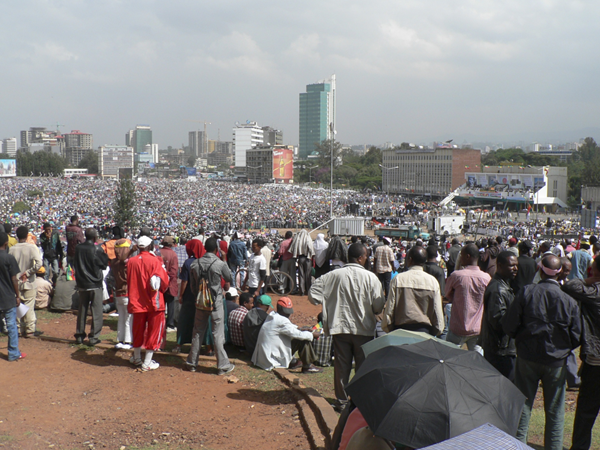
-
1) Organization of African Unity
2) External Debt Burden and Economic Decline
-
Take a look at the attached map of Africa. Select one country or a region (Horn of Africa, West Africa, South Africa, Equatorial Africa, East Africa) and try to find out as many information as possible in regard to its economic growth or decline in since independence with particular focus to minerals, natural resources, and resource curse.
-
After watching the video and reading the texts, be ready for the following set of topics/questions:
1) What is the main difference between OAU/AU and the EU?
2) Can Africa be developed given the fact that it is still mostly dependent on external powers including former colonial ones?
3) What can, in your opinion, China and BRICS bring to Africa?
-
Separatism as a result of colonialism?
It was no surprise that in some of African states, separatism as a form of nationalism became a natural phenomenon. Separatism is usually a tendency of one group to separate a part of a territory of a state from the rest of the country in order to create a new independent state (secession) or an effort to unite an ethno-cultural community in one political entity (irredentism). In postcolonial era, Africa witnessed several of such separatist movements with varying level of success. Katanga, Biafra, Eritrea, to new a few, were the most challenging to the integrity of states in Congo/Zaïre, Nigeria, and Ethiopia respectively. Multi-ethnic character of societies and their cultural diversity are not themselves causes of separatism but form at least their important basis. Separatist tendencies are very often perceived in strictly ethnic connotations, but it is not necessarily the case every time. For instance, people inhabiting the Comoro islands belong to one ethno-linguistic community but in 1997–2002, an island of Ndzuwami formed a de facto semi-independent quasi-state.
Some of the nationalist/separatist movements proved their effectiveness after decades of clashes while others did not reach any goal or demand in the same time frame. There can be obviously multiple reasons but one of the main is the internationally rooted proclamation of indivisibility of African states guaranteed by the UN as well as by the OAU and the AU. This is the reason why still the only two successful separatist/nationalist movements are Eritrea (which was formed within the borders of former self-named Italian colony), and South Sudan, for whose independence there was an enormous international support caused by almost fifty years of civil war. In the same logic, Western Sahara, whose territory lies in what was formerly known as Spanish colony of Rio de Oro, is eligible for independence but many other factors are against it. When the Republic of Somaliland proclaimed independence in 1991, it was justified by the “colonial” borders it had.
Another group of nationalist and separatist movements are those who demand certain territory inside existing states without any “colonial” boundaries as Eritrea, Somaliland, or Western Sahara. Ethno-regional and nationalist struggle inside heterogeneous states can be witnessed in places where there does not exist an equal distribution of wealth, where certain group is marginalized or oppressed or where there are other, for instance, international interests involved. There we may count the movement in Congolese province of Katanga in the era of early independence. The then head of Katanga, Moïse Tshombe, supported by Belgian military forces and secret service, as well as by CIA, proclaimed independence of Katanga. Another, and still recent, example can be found in Senegal, where Movement of democratic Forces of Casamance (MFDC) seeks independence of this southern region from the rest of the country. Its action is, according to its proclamations, justified by historical marginalization accompanied by economic exploitation and religious as well as cultural oppression from the side of the Wolof who form a ruling majority of Senegal. Strategy of this movement is derived from economic marginalization. Moreover, the leader of the MFDC, Abbot Diamancouné, refuses to speak about “separatism” as according to him Casamance has never belonged to Senegal but is closely related to cultural history of neighboring Guinea-Bissau.
Photo: Jan Záhořík (Dakar, Senegal)
-
-
Take a look at the map of the Horn of Africa. Based on what you know from the documentary movie, the compulsory readings, and your own knowledge from the internet and other literature, try to find out the reasons why Eritrea and South Sudan gained independence while the Republic of Somaliland remains up to this day not internationally recognized.
-
After reading the texts and watching the movie, be ready for the following topics/questions:
1) Why has there been so many separatist attempts that failed and why there have been only a few successful separatism movements? How would you explain that given the fragility of most of the states in Africa?
2) Why and how is the Eritrean separatist different from the rest of Africa?
3) Based on your knowledge, do you consider the existence of the postcolonial state in Africa as success or failure? Why?
-
Midterm exam will cover the first part of the semester, all the lectures, readings, and other activties done during the classes and seminars such as quizzes, etc. Concrete form of midterm exam will be announced long in advance to the students.
-
The end of the Cold War in Sub-Saharan Africa was characterized by fall of authoritarian regimes and efforts leading towards national conferences that would include all relevant parties. State controlled centralized economic systems stepped away as new liberal trends entered Africa and in many cases former frequently existing dominance of one particular group was replaced by multi-ethnic and multi-party governments respecting ethnic diversity.
While the newly formed African independent states showed high level of centralization and absence of civil society, after the end of the Cold War decentralization entered Africa together with creation of regional and local governments and provincial responsibility. In last two decades, about 80% of all developing countries have undergone a process of decentralization. In Sub-Saharan Africa only a minority of countries did not start or left the decentralization process. Although mainly in former British colonies a system of local governments emerged, these were only rarely responsible for education, health care, and infrastructure in reality. Only after 1990 with the fall of oppressive regimes it was possible to apply earlier theoretical principles of “self-rule” and “shared-rule.” For authoritarian regimes, it was not desirable to talk about leaving absolute control over state institutions and regional resources with the exception of Nigerian military regime in 1976 that initiated so far unseen decentralization program.
If we talk about democratization and decentralization in Africa as expected concepts bringing economic growth, prosperity and stability, it is perhaps a legitimate question which type of democracy we should apply. Despite being difficult to define democracy as a concept applicable on all types of society, there exist several attributes universally accepted for all types of democratization processes. There we talk primarily about good governance, where we could put pluralism, transparency, rule of law, and decentralization. On the other hand, in many African states (for instance, Ethiopia), there exist a huge difference between decentralization in theoretical and practical level. The same goes in many other issues.
Democracy or decentralization is usually considered one of the main conflict preventions (not only) in Africa. Nevertheless, many of African countries encounter several other problems, therefore it is first necessary to focus on territorial, economic, and political inequalities. Peace and justice is thus a condition to the development of democracy. Participation in civil society or engagement of all relevant subjects in the peace process, elimination of marginalization of any of participating parties, and strengthening of civil society has had to follow.
Accordingly, the global context was manifested in the use of telecommunication technologies that made action readiness easier and more effective for many guerilla and rebellion movements. On the other hand, it is now easy to trace satellite telephones used by various warlords. After the end of the Cold War, attention of world powers turned towards the failed states as possible sources of global terrorism after 9/11. Possible asylum that terrorist could gain in Africa made a lot of concern in the West especially after the Somali experience. Some of the African leaders soon after 9/11 declared their preparedness to stand side by side with Washington, D.C. and Pentagon in the ‘war on terror’. However, some of these governments could use their anti-terrorist campaigns against political opposition or regional disturbances.
On the other hand, the end of the Cold War generally contributed to a decrease of importance of Africa in global terms as its role of a ‘Cold War laboratory ended’. Western powers lost any motivation to be militarily engaged in regions that did not belong to their priorities. Similarly, an early OAU principle of inviolability of borders in Africa vanished when already in 1979 the Tanzanian forces crossed Ugandan borders in order to overthrow Idi Amin regime, and so when in 1998 a war broke out in Democratic Republic of Congo, almost all neighboring countries were involved in one way or another. Civil conflicts and wars were affected by the fall of the Iron Curtain in one more way: it was a lack of ability of international community to understand and react on changing dynamics of violence in Africa that can be documented on examples of Rwanda and Somalia in the first half of the 1990s. Cold War was replaced by different reality but transnational links, global challenges and local conflicts remained more or less the same or became intensified.
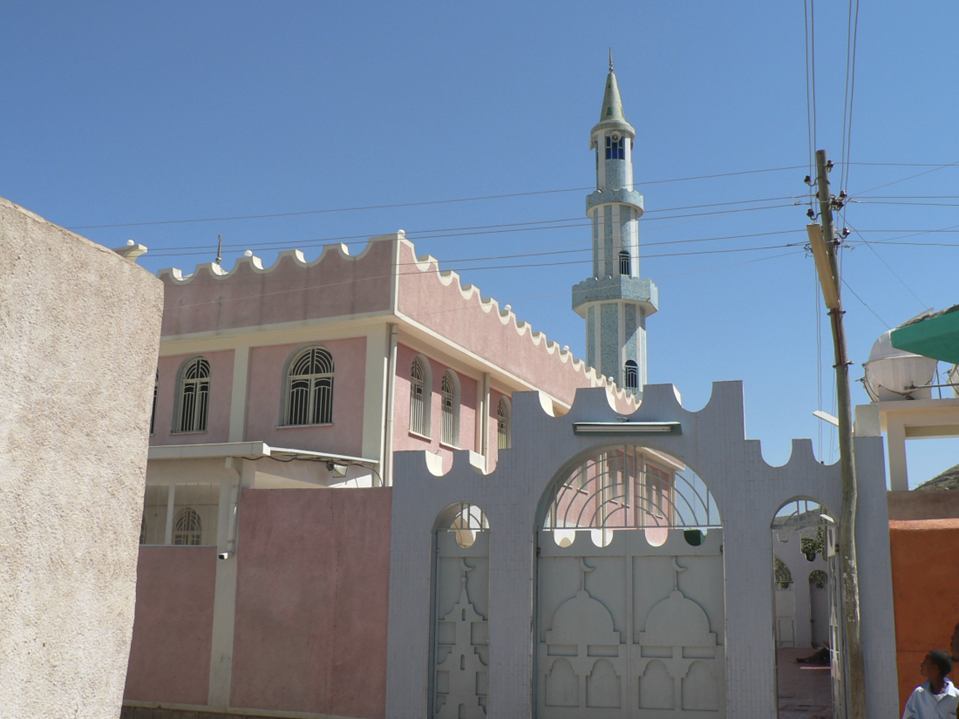
Photo: Jan Záhořík (Somali mosque, Dire Dawa, Eastern Ethiopia)
-
1) Biafra War
2) Soviet Model in West Africa
3) Soviet Union, China in Southern Africa
-
Take a look at the blind map of Africa attached to Week 1. Print it and try to mark all major Cold War hot spots in Africa, prepare a brief account or survey of Cold War battlefields in Africa to be discussed during the class.
-
After reading the text and watching the video, prepare yourself for discussing the following:
1) How would you evaluate the legacy of the Cold War in Africa?
2) Why the Soviet model of development had difficulties to penetrate Africa?
3) What is the legacy of the Biafra war in Nigeria until today?
-
Numerous authors studied the contexts, consequences, causes, and impacts of the genocide but a deeper understanding of the root causes must necessarily include historical links and deeds such as “ethnic favoritism,” officially legalized inequalities between groups of people and subsequently a combination of demographic, economic, social, and environmental causes.
Rwanda is a small country in Equatorial Africa which has become known for the 1994 genocide that finished a century long development of polarization of society in its socio-economic, political as well as cultural consequences. The early roots of the genocide can be found already at the end of the 19th century when first under the German, and later during the Belgian colonialism two “racial” entities were formed within one nation which had for centuries lived together sharing common history, language, cultural traits, religion, and socio-political organization and institutions. However, social scientists and historians until very recently could not agree on the initial phase of “antagonism” between Hutu and Tutsi, whether it was a matter of the Tutsi conquest long before the European colonialism came to Rwanda, or whether the politics of distinction was a matter of the European policy of divide and rule.
Tutsi aristocracy was put into a place of indubitable superior “race” and rulers of the country with a supervision of their Belgian administrators. Hutu farmers and Twa hunters were destined to a role fo second-class citizens or subjects with no privileges. It was this polarization of society and the division between the rulers and the ruled which had later imprinted the genocidal character to Rwanda and Burundi. Until the World War II, the Tutsi aristocracy enjoyed the fruits of superiority in terms of social privileges including distribution of wealth, access to education, power and influence.
Polarization of society in Rwanda was caused by several interrelated factors. Belgian impact on formation of ethnic, or racial in this case, identities is indubitable; growing demographic curve and overpopulation of Rwanda and Burundi is linked to it as well; mythologization and re-invention of collective identities done by the Catholic Church was allowed by its monopoly on education which was until 1940s mostly offered to Tutsis while Hutu were allowed to attend only to gain education (in smaller numbers) in worse schools. One of the notable Belgian representatives said in 1920s that the “Tutsis were destined to rule,” which openly approved the direction of Belgian administration giving privileges to one part of society while marginalizing the other.
In 1952, the Belgian administration initiated significant reforms which counted with higher representation of the Hutu delegates in local and regional councils in order to reach a resolution on elimination of existing dominance of the Tutsi part of society. In 1953, election councils included 7 674 of Hutu (56,58 %), 5 442 of Tutsi (41, 4 %) and 22 of Twa (0,22 %) representatives. The reforms calculated with future strengthening of indigenous social and political institutions which would lead to further democratization of the country including higher percentage of indigenous representatives in election bodies.
The Hutu Manifesto, originally called Report on social aspect of racial native problem in Rwanda, published on 12th July 1957 divided the racial question into three levels, political monopoly, socio-economic monopoly, and cultural monopoly. The critique of the political monopoly was based on long-lasting superiority of the Tutsi kings and chiefs where the Hutu chiefs had played only minimal role rather being exceptional. Socio-economic monopoly was stemming from an absolute dominance of the Tutsi people when it came to functions, privileges and advantages with direct economic benefits. Cultural monopoly was defined as a superiority of the Tutsi in terms of noble race whose cultural traits were regarded supreme. The Hutu Manifesto was aimed to promote and develop the Hutu part of Rwandan society in each of these levels in order to get rid of the Tutsi leadership. Belgians were aware of legitimate arguments and power the Hutu Manifesto had being simply a resonation of ambitions of frustrated and marginalized Hutu elites.
The Manifesto came as a result of already existing notions among the Hutu elites that the Hutu people were first colonized by the Tutsi and later by Europeans. The authors of the Manifesto used similar ideological vocabulary as the Catholic Church. The Manifesto thus argued for elimination of disproportionality in which numerical minority ruled numerical majority, in this case the Hutu. Social, economic, and political reforms leading to promotion of power and rights of the Hutu were the only way out. The Manifesto was not directed only to Belgian authorities but more importantly to Belgium and United Nations as it aimed to point at insufficient conditions in which indigenous inhabitants of Rwanda had lived under twofold colonization. Such appeal was necessary to understand as a part of general post-war emancipation and self-determination movement of the era of decolonization.
Crucial difference between the Hutu nationalism and the Tutsi nationalism lied in the way in which both perceived the roots of the colonial problem. While the Hutu called for elimination of the Tutsi colonialism first, the Tutsi pressed for an independent Rwanda and thus to end the European colonialism. Despite the Belgian control over social and political issues, the authorities were aware of necessity to implement the reforms. Anyway, in official documents, the problem of Hutuization of the Tutsi system was never mentioned as the principle of Africanization of Rwanda was the primary factor of the native development and democratization. Mandate administration and above all the direct impact of the Church became inevitable obstructions to development. The only possible scenario for the Rwandan elites how to reach a positive development in their country could be the Africanization of political system. In spite of such proclamations and plans, Belgians did not allow a complete regime change as they tended to keep a grip on power in the late 1950s. The word “independence” was not a part of colonial vocabulary of that time. Among some Belgian officials, plans for a decolonization of Ruanda-Urundi and Africanization of its political system acted like a treason of Belgium that had invested so much for the development of the country and its functional apparatus.
The Hutu Social Movement was founded in June 1957 in Kagbayi for the purpose of democratization of Rwandese institutions and judicial system. A very tense situation and ethno-political polarization of the society was accelerated by sudden death of Mutara III Rudahigwa on 25th July 1959 in Bujumbura showing a deep rupture between the Hutu and Tutsi element of the society. After Mwami’s death, the Supreme Council did not waste time with the election of his successor and on its meeting which had taken part shortly after Mutara’s funeral, Jean-Baptiste Ndahundurwa, a son of the former Mwami Musinga and a step-brother of Mutara III, was elected Mwami under the name Kigeri V. Such a quick action was by Belgian authorities, Hutu elites and the Catholic Church considered a coup d’état and caused many negative reactions. Although Kigeri V seemed to Ruanda-Urundi vice-governor Jean-Paul Harroy as an appropriate candidate, the speed with which he was inaugurated made him feel puzzled as it was not a result of general consensus, especially in such a tense period of time.
Turbulent development of the 1959 resulted in series of attacks and counterattacks. The whole social revolution gave the Hutu militants a “free hand” with which they began to victimize local Tutsi civilians, burning their homes, killing and beating them. Soon after, violence spread all over Rwanda and the UN mission sent to Rwanda at the beginning of 1960 estimated the number of dead at around two hundred. The Belgian administration directly contributed to the Hutu social revolution by setting no restrictions and limitations to it, not mentioning the fact that they directly called for advantaging of the “Hutu element.” Belgians imposed a state of emergency and Colonel Guy Logiest became a primary actor of the Hutu revolution when he stated that the Tutsi chiefs and sub-chiefs were responsible for the public unrest. Under such conditions he began to substitute the Tutsi chiefs by the Hutu chiefs resulting in a final phase of the social revolution. Meanwhile, violence forced thousands of the Tutsi civilians to take refuge in neighboring Uganda, in April 1960 there were already 22 thousand of Tutsi refugees. The PARMEHUTU party which viewed itself as the leading Hutu power called for an exodus of the Tutsi people to the homeland of their fathers somewhere in Abyssinia (Ethiopia), or to return in case they would respect the real democracy, meaning the rule of the Hutu.
Foundation of independent Rwanda in 1962, victory of the Hutu political parties in autumn of 1961, and ambivalent attitude of the Belgian administration toward increasing tensions presented the first major threat to the cohabitation of the Hutu and Tutsi in Rwanda. Tens of thousands of Tutsis were forced to leave the country especially to neighboring Uganda which proved to be decisive for the 1994 genocide. Appalling presumptions of several representatives of Francophonie about Rwandese identity has been fulfilled. Roots of this situation can be found already in the era of colonialism and failed decolonization of Rwanda, which Belgians did not manage properly.
Photo: Jan Záhořík (Genocide Museum, Kigali, Rwanda)

-
1) Maitatsine and Boko Haram in Nigeria
2) Ivoirité, Atochtony and Conflict in Cote d'Ivoire
-
In this course you can see in each section one photo from Africa. It is your task to write a short essay (up to 3000words) on one of these pictures. What does the concrete picture represent? You may discuss the issues of colonialism, racism, tourism, inequalities, genocide (in Rwanda), etc. It is purely up to your imagination.
-
For the class discussion: try to find out the meanings of terms such as essentialism, primordialism, constructivism, and how they are related to the issue of ethnicity, race, nation, or generally collective identities. Try to apply them on the issue of Apartheid in South Africa, and the civil war in CdI - as seen in the movies attached.
-
After watching the movies and reading the text, preapre yourself for the following:
1) On what ground was the Apartheid regime based and what are its legacies until today?
2) Can post-Apartheid South Africa be labeled as truly democratic?
3) What kind of role does ethnicity play in shaping the state and nation in Africa?
-
African Diaspora
African Diaspora has ever since played a twofold role in the development of African politics, society, and economy. First, a lot of African families relied on finances sent by their relatives from outside, moreover, many businessmen from the diaspora supported the development in their original homelands through building new hotels, restaurants, schools, libraries, etc. On the other hand, quite a significant number of Africans living in the diaspora began to form opposition movements or at least to accent various problematic issues of political development in Africa.
Many of the members of the diaspora were writers, playwrights, artists, university teachers, and scientists who used their knowledge and talents to form an alternative world to the existing propaganda that many of African authoritarian regimes tended to create in order to keep their power untouched and unchallenged. One such example could be the Somalian author Nurrudin Farah, whose work from the very beginning was aimed to criticize African dictatorial regimes in general, of course, with special focus on Somalia. The same can be said about Ahmadou Kourouma from Côte d’Ivoire, or Nigerian Nobel-prize winner Wole Soyinka.These members of African Diaspora gained a significant audience in the West but had little impact on what actually was happening in their countries of origin due to strong censorship and lack of access to foreign information in general.
Besides these activities, African Diaspora began to form organized movements, associations, and even liberation fronts in order to challenge legitimacy of their respective African governments which were during the ra of the World War II characterized by strong authoritarianism, one-party states, terrible human rights records, and disastrous economic conditions. Diaspora can be perceived in many ways. First, generally as African Diaspora which plays a role of representative of a continent and finds most of its support from the Afro-American community in the U.S. or in generations of immigrants in Western Europe. Second, a huge number of various ethnic diasporas related to their original homelands, states, regions, and nationalities in Africa is to be seen all over America and Europe. Third, diaspora has become a necessary component of a globalizing society, connecting their new and old homelands through various activities and contributing to the development of prosperity to African countries as well as bridging Africa and the West.
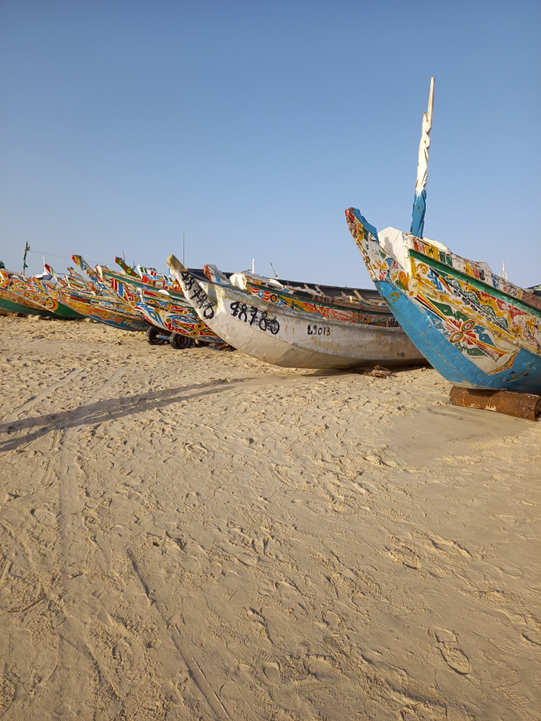
Photo: Jan Záhořík (boats of fishermen and migrant-traffickers in Nouakchott, Mauritania)
-
-
Based on the reading about gatekeeper states in Africa, your task will be to prepare a group project in which two persons will serve as representatives of gatekeeper state and two as diaspora members in need to come back to their country of origin and invest.
-
After reading the texts and watching the movie, be ready for the following:
1) How would you evaluate the higher educational sector in Africa? What are the strengths and weaknesses?
2) What are the main challenges for Africa in the 21st century?
3) What would help Africa to boost its economic growth?
-
It is your task to use all kinds of relevant media sources: BBC, CNN, Al-Jazeera, France24, etc., and to find as many relevant information as possible to the economic growth of Africa, as well as existing economic problems which Africa has to deal with in order to become a significant global actor. When presenting your findings, do not forget to mentioned which sources you used.
-
Industrialization
The topic of Africa's industrialisation is still a highly debated topic for many reasons. Africa is the poorest continent in terms of a number of indicators, especially in terms of economic output, GDP per capita, etc., and the continent's economic performance is comparable to that of, say, France. It is clear that industrialisation must be linked to the overall transformation of society, as pointed out, for example, by the Nobel Prize winner in economics, Joseph Stiglitz. According to his judgement and the available data, it turns out that countries that have relied on universally accessible primary education, and especially girls' education, are doing much better economically. In many African countries, however, the percentage of girls in school is still relatively low because poor families do not have enough money to pay for schools. Countries such as Uganda, which has abolished school fees, are experiencing higher economic growth and more promising future prospects than countries that have not abandoned school fees and where the proportion of girls in school is lower.
Industrialization is not a new phenomenon in Africa. The first phase of industrialisation took place in the 1920s, still under European colonialism, but despite considerable progress in industrial production, most African countries remained dependent on primary commodity exports after independence, which threatened their economic stability in relation to the movement of world prices for any given commodity. The emphasis on industrialisation in Africa has been presented in many different fora in Africa in recent decades as a means of lifting the continent out of the cycle of poverty and war, increasing employment and raising living standards. However, according to UN data, the share of manufactures in GDP has declined from 12% to 11% between 1980 and 2013. This, according to some courts, relativises some of the myth of a 'rising Africa', but industrialisation remains the main means of boosting the economic strength of African countries.
Countries such as Ethiopia, Rwanda and Tanzania are the main drivers of industrialisation on the African continent. In Ethiopia, in particular, industrialization has been driven by a confluence of several factors. Firstly, there is a government-led system of economic control (developmental state), focused on economic growth in key areas of the economy and infrastructure, overseen by the government, which at the same time encourages and attracts foreign investment into the country, not only Chinese, but also Turkish, German, Swiss, etc. Secondly, Ethiopia has long had an economic growth rate of around 10% annually, which attracts foreign investors who have confidence in the local market. Thirdly, Ethiopia has a very young population and a cheap labour force, making it worthwhile for foreign investors to shift part of the production of one or another product or sector there.
Africa is the continent with the lowest electrification rate, although in recent years some countries have been trying to change this trend. Ethiopia has begun construction of the Grand Ethiopian Renaissance Dam (GERD), which is expected to have a capacity of 6 GW when it comes online in 2021, at a cost of US$4.7 billion. An even larger dam is planned for the Democratic Republic of Congo, whose government's proposed Grand Inga Dam is expected to have a capacity of 39 GW and cost around USD 80 billion.
Given Africa's natural wealth, most industrial production remains mineral-based. Moreover, around 70% of investment in industrial production takes place in four countries in Africa (South Africa, Egypt, Nigeria, Morocco). Even so, industrial production grew by 3.5% per year between 2005 and 2014, higher than in the rest of the world. In 2016, industrial exports, i.e. trucks, electronics, appliances and other industrial products, grew by 14%. The aforementioned CFTA may be a key factor in continuing these trends, as it will create a single continental market with free movement of capital, thus leading to continental integration. If all this is successful, it could mean an increase in industrial output from USD 500 billion in 2015 to double that in 2025, creating an additional 14 million jobs. However, intertwined with this is the issue of education, as Africa suffers from a shortage of a quality and educated workforce, which should prompt African governments to change or modify education curricula to strengthen business-oriented skills, entrepreneurship, engineering and mathematics, as well as apprenticeships and vocational training.
In North Africa, one of the leaders in industrialisation is Morocco, where industrial production accounts for about 15% of GDP and employs 10% of the population, with about a third in textiles. The country has a strong aeronautics industry, with a number of companies, including Boeing and Bombardier, operating in Casablanca's Midparc free zone, for example. The same can be said of the Tangier-Med industrial park, which is linked to the port of Tangier and is home to a concentration of companies producing automotive components. The French carmaker Renault opened a USD 1.5 billion factory here in 2012. Similarly, Japan's Nissan and India's Tata operate here. In Kenya, manufacturing employs about 12.5% of the population and accounts for about 20% of all economic activity, with pharmaceuticals, leather processing, and motor vehicle or component manufacturing dominating alongside textiles. Zambia is Africa's third most competitive economy, after Seychelles and Ghana, and industrial production grew by 30% between 2009 and 2013 alone. Zambia is extremely rich in minerals, with copper leading the way, but other industries are also booming, particularly agricultural processing. In West Africa, Nigeria is the leader, but despite a considerable economic boom in the last 20 years, the country remains too low on the Human Development Index, as well as other statistics. Indeed, a traditional problem in many African countries, and typically oil-producing countries, is social inequality, and high unemployment rates.
Infrastructure
Infrastructure is important for economic development in any country, and this is doubly true for landlocked countries, or countries not blessed with any quite substantial mineral wealth. Infrastructure is also the basis of industry and is also an important part of the development of services, on which, for example, the advanced European economies are based. Many African countries inherited railway networks that during colonialism were mostly used for mineral exports and usually linked an inland mining town to a port. In East Africa, for example, where extensive railway construction is now taking place, mainly under Chinese supervision or with Chinese investment, both the Germans in the former Tanganyika and the British in Kenya and Uganda began building railways as early as the 1890s. All the railway lines terminated at lakes Victoria and Tanganyika and served to promote trade with central and equatorial Africa, which were thus linked by rail to ports on the Indian Ocean. As a result, some of the most important towns in East Africa and beyond grew up, such as Nairobi, which became the main transhipment point and railway station in Kenya, and the French, when building the railway linking Djibouti with Addis Ababa in Ethiopia, gave rise to Dire Dawa, which was originally intended as a stopping point but eventually grew to become one of the largest towns in Ethiopia. The design of East African railways has been occasionally disturbed, for example by the man-eating Tsavo lions, about which several films have been made and books about their stories can be bought in Nairobi.
Above all, the construction of the Kenya-Uganda railway in the early 20th century encouraged European (British) settlers to settle both countries, with the associated issue of land grabbing and hence displacement of indigenous people. After Kenya's independence, the railway sector slowly began to collapse, whether due to corruption, mismanagement or the global economic crisis of the 1970s. The East African Community, in an attempt to speed up interconnectivity, agreed on a project called the East African Railway Master Plan (EARMP). The Kenyan government's Vision 2020 envisages the construction of a modern 3,100km railway by 2025, linking Mombasa on the Indian Ocean coast to the hinterland and connecting East Africa in later stages.
Ethiopia's capital Addis Ababa, which is the seat of the African Union, a kind of African Brussels, is also the first city in sub-Saharan Africa since 2015 to have a metro or overground line, whose two lines, the North-South and West-East, have a total of 39 stations and, according to initial ideas, will carry up to 15,000 passengers per hour in one direction at a top speed of 70 km/h. Construction took three years and cost nearly $500 million, with the Ethiopian government receiving a loan from the Export-Import Bank of China. Until the metro was launched, traffic in Addis Ababa looked like any other African capital. It was provided exclusively by taxis, either old Toyota minibuses that could hold over fifteen passengers or even older blue Ladies. This, however, accounted for both the air pollution and the constant traffic jams we know from other cities like Nairobi, Dar es Salaam and the like. This is a trend that follows the efforts of many African countries, especially those in East Africa, to build rail links, to rely more on trains and less on cars, which contribute a great deal to air pollution, which in turn affects the quality of life in general.
Photo_ Jan Záhořík (Light Rail, Addis Ababa, Ethiopia)
-
1) Ethiopian Great Renaissance Dam Disputes
2) Ethiopia's Ethnic Federalism
-
1. Which of the following countries are the most stable/democratic? 2pts
a) Central African Republic
b) Botswana
c) Ghana
d) Democratic Republic of Congo
2. Which of the following statements are false? 2pts
a) Ghana has one of the most dictatorial regimes in Africa.
b) Nelson Mandela was the first the President of post-Apartheid South Africa.
c) Omar Bongo (Gabon) had very close ties with France.
d) Eritrea is a former French colony.
3. In which country you would meet the Hausa, Igbo, and Yoruba people? 1pt
a) Senegal
b) Ethiopia
c) Nigeria
d) DRCongo
-
Water, drought and the environment in Africa
The economies of most countries in Africa depend on agriculture, while at the same time the countries are plagued by drought or diseases such as trypanosomiasis, which is transmitted by the tsetse fly. African agriculture cannot be considered archaic, as European colonialists believed. African farmers have usually responded to long periods of land regeneration by shifting cultivation, and have likewise adapted to the influx of new crops. After all, maize and cassava, probably the two most widely grown crops, originated in the Americas, as did other cash crops such as tobacco, beans, etc. Drought is one of the biggest problems in many African countries. Ethiopia or Somalia struggle with droughts every year, affecting mainly lowland areas. In addition, in 2020, countries in the Horn of Africa were also affected by waves of locusts that decimated crops. However, in addition to the Horn of Africa, countries in Africa's south are sometimes affected, such as Zimbabwe in 2016. While the latter is one of the countries with a rather controversial international reputation due to the long-standing rule of the now-deceased Robert Mugabe, it has also long been an agricultural power in Africa. In 2000, President Mugabe came up with a land reform to give land to war veterans and other black people in the country, as most of the fertile land was farmed by the white minority. Not only did thousands of white farmers leave the country, but Zimbabwe came under fire for criticism, particularly from the UK. For a number of years the country faced partial international isolation and, above all, economic problems. Zimbabwe was notorious, among other things, for its enormous inflation, which reached dizzying heights.
In 2016, Africa was hit by a phenomenon called El Niño, so that between January and May, when it is usually relatively dry in Ethiopia, for example, it rained almost every day, while countries such as Zimbabwe, South Africa and Malawi struggled with unusual droughts. El Niño left behind thousands of dead domestic animals, dried up water supplies and devastated crops. Yet for most African economies, as we have said, agriculture is the cornerstone of the economy. Zimbabwe, the breadbasket of Africa, has had to import much of its food from neighbouring countries in recent years because of drought and economic difficulties. This is one of the reasons why, in the same year, President Mugabe was forced to declare a state of catastrophe, as around a quarter of the population did not have sufficient food supplies. At the same time, however, he blamed this state of affairs not only on low harvest yields, but also on the West and its sanctions imposed on the country for trampling on human rights.
On the other hand, the president's critics see the legacy of the aforementioned land reform as the reason behind the current situation, as many of the farms were underutilised, leading the government to reassess the situation and push for greater utilisation of farmland. Although the government is thus trying to declare its desire to prevent further loss of life, given the lack of resources and international isolation, this task is likely to be difficult. Already the 2015 harvest was, according to some sources, 50% lower than the previous year. In some areas of Zimbabwe, such as Manicaland province, most of the cattle there have died and only the more resilient animals, such as goats, have survived. However, El Niño is also at work in other parts of Africa. For example, some parts of Ethiopia are suffering from drought and the risk of famine, while others are experiencing very long rainy seasons, even in May, which is supposed to be by far the driest and hottest time of the year. This shows how vulnerable countries that depend on agricultural production are to such crises, whether caused by political or environmental problems and fluctuations.
Indeed, in the past, particularly in the 1980s, it was often a combination of natural disasters and political setbacks. Between 1983 and 1985, for example, there were major famines in Ethiopia and Sudan. But both countries were going through civil war. In Sudan, the black and mostly Christian south fought against the Arabized and Muslim north. In Ethiopia, on the other hand, a number of liberation fronts were fighting against a Marxist military dictatorship. When a terrible drought struck both countries, millions of people found themselves in acute danger. The government then not only failed to inform the people of the ongoing famine, but also prevented the supply of food to the regions that were fighting against the government. Yet food was relatively plentiful in other parts of the country and many lives were saved in 1985 thanks to foreign aid.
This brings us to the issue of water, closely related to the drought. As the population grows, water is becoming an increasingly scarce commodity, which can be reflected, among other things, in the emergence of conflicts or outbreaks of tension in different parts of the world. The control of water resources has always been part of the tactics of every war, conflict or clash. For example, when the European powers partitioned Africa during the Berlin Conference of 1884-1885, the main interest of the powers was to allow free trade on the Niger and Congo rivers. Great Britain was equally keen to control the entire Nile basin, which it did in the colonial era. Water resources are not only used for fishing or basic daily subsistence, but are also important communication and strategic points. Very often, rivers form borders between states and control of the water flow was then very important to defend against any external threat. Water resources are, for example, an important part of international law, as some lakes (such as Lake Chad) form borders between several states and the interests and claims of several governments clash.
The economies of some countries are entirely dependent on watercourses, perhaps the most classic example being the Nile, which is the economic artery for a number of countries from the Great Lakes region to Egypt. It is Egypt that has long acted as a power with an exclusive say in the use of the Nile basin. This was the case until the overthrow of President Hosni Mubarak, since when Egypt has been somewhat weakened on the international stage, as reflected, for example, in Ethiopia's growing ambitions to become a major power in the export of electricity, which is linked to the issue of building a network of hydroelectric power stations.
As a country rich in water resources, Ethiopia has already set itself the goal of becoming a hydroelectric power in Africa under Prime Minister Meles Zenawi (1991-2012). This will not be without problems both internationally and in the affected areas, as both the GERD dam just constructed and some smaller projects like the Gilgel hydroelectric projects on the Omo River are causing the displacement of about two hundred thousand people, mainly in the Omo Valley.
The Nile Basin includes eleven countries: Egypt, Sudan, South Sudan, Ethiopia, Eritrea, Uganda, Kenya, Congo, Rwanda, Burundi and Tanzania. However, it has always been Egypt that has dominated all the events surrounding the Nile, as the Nile is a vital economic artery for Egypt and has therefore to some extent monopolised the use of the river. It was Ethiopia and Egypt that concluded an agreement in 1993 regarding their relationship with the Nile, which states, among other things, that each party shall refrain from any activity in relation to the Nile that could cause appreciable harm to the other party. Until recently, Ethiopia had not made any specific demands regarding the Nile, partly because it was just emerging from years of fighting against a dictatorial regime in the 1990s and partly because Egypt was at the height of its power at the time. It therefore made no sense to question Egypt's claims to the Nile. More recently, however, there has been a significant reversal in this relationship, with Ethiopia declaring its plan to build the Great Renaissance Dam in 2011, at the same time that Mubarak's government in Egypt was swept away by the so-called Arab Spring, which greatly weakened Egypt's bargaining position and existing hegemony on the Nile. The year 2011 brought about major changes, as in addition to the overthrow of Hosni Mubarak, Sudan was split into two independent states, South Sudan and Sudan, thus diluting Sudan's position, and in turn providing the Ethiopian government with the opportunity to take advantage of a kind of power 'vacuum' on the Nile to present and, above all, implement ambitious projects. Egypt's diminishing role seems to be one of the main factors behind Ethiopia's intensified efforts to make effective use of the Nile. A few years ago, such plans would have been unthinkable, as the case of Tanzania in 2004 suggests. At that time, the Tanzanian government decided to introduce a project to irrigate land from Lake Victoria, which was strongly rejected by the Egyptian president, who even threatened Tanzania with the use of force. Ethiopia's growing economic stability and relative prestige, challenging Egypt's long-standing dominance, intensified negotiations with the smaller Nile states.
The construction of a gigantic hydroelectric power plant on the Nile has not only an international political dimension, but also a socio-economic one, as the roughly five hundred million dollar construction may be threatened by exorbitant estimates in electricity production in the future. According to government sources, thousands of civil servants have responded enthusiastically to the plan to build the Nile project and have donated one month's salary for its construction.
The issue of national energy security is also an important factor that the Ethiopian government hopes to use to quell resistance and boost national pride. When celebrations were held for the twentieth anniversary of the fall of the Dergo on 28 May 2011, the government took the opportunity to hold a referendum on the construction of the largest hydroelectric power plant in the Horn of Africa. In doing so, the government wanted to demonstrate to the world the political unity and support emanating from the 'ordinary' people, but they were often coerced into attending the meeting by party cadres. The construction of this monumental project also has a political dimension, as regimes such as the Ethiopian one use similar works to promote the image of a great nation, government and national leader, such as Meles Zenawi in this case. Such projects play the role of a kind of monument to the regime. The common denominator of these projects is the lack (or even absence) of communication between the government and the public, especially in relation to those populations most affected by its construction.
In recent years, as Ethiopia has become one of the 'lions of Africa' and strengthened its hegemony in the Horn of Africa, diplomatic tensions between Addis Ababa and Cairo have increased. While Egypt has focused its efforts on highlighting the negative aspects of the project, the Ethiopian side stresses that the hydroelectric plant will benefit everyone, including Egypt and Sudan. Egypt fears the loss of its current leadership position on the Nile, while Ethiopia seeks to confirm its role as a regional power through electricity exports, especially when it lacks its own resources such as oil, diamonds and gold. Under the current government of Egyptian President Sisi, the solution to the dispute between the two countries seems to lie in diplomatic negotiations rather than forceful solutions. The near future and the launch of a large hydroelectric power plant on the Blue Nile in Ethiopia will then show which direction the issue of watercourses and disputes over them will take in this part of the world. While Ethiopia has a number of watercourses and is one of Africa's major water reservoirs, Egypt cannot say this and therefore the Nile issue is vital to it. Concerns about the projected 15% drop in the Nile's flow after the opening of the GERD are therefore understandable.
Africa has 'traditionally' been one of the areas with the highest incidence of famine in the world, although the percentage of people living in conditions of absolute poverty and at risk of famine is decreasing according to some statistics. Agricultural production in Africa has been increasing over the last twenty years, but this has mostly been due to the expansion of agricultural land, a trend that has reached its limits. An important part of agricultural development is the so-called 'green revolution', which has brought more sophisticated farming systems, more resilient crops, irrigation and more efficient harvesting systems to all parts of the world, especially to countries dependent on agricultural production. Africa has certainly not been spared from this trend. Without the Green Revolution, the prices of some foods, such as rice, would be up to 40% higher. The experience of the Green Revolution in Asia shows that rapid increases in productivity can be achieved in a relatively short time. However, the Green Revolution must be linked to a number of other aspects such as adequate public investment, rural support or the availability of modern financial markets and services for farmers and the development of agricultural technologies.
Foreign donors are also involved in the Green Revolution, and to a significant extent. For example, the Rockefeller Foundation is now helping the Alliance for a Green Revolution in Africa (AGRA) and overseeing a new seed research programme it funds jointly with the Gates Foundation. However, the work of such foundations has its critics, who fear the dominance of the Gates Foundation, playing the role of a kind of god deciding the fate of the continent. One of the countries that has seen significant growth in the agricultural sector is Ghana, one of the most stable countries in Africa and, after Côte d'Ivoire, the most important producer of cocoa. As the most important export commodity, cocoa has also traditionally received financial assistance from the government.
Digitisation and new technologies
Digitalisation is a global phenomenon affecting almost all sectors of the economy, and Africa is no different. It is clear that digitalisation can contribute to reducing social inequalities if it is coupled with appropriate policy instruments to prevent the widening of already often significant social inequalities in a number of African countries. According to economists, Africa needs the help of African governments on the basis of the three C's (competition, capital, capacity) on the road to a successful digital transition. Through the competitive environment, there is pressure to create new and better technologies. Capital is not only financial capital, which is necessary for the development of digital technologies, but also human capital; the policy environment must enable the development of an entrepreneurial, often informal, sector that could benefit from digital technologies. Last but not least, governments in Africa need greater capacity in terms of improved tax collection, balanced budgets and social protection, which in many African countries is languishing precisely because of limited fiscal resources.
According to an African Union document entitled 'Africa's Digital Transformation', the goal is universal access to the internet, which would mean a 2% annual increase in GDP and a 1% annual reduction in poverty. So-called mobile money has a relatively long tradition in sub-Saharan Africa and there are countries that are setting trends in this direction.
Within Africa, the leader is Kenya, which has not only introduced the M-Pesa mobile currency, but is also setting trends in digitalisation in telecommunications, transport, electronics, and heavy industry. ICT (information and communication technology) has become part of the Kenyan government's Vision 2030. According to some figures, the M-Pesa has lifted up to 200,000 households out of poverty, and in particular enabled a significant number of women to emancipate themselves from subsistence agriculture towards business. In the agricultural sector, Kenyan farmers use a range of apps that make it easier for them to grow and harvest crops, but also to connect with buyers. All this means that agricultural productivity is increasing, contributing 26% of Kenya's GDP directly, and a further 27% indirectly in sectors that are directly linked to agriculture. As part of Vision 2030, the Konza Technological City, also called Sillicon Savannah, was announced as the flagship for ICT technology or services based on the use of IT. This goes hand-in-hand with the Kenyan government's efforts to attract investment from abroad, in which Kenya has done a tremendous job in greatly simplifying investment and business opportunities in the country.
In 2016, there were nearly 120 technology hubs across Africa, most often run by private companies, non-profit organisations, foundations or development consortia. In addition, there are academic, government-established, or hybrid technology centres involving government and non-government institutions or external donors such as the World Bank. Equally important in innovation and digitalisation in Africa is Rwanda, which has made great strides since the 1994 genocide to become the 'Singapore of Africa' under the leadership of President Paul Kagame, sometimes called the 'Digital President', who organises 'Transform Africa' conferences in Kigali. Although for a long time Rwanda was one of the countries dependent on foreign aid, President Kagame announced Vision 2020, which emphasised domestic manufacturing, ICT, tourism with the secondary goal of serving as the distribution and logistics hub of East Africa. In addition to agriculture, the service sector contributes 43.9% of Rwanda's GDP, while industry contributes another 18.7%, promising figures compared to many countries in, for example, the West African Sahel, speaking to the growing importance of the service sector.
-
Although some global trends and events, such as covid-19, have negatively impacted Africa in the past year, as well as other parts of the world, we can still see economic growth averaging around 2.4%, with East Africa remaining the fastest growing region in Africa at 5%. According to various indicators, and despite the huge disparities within the continent, Africa is succeeding in achieving economic growth, strengthening internal connectivity through the construction of roads, highways and railways, air links and regional associations. Regional economic integration is also one of the priorities of the AU and its aforementioned Agenda 2063. Better infrastructure, more intensive industrialisation, together with the reduction of social inequalities, digitisation and the streamlining of agriculture, are tools that can help Africa to overcome various recurring problems, such as droughts, epidemics of various diseases (cholera, Ebola, etc.) or floods affecting the most vulnerable. Of course, the level of indebtedness will also matter, and this is most evident in relation to China, which is the largest investor in infrastructure projects in Africa. Equally important for stability and economic development will be maintaining equitable access to water, which - as the diplomatic conflict between Egypt and Ethiopia over the construction of the GERD shows - may be a problem with the rising demographic curve in most African countries.
The future of Africa is the development of health, education and infrastructure, as well as inclusive access, not only to education, but also in terms of the development of civil society towards greater participation of the young generation, who in many countries feel uprooted and without a chance of achieving better living conditions or social mobility. However, despite all the negative and pessimistic forecasts, Africa is also a continent of hope, development and perspective and, as we outlined in the introduction, a continent of the future, which is trying to respond to global trends and the opportunities offered by globalisation, including the aforementioned digitalisation.-
In order to successfully pass the course, students are obliged to write a short reflection on how they would use knowledge and skills gained in the course in practice. The text of your reflection will be uploaded into your protfolio as one of proofs of your participation in the course. The reflection should be composed of at least five sentences. After an approval of your reflection by the lecturer, you will be given an official certificate.