
Communication and visual impairment
Požadavky na absolvování
3. Compensation in communication
Many visually impaired people use various compensatory aids, like:
- Computer adaptations
- Braille translation software and equipment (converts print into braille and braille into print)
- Braille printers (connects to a computer and embosses braille on paper)
- Screen readers (converts text on a computer screen to audible speech)
- Screen enlargement software (increases the size of text and images on a computer screen)
- Refreshable Braille display (converts text on computer to braille by an output device connected to the computer)
- Adaptive devices:
- Braille notetakers (lightweight electronic note-taking device that can be connected to a printer or a braille embosser to produce a printed or brailled copy)
- Optical character readers (converts printed text into files on a computer that can be translated into audible speech or Braille with appropriate equipment and software)
- Special (audio/talking/with voice output) devices, like watches, thermometers, calculators etc.
- Optical devices:
- Electronic or optical magnifiers (enlarge an image to a larger size and projects it on a screen)
- Telescopes: used to view distant objects
etc.
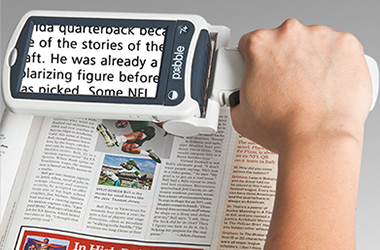
(E-magnifier - https://cz.pinterest.com/patnewbalance/)
The visually impaired person should always be allowed to approach the information boards as close as possible, and all important items (such as merchandise in a store) should be available as well for them to take in hand and check by touch. We also have to take in account that these people need usually more time for reading and space orientation.
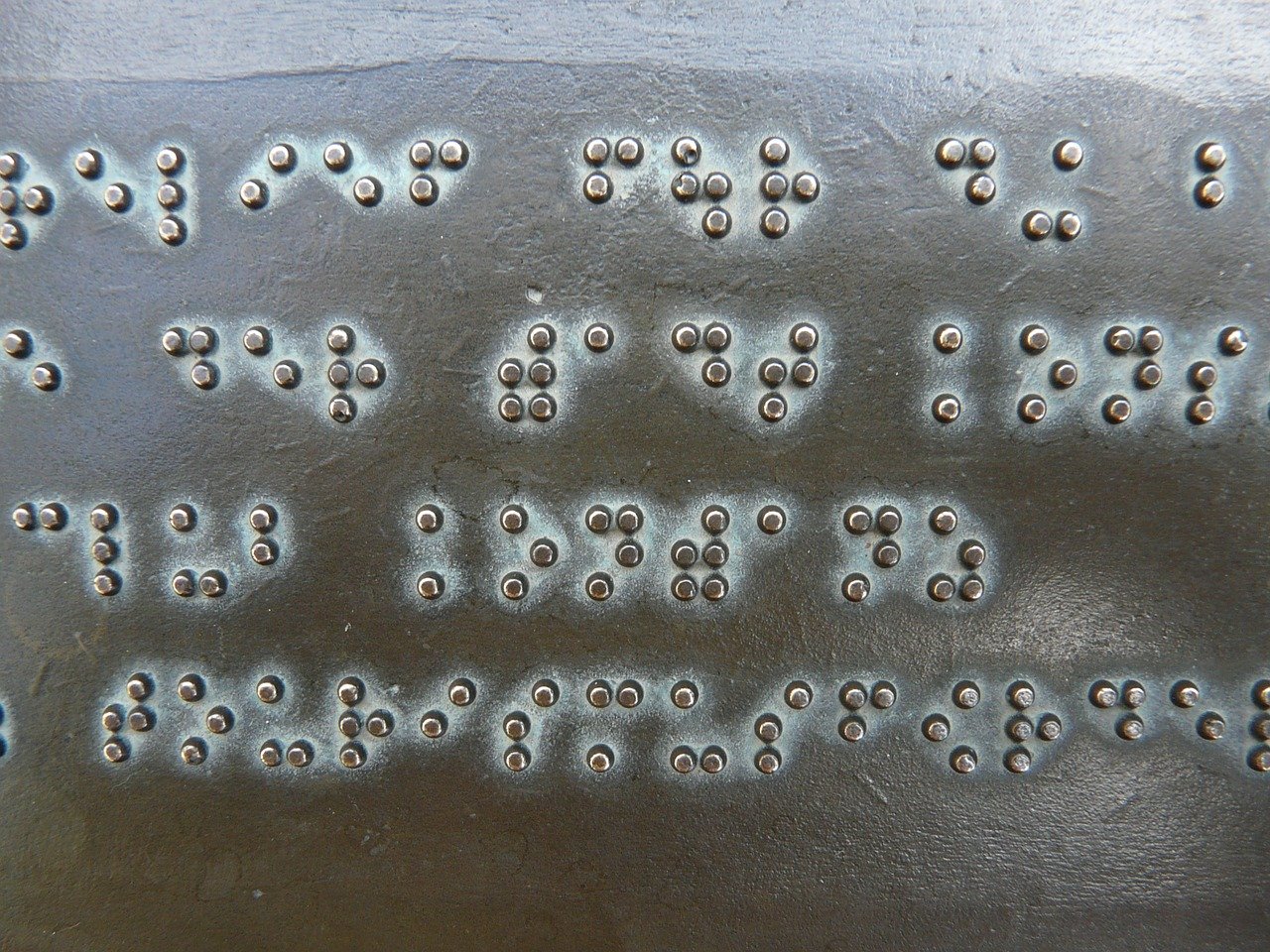
(Braille writing - pixabay.com)